The Art of Deception 39

The Art of Deception

or Pride and Extreme Prejudice

12241791_735836876546522_6197947469406170479_n

This week continues a spy story set in late Georgian England, the year before Trafalgar. Last time Sally and her fiance met a strangely assertive maid in the Avonside garden (which I should call the parade). The maid didn’t leave, and she had good reasons not to.


“Didn’t you hear me; you may go; please go; now.”

Instead of leaving, the maid stood her ground and said, “Sally, Don’t you recognize me?”

“Alice, what are you doing in that get up?”

“I can’t stay long; I’m desperately sorry for last night.”

“You should be; that was rude; have you grown so above us?”

“No, it’s just, I’m tracking a French spy and you nearly gave the game away.”

“A spy, how exciting; isn’t it exciting Robert?” Sally’s eyes glowed at the idea.

Mr Mapleton said, “I suppose it is; too dashed exciting for me.”

“In any case,” Alice continued, “before I leave, you both have my best wishes; seeing you last night together, I can’t imagine a better match – for either of you.”

Now that you’ve read my hackery, please see the talented writers in Weekend Writing Warriors.


My apologies for creative punctuation.

Still working on a cover idea – hard even though I’m a dashed good photographer (if I say so myself).

british_militia
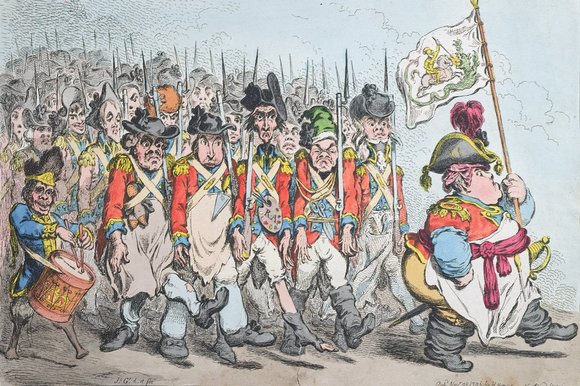
The militia (Shown here in Gilray’s cartoon “repel all invaders”) will soon make an appearance. Great Britain is on a war-footing with that Corsican monster just miles away over the channel. Mind you the monster would have said kilometres, and his ‘Million man’ army was significantly smaller than a million soldiers (about 100,000 strong). Whatever Napoleon was, and he was many things (mostly bad), he was a master of publicity.

Nearly all the men in England were enrolled in their local militias – but the militias were not anywhere as well organized or skilled as the regulars. Jane Austen’s villain Mr Wickham would have fit right in with them. How he would fare when promoted to the regulars was another question.

Gilray’s cartoon shows typical upper class condescension (in the modern meaning) about the rest of the country. The sorry-looking militia men are all tradesmen (a cobbler, a mason, a painter (Gilray himself?), a tailor, a barber), and they’re led by a baker.

Frankenkitty is available.
Frankenkitty What happens when teenagers get to play with Dr Frankenstein’s lab notebooks, a few odd chemicals and a great big whopping coil? Mayhem, and possibly an invitation to the Transylvanian Neuroscience Summer School.

Like poor Cecelia, ” The Curious Profession of Dr Craven” is back from the dead.

I’ve released a sweet regency romance, Miss DeVere Miss_devere_1 This is a fun read.

Get Free Stuff and try out my landing page. There are three free complete short stories (including an ARC for Frankenkitty) available after you’ve gone through the hoops.

Sunday Snippet, Dinner is Served.

A Formulaic Romance

This is the start of another story Amelia and I are putting together. There’s a pun in the title that will become obvious in time.

It starts with the trope, Lady Rachel on her way to London, is stranded in the country by an unfortunate accident. They’ve made their way to the house in the distance, but not without slipping in the muddy lane.

The Master was introduced in the last installment. He was somewhat annoyed at the disturbance, but willing to see that his guests were properly entertained.  The housekeeper, Mrs Hobbes, leads Rachel and Lucy to their rooms at the start of the last snippet.

This snippet continues their story.

An Interruption, continued.


Mrs Hobbes curtsied to him and said, “Rupert, Lord Hartshorne. May I present Rachel, Lady Hayforth?”

He bowed and said, “Enchanted. I see Mrs Hobbes has seen to your needs. Mother’s dress becomes you.”

Rachel curtsied to him, and blurted out as she rose, “Your eyes, what did you do to them?” Then she blushed and said, “I’m sorry. That was impertinent of me.”

“Not to mention impolite,” he chuckled, “You most likely have noticed the rings from my goggles. I wear them in the laboratory to protect my eyes.” He paused, and then added, “From the fumes.”

Lucinda’s nose wrinkled at the sharp odour that emanated from him. She could not help but ask, “What’s that smell?”

“A product of my research. You get used to it.” Neither Rachel nor Lucinda was sure she wanted to get used to it.

“Is that what happened to your hair?”

His hair had a peculiar bleached look, blonde streaks among the dark black of his natural colour. His deeply coloured eyes and eyebrows, protected from the fumes, gave him a piercing glare and offset his hair.

“Well, yes. Rather dashing, don’t you think?” Then remembering his manners, he offered her his arm and said, “I presume you are hungry. Would you care to dine? You and your companion.”

“Miss Holloway.”

“Miss Holloway, then.”

One of the Master’s footmen interrupted them when they turned to enter the dining room. “Sir,” he said, “There is a person at the door. He wishes to talk with Lady Hayforth. About her carriage.”

“Ma’am?” Lord Hartshorne said, “I do not like to be delayed.”

“Sir, I should attend to this. May I?”

“If you wish.”

Rachel followed the footman. Lord Hartshorne, uncharacteristically, decided to delay his repast and followed her.

The footman did not exaggerate, ‘a person’ somewhat described the local carriage-wright. Even Lord Hartshorne, his nose immune to many smells from its exposure to the less appealing aspects of the chemical arts, wrinkled his nose at the odour. It steamed off the man and filled the front hall with a distinctive miasma.

“Miss Heppleworth. That carriage of yours, it’s fair broke.”

“Meaning?”

“The brace snapped; then the body landed on the axle. Snapped one.”

“So?”

“Close on fifty pound to fix. Almost as much work as building a new one.”

Fifty pounds!” There weren’t fifty pounds to spare in Rachel’s calculations. Maybe, if she were lucky, fifty shillings, and in reality, more like fifty farthings.

“Aye, if that little. Be a week at least before we can get to it. Have to wait out this rain. The thing is well stuck in.”

Lucinda turned to her mistress, “What are we going to do? We’re due in London. Lord Bromley expects us.”

“If I may,” Rupert interjected himself, “is that all it will take? Only fifty pounds.”

“Sir?”

Rupert looked at the two young women; one was decidedly pretty, dashed pretty at that, but still a distraction for his serious endeavours. “One hundred pounds, if you’re done tomorrow.”

The carriage-wright stared at him. Fifty pounds was an opening shot across the bows, in hopes that the price wouldn’t be bargained down to a more realistic twenty-five or even less. “One hundred, sir?”

“Only if the carriage is ready tomorrow. Next day, seventy five.”

“I’ll see what I can do. Sir.” For one hundred pounds, he’d undertake to move the mountain to Mohammed, with a soup-spoon.

“Excellent. Now Lady Hayforth and Miss Holloway, would you care to join me in our repast. If it isn’t too cold.”


I always liked the smell of chemistry labs. A whiff of whatever in the morning.

The Art of Deception 38

The Art of Deception

or Pride and Extreme Prejudice

12241791_735836876546522_6197947469406170479_n

This week continues a spy story set in late Georgian England, the year before Trafalgar. Last time things came to an unseemly head on the floor of the assembly.


In the morning, Sally and her fiancé, Mr Mapleton strolled together in the lower Avonside garden, “Alice said she’d meet us here; I can’t believe she would be so rude, as cold as she was last night.”

“It certainly was unlike her; I suppose she’s jealous of us.”

“Even so, we were the best of friends; it was almost the cut direct; has she grown so high and mighty as to forget mere gentleman’s daughters?”

A servant girl approached them and curtsied, “Ma’am?”

“Yes, what is it?” Sally struggled to keep the annoyance from her voice; it wasn’t this poor maid’s fault that she’d had words with her former best friend last night.

“Ma’am, I was told to give you this,” She gave Sally a folded letter, “It’s from my mistress.”

Sally snatched it and broke the seal, “It’s for me; you may go.”

The maid stayed.

Now that you’ve read my hackery, please see the talented writers in Weekend Writing Warriors.


My apologies for creative punctuation.

It’s time for cover designs. Arggh.

servants1893

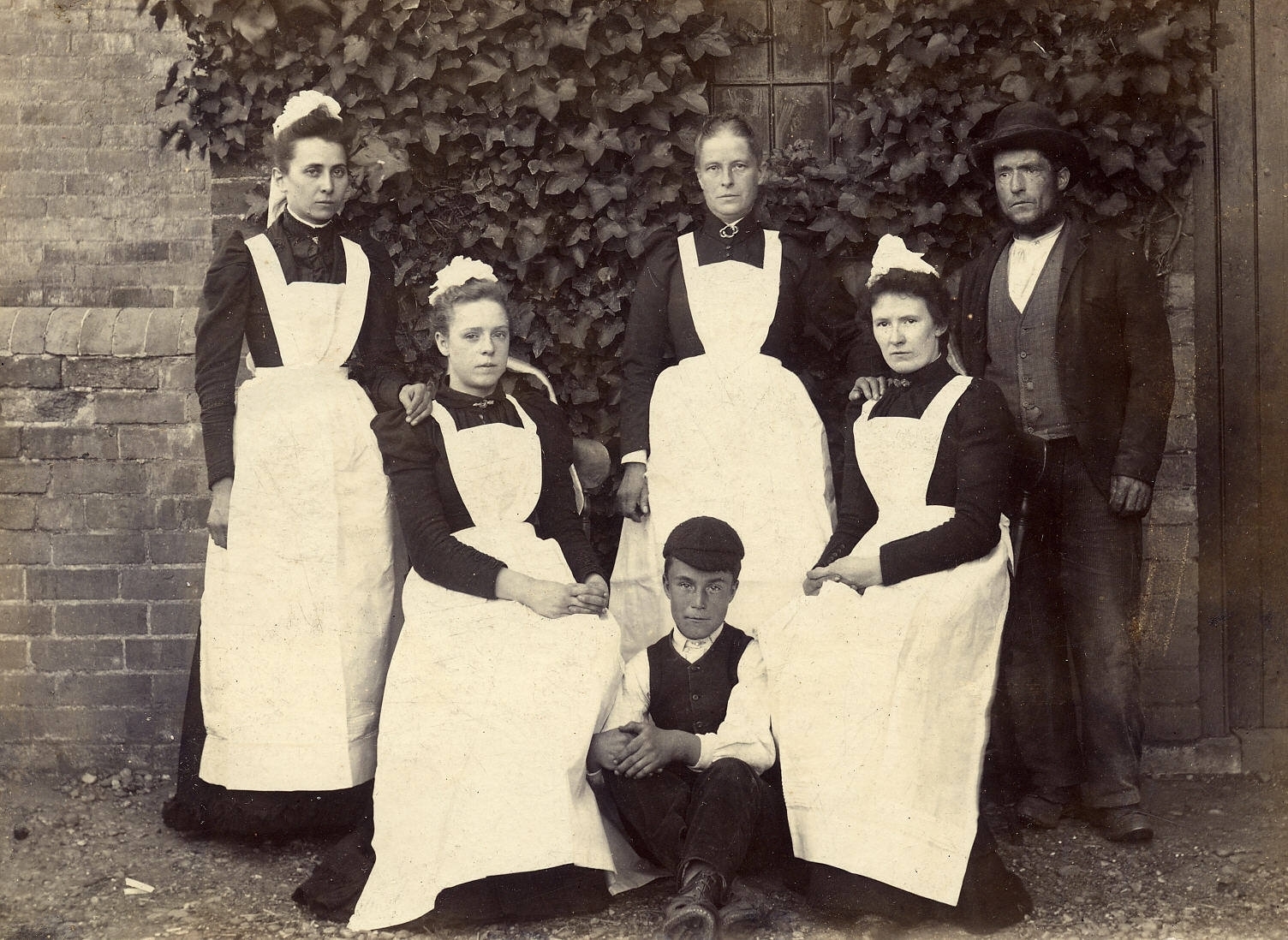
Most of us don’t have servants (indeed many of our ancestors were servants). So one thing we tend to not appreciate is their ubiquity. A maid could go anywhere without much comment. They saw things that “polite society” would miss. Rather useful for a spy, don’t you think?

Like poor Cecelia, ” The Curious Profession of Dr Craven” is back from the dead.

I’ve released a sweet regency romance, Miss DeVere Miss_devere_1 This is a fun read.

Frankenkitty is available.
Frankenkitty What happens when teenagers get to play with Dr Frankenstien’s lab notebooks, a few odd chemicals and a great big whopping coil? Mayhem, and possibly an invitation to the Transylvanian Neuroscience Summer School.

Get Free Stuff and try out my landing page. There are three free complete short stories (including an ARC for Frankenkitty) available after you’ve gone through the hoops.

Sunday Snippet, The Master.

A Formulaic Romance

This is the start of another story Amelia and I are putting together. There’s a pun in the title that will become obvious in time.

It starts with the trope, Lady Rachel on her way to London, is stranded in the country by an unfortunate accident. They’ve made their way to the house in the distance, but not without slipping in the muddy lane.

The Master was introduced in the last installment. He was somewhat annoyed at the disturbance, but willing to see that his guests were properly entertained.  The housekeeper, Mrs Hobbes, leads Rachel and Lucy to their rooms at the start of this snippet.

An Interruption, continued.


She led them upstairs, “Lady Hayforth, this is your room. I’ll tell the servants to send warm water up for you.”

Not many minutes later, with her face, arms, and hands, cleaned and her gown drying by the fire, Rachel smiled at her companion from a warm bundle of blankets. “I think we’ve landed on our feet.” She stretched her legs toward the fire, “At least the mud has washed off.”

“I don’t know Miss Rachel. This ‘Master’ seems to command almost oriental obedience from his servants.”

“And I don’t?”

Lucinda gave her mistress a playful tap on her shoulder. “You know what I mean.”

“I do, and believe me, I believe you’d walk into the flames for me. Still, Lucy, I can’t imagine inspiring such awe in you or any of my servants.”

“I just wish, Miss Rachel that we hadn’t broken down on the road. If it costs you your chance at a London season, that old carriage was a poor bargain.”

“What else could we have done, Lucy? There wasn’t enough of the needful in that legacy to be worth investing in any other way and we couldn’t waste it until we get to the City. It will work. I’ll find a stupid rich young man who is tolerable and break the entail. Or failing that support us in the manner to which we are accustomed, if not better.”

“If you say so Miss.”

“Lucinda, that I’ve never had much choice in the matter. Had my parents lived, they’d have sold me to the highest bidder. This way I get something of a say in who I marry. I intend to pick someone who is conformable to my wishes.”

“Yes, Miss. I still think this adventure is ill-fated.”

“Five hundred pounds in the four-percent’s would give me twenty pounds a year to live on. That’s barely enough to keep body and soul together, not enough to support a genteel life, let alone make me attractive to any sensible man. My, our, only hope is to find someone who thinks the manor is worth the cost of marrying me before the entail takes effect and we lose it. Failing that, at least some man I can tolerate, who isn’t too stupid, lazy or poor. And who, when he strays, is at least discreet about it.”

A loud knock on the door delayed Lucinda’s response. When she answered it, Mrs Hobbes entered, bearing a gown.

“Lady Hayforth. The cart that we sent for your baggage is stuck in the lane. Supper will be served within the hour.”

“Oh. My gown … not dry and we’ve only managed to scrape some of the mud from it. I can’t be seen in my stays.”

“I thought as much. This gown, if you would, it was my Mistress’s, and I’m sure she would lend it to you were she still with us.”

“Your mistress’s”

“The Master’s late mother. She was about your size, and if Miss Holloway would assist, we could fit you before your trunk arrives.”

“And in time for supper?”

“That too, My Lady.”

Between them, Mrs Hobbes and Lucinda had Rachel dressed in record time. The gown, while old-fashioned, was made of a fine blue silk. The colour complimented Rachel’s eyes, but when she looked at herself in the mirror, she said, “I wish I had the raven black or dashing auburn hair, this gown requires. Not this mousey brown.”

Mrs Hobbes stood back from her creation and said, “My Lady, I’d say it becomes you. My Mistress herself, before her illness, wore this gown to great effect.”

“Swain’s falling at her feet?”

Lucinda said, “Do be serious Miss Rachel.”

Mrs Hobbes attracted their attention, saying, “The Master does not like his supper delayed.” Then she pointed to the door, and added, “Shall we?”

The Master stood in the room, impatiently tapping his foot, and waiting for them when they arrived.  Having removed his goggles and the thick coat he wore in his laboratory, he was elegantly dressed.

He looked at Lady Hayforth in surprise, and said, “Mother?” before catching himself. There were no such things as ghosts, and in any case, his mother would never stoop to haunt her son’s home. It would have been so unbecoming and simply beneath her dignity. His late father, on the other hand would have enjoyed it, but then he would never have appeared as a female.


Happy Halloween.

The Art of Deception 37

The Art of Deception

or Pride and Extreme Prejudice

12241791_735836876546522_6197947469406170479_n

This week continues a spy story set in late Georgian England, the year before Trafalgar. Last time Alice was more or less “outed” by a friend from back home. Roderick acted in a less than gentlemanly manner. This week, Alice overreacts in a less than lady-like manner, using the skills she so painstakingly learned at Mrs Hudson’s academy.


Alice had little choice. Her gown was both too long and too clingy for a solid kick and a slap to the face was unsatisfactory, so she bunched one of her fives and smashed with all her weight into Roderick’s mid-riff. He toppled over with a satisfying, at least to her, crunch, and slid along the polished floor. She hurriedly whispered, “The lower garden, Avonside, tomorrow morning,” to Sally. Then she disappeared, weaving her way through the crowd with startling ease.

Sally said to Mr Mapleton, “The garden, Avonside? What could she ever mean by that?”

“I should think she desires us to meet her there in the morning.”

Mr Spode looked up from trying to aid his friend, and noted their conversation.

Now that you’ve read my hackery, please see the talented writers in Weekend Writing Warriors.


My apologies for creative punctuation.

Tempers are flaring in this and the last post.

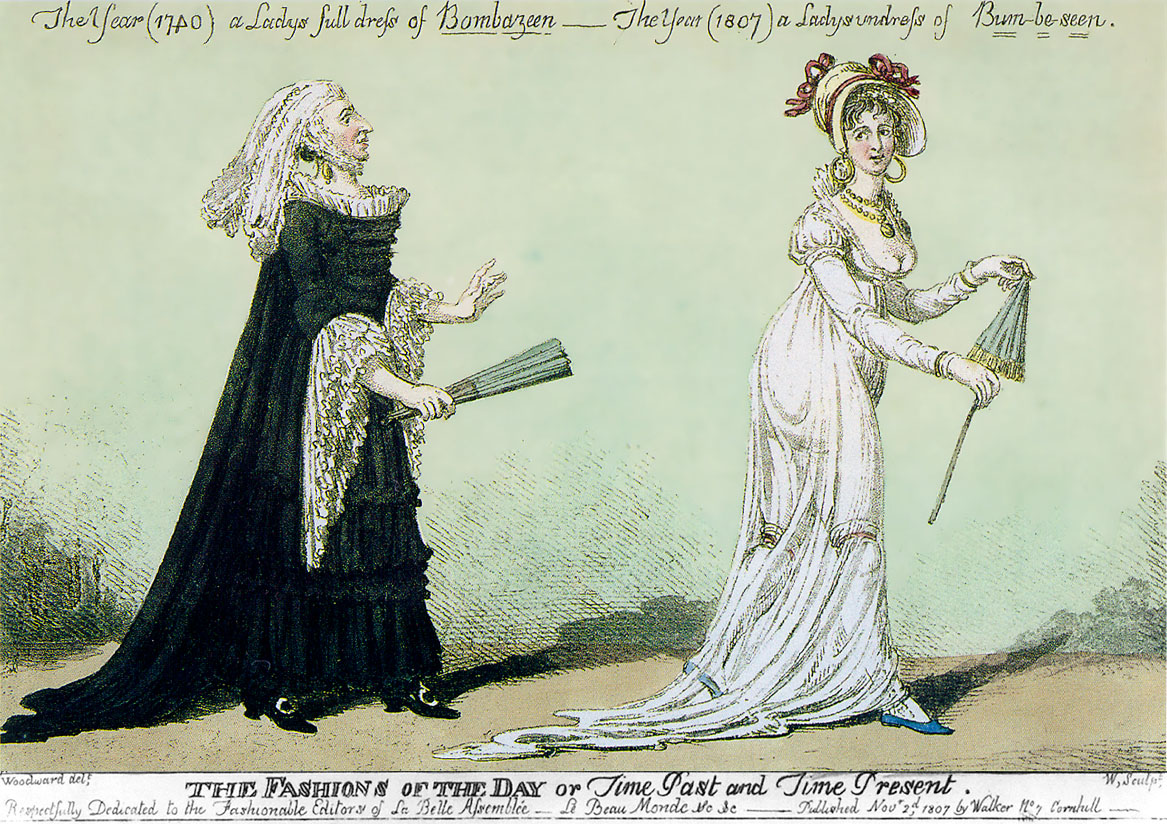
They’re not the only inflammable thing in the late Georgian/early Regency. The shift from wool, good domestic, “Make Britain Great Again” wool to imported cotton had consequences. One we forget about today, when nearly all cloth is treated to be flame-resistant, was fire. Getting rid of an interfering chaperone or mother-in-law, as Gilray suggests, is an added benefit.

There were others (at least if you were male).

1807-pseudo1740_Fashion-contrast_Bombazine-pun

Like poor Cecelia, ” The Curious Profession of Dr Craven” is back from the dead.

I’ve released a sweet regency romance, Miss DeVere Miss_devere_1 This is a fun read.

Frankenkitty is available.
Frankenkitty What happens when teenagers get to play with Dr Frankenstien’s lab notebooks, a few odd chemicals and a great big whopping coil? Mayhem, and possibly an invitation to the Transylvanian Neuroscience Summer School.

Get Free Stuff and try out my landing page. There are three free complete short stories (including an ARC for Frankenkitty) available after you’ve gone through the hoops.

Sunday Snippet, The Master.

A Formulaic Romance

This is the start of another story Amelia and I are putting together. There’s a pun in the title that will become obvious in time.

It starts with the trope, Lady Rachel on her way to London, is stranded in the country by an unfortunate accident. Her carriage is a wreck, the thoroughbrace, a leather strap that holds the cabin up, broke. When the cabin fell, it broke the axle. It’s snowing and they’re in trouble.

They’ve made their way to the house in the distance, but not without slipping in the muddy lane. At least it wasn’t full of “slough” – a wonderful and now disused word for that unique mixture of horse apples, mud, and muck that so characterized roads in the days before the automobile.

This week we see what ‘the Master’ says.

An Interruption, continued.


A knock on the laboratory door interrupted Rupert’s intense concentration on his latest experiment, electrolysing a molten salt to determine what metal he could recover.  He had opened the windows in the laboratory to disperse the thick yellow gas that rose from one electrode, and a cold wind blew through the room. The thick coat he wore, because of the cold, concealed a wiry yet muscular frame. Striking blonde streaks in his dark hair showed where the caustic fumes had partially bleached it. The fumes had also bleached his face, giving him a ghastly white pallor. He wore goggles to protect his eyes. Without looking away from his apparatus, he said, “Brindle, what is it. This time?”

“Sir, there are two women at the front door. They asked for refuge from the storm, their carriage having had an accident on the main road.”

“I told you my opinion about visitors. Send them away.”

“One of them is uncommonly pretty, sir. She would be a diversion.”

“I don’t want to be diverted, but,” he paused, “Are they suitable company?”

“One claims to be Lady Hayforth, the other her maid. They are young.”

“Suggesting something again, Brindle?”

“I wouldn’t take that liberty, Sir. Still, may I remind you about the entail?”

“Yes, I know, I shall marry, sometime, if I ever meet the right woman.” Rupert shrugged, “Which seems rather unlikely. My experiment is at a critical stage. Ensure that they are warm and send someone for their bags. I’ll be ready at the regular time for supper.”

“Sir.” Mr Edward Brindle bowed. Then he shuffled off.


Rupert is doing an experiment that is dangerous (an understatement). Electrolysing a molten salt to extract the metal. Chemistry in the early 1800’s was decidedly heroic. The 1803 paper in the Royal Academy on synthesizing mercury fulminate – an explosive that will enter into this work – had the chemist analyzing his product by tasting it. There is no way on heaven, Earth or hell that I would do that.

The Art of Deception 36

The Art of Deception

or Pride and Extreme Prejudice

12241791_735836876546522_6197947469406170479_n

This week continues a spy story set in late Georgian England, the year before Trafalgar. Last week, after Alice was unable to worm anything interesting out of General Dumouriez, disaster struck. Her best friend from Easterly and her fiance – the real Mr Mapleton – corner her at the assembly. Alice tries, and fails, to bluff this one out.


“Do I know you?”

“I should hope so; um… Mr Mapleton and I… well, we’re engaged.”

“Goody for you, still Miss, what was your name?”

“Miss Willis, Miss Elizabeth Willis, your friend Sally.”

Roderick made his presence known, “Miss Mapleton, would you introduce me to your friends?”

“Miss Mapleton,” Sally’s fiancé spat, “Miss Mapleton, what Miss Mapleton, she’s Miss Alice Green; dashed unfriendly, considering we were almost.”

Sally nudged him in the ribs, “You weren’t, and please have some consideration for my feelings.”

“Got you,” Roderick shouted, “Edward, I’ve got her; I knew she was an imposter.” The queue for supper stopped and everyone stared at him, and her – it seemed as if accusing faces filled the room.

Now that you’ve read my hackery, please see the talented writers in Weekend Writing Warriors.


My apologies for creative punctuation.

Roderick is being a bit of a “puppy” here. I can’t completely blame him because Alice has lead him on a merry chase. The action in Bath is almost complete, setting up a surprise for when it resumes in “Part Trois.”

Puppy is an interesting insult. To call a man a puppy was to use fighting words. Why was that?

dsc_0227

Inquiring minds want to know – what’s wrong with being a puppy?

From the 1811 “Dictionary of the vulgar tongue” Complied originally by Captain Grose and now considerably altered and enlarged, with the modern changes and improvements, by a member of The Whip Club. Assisted by Hell-Fire Dick, and James Gordon, Esqrs. of Cambridge; and William Soames, Esq. of the Hon. Society of Newman’s Hotel. Mr Soames, Esq. was most likely an actor.

DOG LATIN. Barbarous Latin, such as was formerly used
  by the lawyers in their pleadings.
DOGGESS, DOG'S WIFE or LADY, PUPPY'S MAMMA.
  Jocular ways of calling a woman a bitch.
PUPPY. An affected or conceited coxcomb.

Evidently dogs weren’t as popular as today. It adds a layer of complexity to the rather interesting dandy known as “Poodle Bynge.”

Like poor Cecelia, ” The Curious Profession of Dr Craven” is back from the dead.

I’ve released a sweet regency romance, Miss DeVere Miss_devere_1 This is a fun read.

Frankenkitty is available.
Frankenkitty What happens when teenagers get to play with Dr Frankenstien’s lab notebooks, a few odd chemicals and a great big whopping coil? Mayhem, and possibly an invitation to the Transylvanian Neuroscience Summer School.

Get Free Stuff and try out my landing page. There are three free complete short stories (including an ARC for Frankenkitty) available after you’ve gone through the hoops.

We’re back, baby.

Like poor Cecelia, “The Curious Profession of Dr Craven” is back from the dead. It’s been edited, to catch some annoying and very minor errors, though not to remove either occurrence of “get over it” which according to Google n-gram viewer was used in the Regency in much the same way as it is today. (I take comments seriously. I rechecked because it is important to me to be correct, and I checked the usage in the books it summarized.) Literally, “literally” is another phrase that was used in the modern somewhat ironic sense – even in the 18th century. Pope waxed wroth about it, though to quote Marx, why does Roth need waxed?

“Nice” is one word that you have to watch. It can mean nice in the sense of pleasant or good, but it can also mean somewhat common or nasty. (e.g. “That’s a nice kettle of fish you’ve got us into” from Laurel and Hardy.)

On the other hand I did remove “washout” which is a relatively modern term. Personally, the most annoying little error was the shift from “Dr.” to “Dr” in the latest British usage. I also caught a few excess uses of the passive voice. Editing truly is never finished. As a self-pub’ed author I can make changes to fix these little uglies.

Here’s the start of chapter 2. Up until it gets about as hot as Amelia and I usually write. Chapter 1 can be found here.

Alive, Maybe.

The sun shining through the window woke Cecelia. She sat up in her bed with a start and examined the room. The bed curtains had been pulled back so she could see the tattered wallpaper and small fireplace across the room. The low cooing of a wood pigeon could be heard through the glass of the window. Her head swam for a moment. Then she searched the place. It wasn’t her bedroom. A maid was drowsing in a chair by the fire.

“Miss, where am I?”

“You’re in Dr Richard Craven’s house, Miss.” The maid rose, curtsied, and rang the bell. Then she continued, “Is there anything you need?”

“Who are you?”

“My name’s Mary, Miss. Would it be too much to ask yours?”

Panic gripped Cecelia. “I am,” she paused, “I don’t know!”

“There, there, Miss. The doctor will know what to do for you.”

“The doctor? How did I get here?”

“’Tis best he tells you, Miss.”

“Mary.”

“Yes, Miss?”

“Am I alive?”

“Yes, Miss you are. We’re in my master’s house at Streatham, England. It looks to be a lovely summer day.”

“It’s just, I remember, I remember dimly. It’s so strange.”

“Wait for Dr Craven, Miss. He’ll answer that.”

A few moments later, Dr Craven dashed into the room. He was a tall, well-formed man with dark hair. Despite his youth, a widower. Close behind him came two young children, his exuberant four-year-old twins. While he stood in the door, they rushed past him and jumped into the bed with her. Their governess, Miss Grimstock, a severe, somewhat older-looking woman was beginning the long slow decline into spinsterhood. She puffed from her exertion as she caught up with them.

“Thomas, Mariah, please come here. Let your father do his work.”

They replied in unison, “No.”

“Please let them stay. They’re so lovely. I’m sure I’m in Heaven with cherubs.”

“Further acquaintance with them will convince you otherwise. Children, please do as Miss Grimstock requests.”

“Daddy?”

He frowned at them and then added, “I must check on our guest. If she’s well enough, I’m sure you can return.”

The children dejectedly left the bed and returned to their governess.

Dr Craven strode to Cecelia, “How are we feeling?”

“Completely lost, sir. Where am I?”

“My house in Streatham. I am Dr Richard Craven. The question is, who are you?”

“I wish I knew. What happened to me?”

Dr Craven paused, considering whether telling the young woman the truth would do more harm than good. Finally, he made up his mind. “What do you remember?”

“Almost nothing. You. I distinctly remember you. I woke up on a table last night. It was after a long nightmare, and you were there.”

“Do you remember anything else?”

“No. It’s all gone.” She paused, “There’s a bit more. I was in this dark place where no one could hear me. I tried to kick or pound with my fists. Nothing happened. I could barely move.” She shook her head in disbelief and continued, “What happened to me?”

“I’m not sure. I was going to study you, but now I suppose I’ll try to cure you.”

“Study me? What do you mean by that?”

“I’m not just a country doctor, Miss. I study how the body is put together.”

“You’re an anatomist?”

He paused, “Yes.”

“You were going to anatomize me!”

He nodded. She backed away from him gathering herself into farthest corner of her bed.

“We, I…It wouldn’t have mattered were you dead. I’m working to prevent death, and sometimes that means anatomizing bodies.”

“Including me?”

“Had you been dead, yes. But you weren’t, and I’m glad of it. Though it does mean, I’m going to have to find another body.”

She glared at him, “You bought my body, didn’t you?”

“Yes. If I hadn’t, you would have died, for real. Instead, here you are, alive.”

Cecelia felt faint, then in her anger, recovered. “You’re an evil man.”

“No. I’m a natural philosopher, and a doctor. I do my best, my tiny mite, to cure people.”

Panic gripped Cecelia again, “What are you going to do with me?”

Trying to reassure her of his intentions, Dr Craven smiled. “I’m going to examine you. If you’ll let me. Then we’ll decide what to do with you.”

“Examine me?”

“You must have been gravely ill for your family to have buried you. I should like to see if you have recovered, before we,” He paused, “proceed.”

Mary was about to leave. Dr Craven requested that she remain. Then he walked over and shut the door. After that, he washed his hands in the basin, thoroughly with soap.

Cecelia looked at him, disgusted, “Why are you doing that? Washing your hands of your guilt, like Pontius Pilate?”

“No. It’s an experiment. To see if there isn’t something on our skin that can carry illness.”

“They looked clean to me.”

“And to me, Miss. The thing that carries illness, whatever it is, it is too small for us to see.”

“What next?”

“I shall need to listen to your heart and your lungs.”

“What?”

“That’s why I’ve asked Mary to stay. I’m afraid it means I need to put my ear on your chest.”

“My chest? You mean…”

“I mean without anything in the way. Mary will ensure that I obey all the norms of propriety.”

On Poodle Byng. #regency #amwriting

Frederick Gerald Finch Byng (AKA Poodle) makes an appearance in two books I’m working on. I’m searching for a publisher for, The art of deception, and the other, A formulaic romance, is nearing a complete first draft.

PastedGraphic1-2013-02-14-07-50
It’s sort of fun to search for historical information about him. There are three different stories about how he got the sobriquet Poodle. The most likely one is that Georgiana the Duchess of Devonshire gave it to him when he was courting her. Given what I can find about his character, he probably was a very dogged suitor and sat there like an expectant puppy. He treated the name with good humour and went everywhere with a dog. Unfortunately the dog’s name is lost to history, and the one drawing I’ve found doesn’t look like a poodle.

He worked for the foreign office, and after the deaths of his daughters became very interested in sewers. (He was actually a member of the Westminster Commission of Sewers.) My guess is that they died from a water-borne illness.

He seduced, made pregnant, and then (after she survived childbirth) married Catherine Neville. Catherine was his mother’s maid. She was not liked by London society. In fact, it was referred to as his great sacrifice. This makes it very difficult to find much about her. Although apparently she and Poodle were a good match. Both were prone to say inappropriate things at awkward times. It’s just that as a nobleman he was forgiven.

It was only London “high” society that shunned her. There are references to her and him visiting Paris and being entertained by French nobility. (Of course you can never tell with these foreigners ;-> ) They gave small dinner parties for friends, most of whom were members of society. Thomas Creevey says in his memoir that he could not give countenance to “such tits”, but went along for the company.

Occasionally you’ll find a reference to “a daughter who died soon after they were married.” Actually there were two, Elizabeth (1817-1827) and Frederica (1819-1831).

A Formulaic Romance, Chapter 6. #amwriting #wip #romancenovel #fridayreads

When Mr Oliver or Harding or whatever tries to confuse things, Rachel discovers that George is something more than he lets on. He’s not just a flighty social butterfly who escorts diplomatic visitors and keeps them out of trouble in the London gaming hells and associated fleshpots.

It continues from the previous chapter, or you can start from the beginning.

My co-author Amelia and I often put the beginnings of books on my, now our, blog. They don’t always make it to the end, but it’s helpful for our writing. This is another Regency Romance. This time without grave robbing or financial dealing and legal chicanery.

We’ve been working hard to write from Rachel’s viewpoint. It’s an interesting exercise.

Mostly about a Notebook, that and Pontefract.


That morning, Lady Beddlington requested her son’s company while she drank her chocolate in her room, prior to emerging from her lair.

Sitting stiffly upright in her bed she asked him, after he gave her a dutiful son’s peck on the cheek, “What can you tell me about this Lady Hayforth?”

“Not much, she was on her way to London, to stay with Lord Bromley … To try her hand at the marriage market. Carriage broke down outside of Rupert’s pile.”

“An adventuress?”

“I don’t think so. Not if she’s Bromley’s cousin … he’s a stiff-rumped fellow of the first rank. Couldn’t be, at least not more of an adventuress than any other unmarried woman in search of a husband.”

“I doubt that.”

“Well … Mother she has behaved with grace, good manners, and genteel conduct. I gather Rupert’s proposal came as something of a surprise to her, but I think it will be the making of the two of them.”

Lady Beddlington studied the faded wallpaper in her room while she tried to remember the Hayforth’s. Eventually she said, “I place her, not her, but her family, now. Her father tried to keep up with Brummel and that set. Run of his legs.”

“When was that?”

“Years ago. You were still in school. It was the talk of the ton. She’s a queer one, George, dashed smoky.”

“I don’t know Mother. She seems pleasant enough. Not at all what I’d expect for an avaricious ladybird.”

“As if you would know.”

“I haven’t lived a completely sheltered life. Until I met Miss Deacon, I carefully avoided the Parson’s trap … which I assure you was laid for me by many an ambitious mother, baited with her desirable miss.”

“I must admit, George, that I find it most reassuring that you are engaged to Charity and out of this harpy’s reach. Poor Rupert. We shall just have to see what we can do.”

“Mother, I’m not…”

“Nonsense. Time that I finished my morning toilette. Would you send Graves in?”

“All I will say, Mother, is that Lady Hayforth is a pleasing and rational young lady with excellent manners.”

“Right, next you’ll tell me about a new patent to make purses from sow’s ears. Where’s Graves?”

George, still unconvinced, nodded his agreement. He also made sure to shut the door before he sighed in relief.

Miss Graves was waiting outside the door. “How is she?”

“Irritable … still upset that old Gas is donning leg shackles. Shame, because it’s the best thing he could do. It’s made him almost human.”

Miss Graves nodded, “I wish I understood My Lady. Trying to keep poor Lord Hartshorne from marrying. It’s a shame and so beneath her.” Confidences over, she curtsied to George and entered the room.

George shrugged and started down the hallway towards the stairs. He didn’t get far. “My dear Lady Hayforth, you look positively radiant this morning.”

Rachel blushed, “Oh stop it. I don’t hold a candle to the sun of Miss Deacon, and you know it.”

“If you’d rather, I could say you look worn and exhausted … positively haggish.”

“That’s not true either.”

“No. But you are looking in good health. One of the prettier sights I’ve seen so far this day.”

“Thank you, but I’m certain Charity would disagree.”

A door opened behind them and Charity asked, “I’d disagree with what, Rachel?”

“Lord Beddlington’s been telling me sweet lies. Ones he should tell you.” Though not lies, you’re so tall, so beautiful. I don’t compare.

“George, stop flirting… so unseemly. I’d like to breakfast and then we should review your Greek. No point in learning Hebrew if your Greek is lacking.”

George smiled at her, and then at Rachel, “See, I told you she wanted to improve my mind.”

They were sitting at the breakfast table, with Charity questioning George on his Greek declensions when Rupert burst in. “It’s missing!”

“What’s missing?”

“That volume, volume nine, from my notes.”

Rachel said, “That’s what I told you.”

“I know, but I thought it was just misplaced. It’s gone. Nowhere.”

George, glad for a diversion from endless arcane variations of difficult words, asked “Did you check your workshop?”

“Of course. Everywhere.”

“What was in it?”

“Things. I shouldn’t say more.”

Rachel said, “Those things you worked on during the war?”

Rupert nodded.

She continued, “I think we have a problem. George, you might want to send an express to your friend Poodle, or did I get the name wrong?”

“No. Poodle’s the fellow.  There’re some dashed odd characters associated with the F.O. It’s either him or ah, Lord Grey. Maybe both.” He rose and bowed to Charity, “You’ll have to excuse me, my love. The Greek verbs can wait.” He chuckled, “They’ve been waiting for me all these years, so what’s a few more hours?” With that he left for the library.

Rupert watched him go. “I don’t know what else. It couldn’t have been that Mr Oliver. I mean he was with General Byng.”

“Who else?” Rachel said, “Either him or one of the soldiers. I doubt most of the soldiers could read.”

“But?”

“I think we should do our patriotic duty and pay a visit to General Byng’s camp. Show we support our gallant Hussars … and ask a few discrete questions.”

Rupert smiled, “Show there are no hard feelings?”

“And inquire after poor Lewis. With that hand and all. You did warn him.”

Bowing, Rupert replied, “That’s true. I’ll see if my Uncle needs my help.”

After he left, Charity asked Rachel, “Why is Rupert being so mysterious?”

“He made explosives, fulminating compounds is what he called them, during the war.  I’d bet a farthing to a pony that the missing notebook is the one where he kept his notes.”

“Oh.” Charity felt faint, “His work could be dangerous?”

“Exciting. Though I’m surprised about his notebook. If it’s so secret why did he have a copy here?”

“I’m sure he had good reason.”

****

Once the carriage pulled up in front of the Hall, Rupert remembered that his workshop needed his attentions. “Sorry, George, but it’s a total wreck. I daren’t let Brindle or the servants in – they could hurt themselves. Do you mind going without me?”

George replied, “Coward.”

Rupert smiled in his embarrassment. “Let’s just say I’m glad to be shot of Camp Hill. It was hard enough to get away from it yesterday. I’m not sure I’d like to return.”

Rachel said, “He has a point, Ge-,” seeing Charity frown, she continued, “Lord Beddlington. It must have been worrying.”

Charity added, “I’m feeling a bit tired, George my love. Do you mind if I stay?”

“No, I suppose not, it’s just I’d thought, well maybe, you’d have enjoyed a ride with me … and Lady Hayforth.”

“I would, but not today. I’ll keep your nephew out of trouble.”

So without much further discussion, the carriage, bearing George, Rachel, and of course – for proprieties sake, Miss Holloway, sped off for General Byng’s camp. It was just this side of Pontefract, an easy five mile ride.

George stretched back in his seat, evidently enjoying the space. Rachel asked, “What should we expect?”

“In Pontefract or General Byng’s camp?”

“Either.”

“The town’s a little market. Used to be an important place, back in the day. Parliament and Cromwell saw that it would stay a minor town.”

“I see.”

“They grow liquorice if that helps.”

Rachel smiled, “I suppose it might. And the camp?”

“A yes. That’s different. Tents, soldiers and officers.”

“Officers?” Lucy asked. “Handsome ones?”

“Yes Miss Holloway. What did you expect?”

“Handsome officers,” Lucy muttered to herself. “I wonder.”

Rachel gave her a friendly push, “After I’m married, Lucy. For now, I still need a companion.”

****

General Sir John Byng stared at this interloper. “Lord Beddlington. Why should I search Mr Oliver and his rooms for this book?”

“Because I’m asking you nicely.”

“That’s not a sufficient reason.”

“I thought as much.” George calmly turned to Rachel and Lucinda, “I’m afraid I shall have to ask you to leave.” He nodded to the General’s secretary, “Unless you are cleared, you as well.”

Rachel gasped, “You’re not going to fight?”

“Oh, no, not at all.” George laughed, “It’s just, um, you see … I can’t show it to you. Please do as I say, and it won’t be long.”

General Byng continued his hard stare, “You’re one of those ‘funnies’ aren’t you? I don’t approve of the funnies. Caused no end of trouble for us real soldiers.”

“Let’s say, I work with the F.O. shepherding dodgy diplomats around the village. Not really one of the funnies, but I know my share of them.”

“You can document this?”

“But of course, my dear general.” He bowed to Rachel and Lucinda, “Now if you’d leave us.”

The guards pulled the flap away when Rachel and Lucinda walked out. They stood there blinking in the bright daylight.

“Rachel,” Lucy said, “Isn’t that Mr Oliver?”

The man in question strode towards them and said, “Lady Hayforth, what brings you to Pontefract? To see the castle Pomfret where good King Richard was murdered or is it to shop in the market?”

“Neither. Lord Beddlington thought it would be good of us to show our support for the soldiers with a visit to their camp. He’s inside arranging the details of a tour with General Byng. We felt we needed some air.”

“Indeed.” Mr Oliver went a shade of puce, then paled to a decidedly grey colour. “Give him my regards.” He turned and hurried away.

Lucy said, “Odd that.”

“Yes.” Dashed odd. He’s worried. Why?

The presence of two young women outside of the General’s tent quickly drew attention. Lucy was chatting with a decidedly good-looking young lieutenant while another, equally gallant and possibly more dashing, tried to attach Rachel’s attentions. He pointed out that there was another ball in a couple of weeks.

“Could I have the honour of a dance?”

“Maybe, but I hope to be in London by then.”

“London, Ma’am? What could London offer that we don’t have here?”

Culture and society, not to mention skilful dancing and men who didn’t stink of horses, “I don’t know, but those are my plans.”

“Is there nothing that would dissuade you?”

“I’m sorry, but I promised my cousins that I’d visit.”

“Lucky cousins, to have such a.”  He stopped and saluted. General Byng and Lord Beddlington emerged from the tent. His friend, who had been chatting to Miss Holloway, was not as observant. He drew a sharp reprimand and the night watch for a week.

George said, “Lady Hayforth, Miss Holloway, if you’ll accompany us?”

General Byng glared at him, but mindful of George’s credentials kept quiet.

“Do you need us?”

“No, but I would feel better were you not far away. Mr Oliver or Harding is a slippery customer.”

“Then,” Rachel curtsied, “It will be my pleasure to accompany you.”

****

George, Lucy and Rachel rode back to the Hall in silence. Mr Harding or Oliver or Jones wasn’t in the camp, and if he had the notebook he’d cached it well. It wasn’t in his tent.

Rachel watched the country slide by as the horses pulled their carriage. She turned back and said, “Well, I hope that’s the last we see of him.”

George replied, “Pity about that notebook. Wonder if one of the soldiers took it after all.”

“I’m sure he has it. Never loses anything that’s to his advantage. Do you remember Lucy, when he turned up at the solicitors, during probate?”

Lucy nodded, “All those bills. You almost had to sell the hall to meet them.”

George’s eyebrow raised, “Indeed. That’s interesting.”

“Interesting to you, Lord Beddlington. A disaster for us.”

“No, not what I meant. I’ve seen this fellow before, or at least heard of him. … I mean from before the last few days. Dashed if I can remember where.”

“Well, for me, I still hope that’s the last we see of him.”

The carriage pulled up near the front of the Hall. A pair of footmen promptly appeared and helped them alight.

George stretched in the fading afternoon light, “Good to be back. Have to see about getting you to London, and what my dear Mater’s plans are. Maybe you can ride with her. It might help things if she gets to know you better.”

Rachel replied, “I’m not sure of that. She disapproves of me, on principle. Thinks I’m taking advantage of Rupert. She almost called me an adventuress to my face. Who knows what she’s said behind my back.”

“Yes … well … you know, she’s sort of, um, stuck in her ways. Pity, but that’s how it is. You’ll have to charm her. I mean she’s Gas’s grandmother.”

“Lord Hartshorne, Rupert’s step-grandmother. I’ll do my best.”

“Good girl. Gas is getting a good bargain. I must admit my suggestion has proven fortuitous.”

“Please remember that my fiancé doesn’t like that nickname.”

“But I do. There’s that, you know.”

An unpleasantly familiar voice met them as they approached the parlour. George stopped and quieted Rachel. He whispered, “Listen.”

Lady Beddlington said, “Mr Oliver, thank you. We’ve been looking all over for that book. My grandson will be ever so pleased that you found it.”

“One of the men took it. I’m simply happy to be the agent of its return.”

“And that other thing, those papers of yours, they will be most useful.”

“Glad to be of service.” The sound of chairs scraping along the floor echoed from the room. Evidently Mr Oliver rose and bowed to Lady Beddlington.

George pulled Lucy and Rachel into the library, with a whisper, “Best if we’re not seen.” They watched while Mr Oliver whistled his way to the front door, and then strode towards the stables.

“Pleased with himself, isn’t he?”

“I’d say so.” George replied, “Wonder what mischief he’s done?”

Rachel said, “Who knows.”

George shrugged, “Must see how Mother is, and then you should find Gas. I hope Charity has recovered.”

“Yes, Charity.” Rachel replied, in a curiously toneless voice.

“Once more into the breech dear friends.” George led the way to the parlour.

Inside Lady Beddlington greeted them with a smile. A knowing smile that seemed almost a leer to Rachel. “You just missed a visit from an excellent young man. A Mr Oliver.”

“We did Mother?”

“Yes. He was returning that missing notebook of Lord Hartshorne’s. One of the soldiers had taken it.”

George hurriedly asked, “May I see it?”

Lady Beddlington pointed to a bound volume on the table. “If you insist.”

Hastily picking it up, George quickly flipped through the pages. His mother continued, “I didn’t know you were interested in chemistry, George.”

“I’m not particularly, but this book interests me.”

“Why?”

“That would be telling. Let’s just say I’ve acquired a recent interest in natural philosophy.” He snapped the book shut and stared at the ceiling for a moment. “Interesting, dashed odd, but interesting.” Then he slipped the book into the shelves with the other laboratory notebooks.

“George,” Rachel started to say, then seeing his mother glare at her, “Lord Beddlington, what’s interesting?”

“Must find Gas. I mean Rupert. See that he’s keeping out of trouble.” George bowed to Lady Beddlington, and then to Rachel. She didn’t take his hint and followed him out of the room.

Once out of immediate earshot, Rachel asked, “George, what was in the book?”

“Nothing.”

“What do you mean by that?”

“Exactly what I said. It was blank. Other than the first few pages. Something tells me Rupert wouldn’t have left it that way. I think it’s a fake or a copy.”

“Surely, Mr Oliver would know that it would eventually be opened.”

“He was gambling on that being well after he had left, or that he’d have the time to copy it out. We interrupted him.” George smiled at the thought then laughed as he said. “Shall we find the light of my life, my Charity?”

****

Having knocked on Rupert’s workshop without success, George found Mr Brindle, “Ah Edward, have you seen Miss Deacon?”

Austere at the informality and disapproving of the intelligence he had to bring, Mr Brindle’s frown deepened when he replied, “Lord Beddlington.”

“George.”

“Lord Beddlington, Miss Deacon and the Master have gone for a walk on the downs. I believe they are hunting Lepidoptera. At least, they had nets and collecting box.”

“Sounds a wholesome activity. It sounds like Gas is taking after his parents after all.”

“It was not clear that they were chaperoned.”

George cocked an eyebrow, “I shouldn’t worry about that. Charity’s a rock. Trust her with my life, you know.”

Mr Brindle’s expression indicated he thought that might be a misplaced trust, but as a well-trained servant he kept his opinions to himself.

George continued, addressing Rachel, “Ma’am” he bowed, “Perhaps you and Miss Holloway would care to find his Lordship. I, on the other hand, am dreadfully tired. Need to write a missive to my friends in London. Let them know the good news.”

“If you’re taking your letter to the post, I should write to my cousin once more. To let him know I’m still on my way.”

“Yes … there is that. I was thinking of a faster, somewhat more expensive missive.” He gave her a smile, “More than a shilling a sheet, if you must know.”

“Oh. That. I’m sorry, must seem so very dense.”

Mr Brindle coughed, “Ma’am, I shall have a page carry your letter to the village for posting.”

Rachel smiled at him, “Thank you Brindle.”

****

Rupert came bouncing back with Charity in tow. Rachel looked up from the desk where she struggled with the letter. “My Dear Lord Bromley,” was about as far as she had written. There’s so much I could say, and so little I can.

“Good hunting Rupert?”

“Yes, for Charity – a blue skipper and others. Did you have luck?”

“Not directly. Mr Oliver brought back your missing notebook.”

“He did?”

“George said it was interesting because it was mostly blank.”

“What! Are you sure?”

“It’s in the library. George too, unless he finished his express.”

“Excuse me,” Rupert gave the two women a quick bow and ran.

Charity remained, standing. “I think you are so lucky Rachel. So lucky with Lord Hartshorne. I mean, to be engaged to him.”

Rachel smiled at her. “Yes, I suppose I am. George, your George is no mean bit either. You could do far worse and not much better.”

“I wish he were more serious, cultured.”

“That frippery manner conceals a good mind and a sound heart. I’m sure he’ll settle down with matrimony.”

“His mother thinks he’s a bit of a fool and needs a strong hand guiding him.”

“That, I can assure you, isn’t at all true. It’s an act, an affectation.”

Charity blinked in confusion, then changed the subject. “Did you know Mr Oliver called while you were out?”

“We saw him.”

“He was closeted with Lady Beddlington for ever so long. They were talking when we, Rupert and I, left to look for butterflies.”

“I know.”

“He said something, I didn’t hear it all, about documents and you.”

“The man’s a forger and a villain. He drove my father into deep water, far over his head.” Rachel paused, “In a way I owe him thanks. Wouldn’t have met Rupert otherwise.”

“It sounded as if Lady Beddlington was pleased with what she heard.”

Rachel sighed, “Why am I not surprised? She thinks I’m an adventuress … out to steal Rupert’s fortune.”

“Weren’t you searching for a husband?”

“Yes, but there’s a difference between that and being an adventuress.”

****

After dinner, after port and snuff, and when the men had finally joined the ladies in the drawing room, George attracted Charity’s attention. “It’s a fine night, Miss Deacon. Why don’t you show me the stars? You were saying you needed to improve my mind.”

“If you’d like.”

“I’d best take advantage of the chance. I’m afraid I must run off to the village in the morning.”

“London?” Rachel asked, “Why?”

“With the end of the war, the expresses don’t run this far. Not regularly in any case. They’ve let themselves go slack.”

“But?” Charity said, “Why do you have to do it?”

“A matter has arisen, an old but in a way still very pressing matter, and I need to, ah … an old friend about it.”

Rachel, all ears, said, “Is this that Lord Grey you mentioned?”

“Maybe,” He flashed her a smile, “Then maybe not. I’ll either be back or Old Gas can see you into town himself.”

“Here,” Rupert objected, “I’m not sure I like this. Me in charge of Lady Beddlington.”

“More likely you in her charge. Charity,” he offered his arm, “The stars are out and it’s a surprisingly clement evening.”

Charity glanced around, “We’ll need a chaperon, Rupert?”

Lucy rose, “Miss Deacon, I’d be glad to see the stars. His lordship should pay attention to my mistress.”

“Yes he should,” Rachel laughed, “Would you care to see the stars too, Lord Hartshorne?”