Castle Combe Ring Walk

This is a seven and a bit mile (12.2 km) walk around Castle Combe. I’ll talk more about public footpaths later, but this shows what you can do easily.

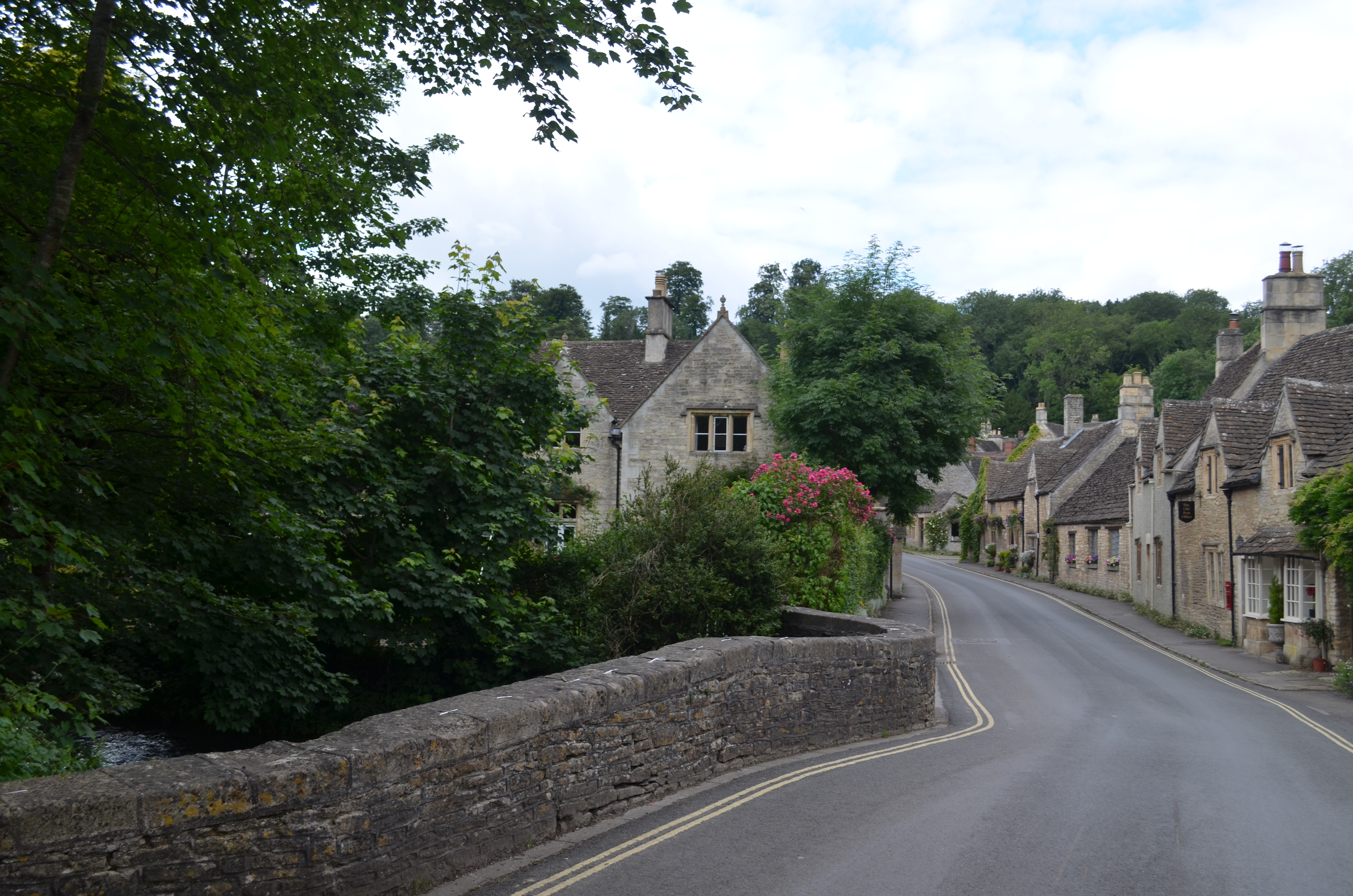
Castle Combe itself
Castle Combe itself

We actually stayed out of the little village, having seen it before. The walk takes a break at the White Hart about halfway there. A nice pub.

IMGP4128

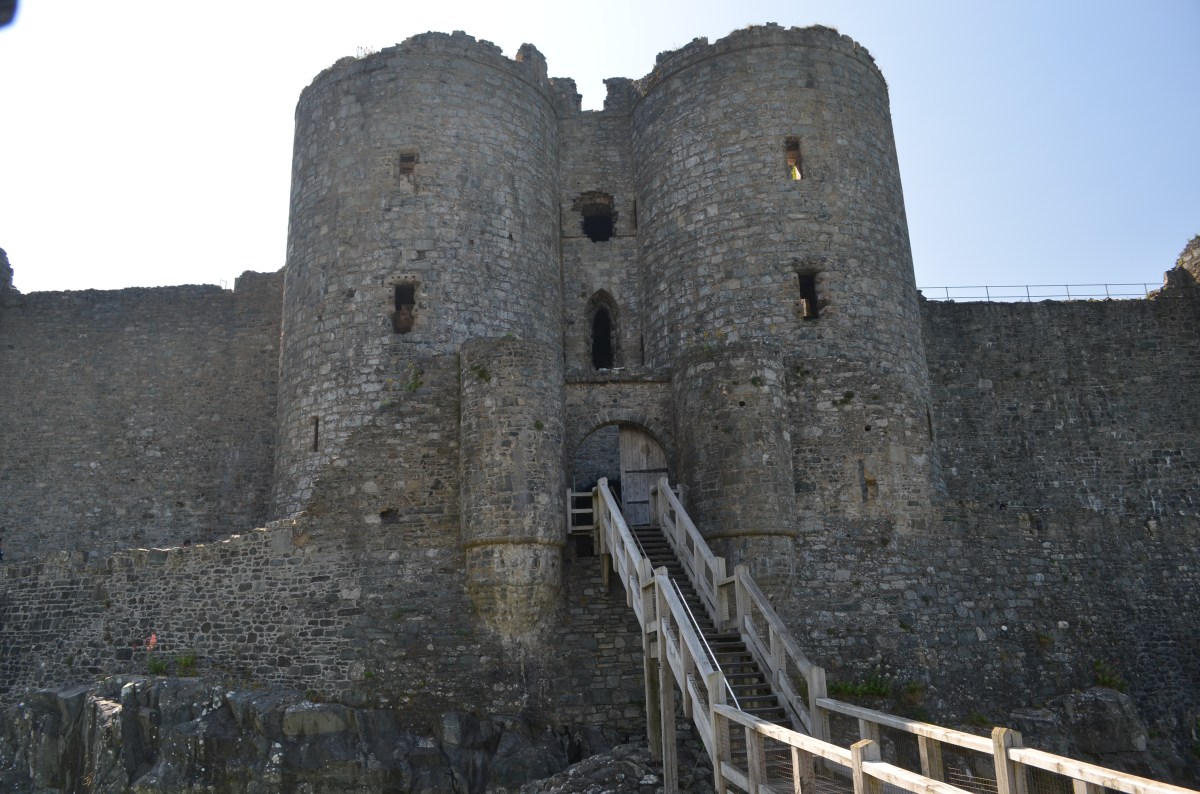
It follows a number of ancient sunken roads.

IMGP4135

You also get exposed to English farm animals in all their glory and their, ahem, ambiance.

DSC_0791

Lord Emsworth would be pleased.

A Yank’s Guide to the UK, Part 1.

Having invaded the UK this July 4th, I thought I’d post on some of the things that make our motherland, albeit the one we stormed away from different from the USA. Also I’ll give some practical tips. Right now I should add a disclaimer. I’m not responsible for the consequences if you follow them. I repeat, you’re on your own.

This post is about driving.

They drive on the other side of the road. The left, those socialist commies, the left I tell you. Sorry I was channeling my “inner republican.”

But they do drive on the left, and if you are hiring a car it is helpful to know a few tricks.

First, do you need a car? If you are staying in the cities, no. Renting one in London would be exceedingly daft as they have excellent transport and more importantly, huge areas where you need a special permit to drive. Don’t bother. You can get from city to city and to most, but not all, of the touristy spots without your own car.

However, if you’re like us and visiting the non-touristy spots (somehow I doubt my brother and sister in law would appreciate the company) then you’ll need one. Check the deals you can get by booking one when you get your tickets. BA is especially good for this and a car rental with tickets is sometimes cheaper than tickets.

Almost all the cars are manual transmission. I repeat, almost all the cars are manual transmission. You can pay extra for an automatic, but be manly and use the stick. (did I just write that?, yes).  It works very much like it does in the US. Except you use your left hand and remember to reach further left than you think you need to. You’ll find, or at least I do, that the right/left side of the road comes naturally, but there are some gotcha’s.

Turns with islands. You’ll initially want to go down the wrong side. Don’t.

Pedestrians and other road hazards, things like zebra crossings. They’re on the left. You’re used to them being on the right. Make a conscious effort to look in the other side. By the way, not only is it illegal to run down pedestrians, but you have to stop for them. Silly law, but that’s the way it is.

Stop lights. Stop lights go yellow before they turn green. Just like drag strips. It’s good, and I wish they’d do that back home. Of course the idiots in Atlanta would hop the yellow, so perhaps its for the best. The law is to put your car in neutral and set the parking brake when you’re at a stop. The yellow is to tell you to put it in gear. Then expect traffic to shoot off when it turns green. Sort of like at a drag race. By the way, don’t be shocked when your engine stops when you put it out of gear and set the brake. That’s to save petrol, I mean gas.

There is no right turn on red.
The roundabout from Hell (Swindon)

Traffic circles are ubiquitous. There is a rule for them. The vehicle (including bikes, lorries and other cars) on the circle to the right has the right of way. They mean it. If you’re turning left, be in the left lane (or left side of your lane) with the turn signal set. If you’re going straight don’t set your signal, and if you’re turning right, set the turn signal to the right. Then enter the circle and exit at the right time. If you’re turning right, set the signal to left when it’s time to leave the circle. It is ok to go around if you miss your turn. (Not just Yanks do this.)

Turning across traffic. If it’s light, OK. Otherwise don’t. Go with traffic and use the next roundabout (circle) to go the way you want.

The Motorways have a speed limit of 70, except when they don’t. A-roads, B-roads have 60, and other roads 50. Except when posted otherwise. A-roads are sort of like numbered state highways, B-roads are a little smaller, and the others, well they range from quite decent to little more than an “metalled” (paved) track. A warning, in the country or in National Parks, the A-roads can be one lane wide. It makes driving interesting and fun.

Don’t use your horn. It’s not polite. You can however give them the finger.

Enough for now, we have to drive to Tesco’s to pick up a few supplies.

‘Ta

The Art of Deception 21

The Art of Deception

or Pride and Extreme Prejudice

12241791_735836876546522_6197947469406170479_n

Welcome to Weekend Writing Warriors. This week continues a spy story set in late Georgian England, the year before Trafalgar.  Last week, Roderick quite literally ran into Alice outside of a modiste’s. This week, as something of a graduation exercise, she and another student (Lucy or Miss Haytor) are attending the Bristol assembly. Not quite a tonnish as Bath, but reasonably enjoyable – as long as one of the ‘bucks’ didn’t kick you while showing off their extravagant dance moves. Roderick’s friend Edward has taken Lucy onto the floor and Roderick has spied Alice standing with the chaperones. She is playing Lucy’s companion, and is in Roderick’s eye’s the prettiest thing in the room. He’s used one of his minor titles as a name.


“Well, would you care to dance? I might be taking my life into my hands, amongst these wild bucks, but it could be enjoyable; if we survive.”

Alice paused, Could I risk it, dancing with this French Agent? She had recognized ‘Mr Stanton’ just as much as he appeared to remember her, even if he did believe her tale;  wonder which is his real name, if either?

“Or is it too much excitement for you?”

“No, it’s –it’s just that I am a paid companion, and-“

“And nothing; you’re no worse than half the cits and tradesmen here; better bred than most of the company by far. It’s not as if I’m asking you onto the floor at the Assembly Rooms in Bath where the society is nicer.”

Alice curtsied, “I’d be very pleased to dance with you, Mr Stanton; as long as my mistress, Miss Haytor, doesn’t object.”

“Since she and Edward are lining up for the next set, I think she won’t … at least as long as you don’t stop her from dancing.”


Please see the talented writers in Weekend Writing Warriors.


My apologies for creative punctuation.

Unlike the relatively exclusive Bath Assembly and the very exclusive parties of the ton, or the even more exclusive floor of the ‘marriage mart’ Almack’s, the Bristol Assembly would have a wide range of social classes. Cits, tradesmen, and merchants would mix with a smattering of the minor nobility to produce a party that could be, at best, a very tedious affair. At worst, it would be a very tedious and highly vulgar affair. Much like visiting the Vauxhall pleasure gardens in London, although with fewer pickpockets and prostitutes.

Alice will have to stop Lucy from dancing a third set. Twice in a row with the same man is already a tad fast.

Like poor Cecelia, “The Curious Profession of Dr Craven” is back from the dead.

I’ve released a sweet regency romance, Miss DeVere Miss_devere_1 This is a fun read.

Frankenkitty is available.
Frankenkitty What happens when teenagers get to play with Dr Frankenstien’s lab notebooks, a few odd chemicals and a great big whopping coil? Mayhem, and possibly an invitation to the Transylvanian Neuroscience Summer School.

Get Free Stuff and try out my landing page. There are three free complete short stories (including an ARC for Frankenkitty) available after you’ve gone through the hoops.

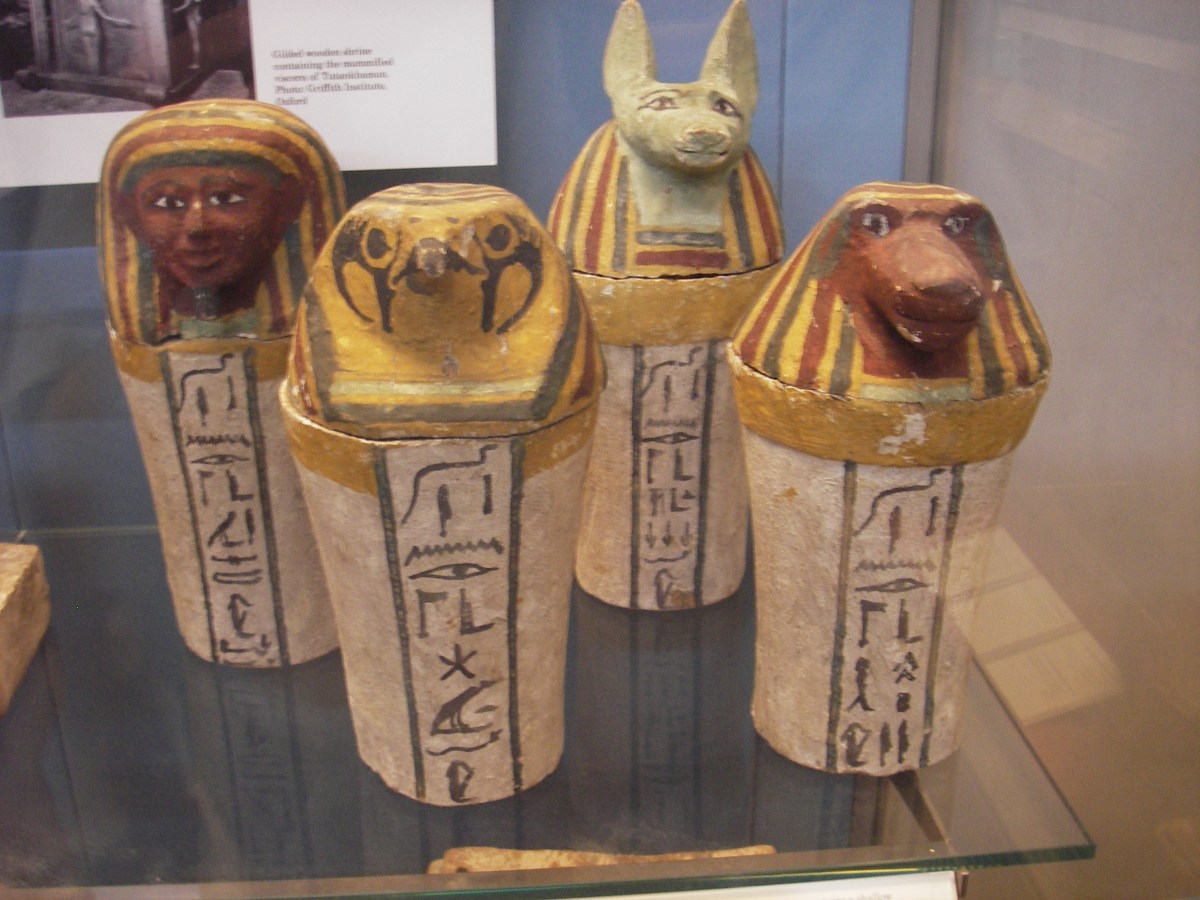
Funerary Sayings.

For what it’s worth.

The jug with the falcon (of Horus) reads:

For my strong staff, the god Osiris, my spirit adores him.

The one with the baboon reads:

For my strong staff, the gods Osiris and Hapy

Hapy is the god of the flood, associated with new life. The bottom literally is the pictograph for strong and the name Hpy (Hapy). The last pictograph is a leopard’s head, which implies strength. Oddly in terms of English grammar, it applies to the whole phrase, which is sort of like German where the verb is at the end (except it isn’t).

I probably made a few errors in these translations, but they should be close.

Amelia and I are furiously writing a new book where the Egyptian gods walk among us.

Medusa

Louise Bogan, 1897 – 1970

I had come to the house, in a cave of trees,
Facing a sheer sky.
Everything moved,—a bell hung ready to strike,
Sun and reflection wheeled by.

When the bare eyes were before me
And the hissing hair,
Held up at a window, seen through a door.
The stiff bald eyes, the serpents on the forehead
Formed in the air.

This is a dead scene forever now.
Nothing will ever stir.
The end will never brighten it more than this,
Nor the rain blur.

The water will always fall, and will not fall,
And the tipped bell make no sound.
The grass will always be growing for hay
Deep on the ground.

And I shall stand here like a shadow
Under the great balanced day,
My eyes on the yellow dust, that was lifting in the wind,
And does not drift away.

The Art of Deception 20

The Art of Deception

or Pride and Extreme Prejudice

12241791_735836876546522_6197947469406170479_n

Welcome to Weekend Writing Warriors. This week continues a spy story set in late Georgian England, the year before Trafalgar.  Last week Roderick caught sight of that blasted servant and followed her into a modiste’s. He bumped into a member of ‘the ton’ when he attempted to follow her. This week we see more of their conversation.


“I was looking for a servant, a girl; she turned into this shop.”

“She did; amazing, imagine turning into a shop; that’s not something you see every day.”

“No, I mean she entered the door.”

The young woman turned to the modiste, herself, “M. Fanchion, did you see a servant girl enter, I didn’t?”

Mais non, Mademoiselle Green.”

The woman shrugged, “Sorry can’t help you;  you will see that the gown is ready for me tomorrow?”

“Certainly Ma’am.”

Lord Roderick peered inside; if the servant had entered the shop, she had vanished into the backrooms.  He shook his head, “Lost the spoor …What has become of my manners?” He bowed, “May I introduce myself, Roderick … Roderick Smythe.”

Please see the other talented writers in Weekend Writing Warriors.


My apologies for creative punctuation.

Like poor Cecelia, “The Curious Profession of Dr Craven” is back from the dead.

I’ve released a sweet regency romance, Miss DeVere Miss_devere_1 This is a fun read.

Frankenkitty is available.
Frankenkitty What happens when teenagers get to play with Dr Frankenstien’s lab notebooks, a few odd chemicals and a great big whopping coil? Mayhem, and possibly an invitation to the Transylvanian Neuroscience Summer School.

Get Free Stuff and try out my landing page. There are three free complete short stories (including an ARC for Frankenkitty) available after you’ve gone through the hoops.

My cure for writer’s block

Nothing fancy. Beer, lots of it. That and bum on seat – fingers on keyboard.

More seriously, it’s a crisis of self-doubt and/or self-pity. The ultimate blue funk. I’ll often try to edit part of my work. If my brain’s in edit mode rather than create mode that often assuages it. I’ll write an outline rather than details. I’ll sometimes put the project away and look at another one. Sometimes the block is telling me “this is rubbish” and it takes distance to see why.

If all else fails, I go for a walk or boat or play my guitar. The later often transfers the block to those around me, so it’s a last resort.

Trying something new

Amelia and I are wondering about trying our hand at horror. Here’s a prolog. We’ll see how it goes, but 7000 words are in the can right now.

Londinium, Roman Britain 400 AD.

“Horatius,” Marcus said, “It’s in there.”
Horatius nodded, “Yes. Those druids, that mistletoe drink. It’s powerful stuff. Remind me never to accept anything eat or drink from them.”
Behind them slaves pounded the damp sandy mortar mix of the coffin into a solid box. A coffer to contain the thing, the unspeakable thing. Only the druid’s magic had contained it and that barely.
Horatius continued, “If it wakes, it’s trapped.”
Marcus laughed, nervous, “I pray Lord Mithras sees it that way.” Then he offered his hand to Horatius, in a gesture of trust, one devotee of Mithras to another.
Horatius politely shook hands; then he crossed himself. “Lord Isus willing.”
After giving him a sharp look, “You’re one of them, Christians, aren’t you?” Marcus pushed the slaves away, “It’s done.” He took a stylus and scraped words into the top of the coffer. In Latin, Pictish, and Greek, he warned everyone to leave the unspeakable thing inside; let it rot for all time in its concrete tomb. “That will do. The language of the empire will never die.”
“Are you sure Marcus?”
“Absolutely.”
“Should we leave a man to watch?”
The slaves looked nervously at each other. The phrase ‘a man to watch’ meant one of them, buried alongside the concrete block to keep it company through the ages.
“No. It ate enough men.” Marcus paused; then shouted at the slaves, “Bury it. Bury it deep.”
Horatius said, “Wait.” Then he scribed a cross and a fish into the side of the block.
Marcus followed with the bull, reborn, the sign of Mithras.
A slave said, “Sire, may I?”
“What?”
“Add the eye of Woden.”
Marcus, followed by Horatius, agreed. “We need all the God’s on our side.”
That slave, and then the others, scribed the holy seals of their faiths. They added symbols ranging from the falcon and eye of Horus to the horned man of Cernunnos to the block.
Horatius said, “It looks like a bloody temple.” Then he turned to the head slave. “Get this damned thing buried … before night falls.”

The Art of Deception 19 #wewriwar #amwriting

The Art of Deception

or Pride and Extreme Prejudice

12241791_735836876546522_6197947469406170479_n

Welcome to Weekend Writing Warriors. This week continues a spy story set in late Georgian England, the year before Trafalgar.  Last week, Alice trapped Roderick and turned him into the militia. Eventually, and only after showing them his warrant, Roderick managed to free himself. The next morning, he’s waiting for her. His friend, Edward, finally gets him to agree to knock it off. They’re just about to enter a public house when Roderick spies Alice again.


Roderick followed the servant girl while she walked along the street; she turned to talk with a street vendor, and he dodged into a doorway; then she continued on her way, apparently unaware of his presence.

He followed, carefully avoiding her direct view; the streets, crowded with people, helped him keep hidden.

Minutes later, she turned into a stylish Modiste’s establishment, Madame Fanchion’s; he struggled through the crowded street to reach the entrance; when he tried to follow her inside he ran into a young woman on her way out, “I’m sorry; I nearly knocked you over.”

The young woman was obviously not a maid, as she was dressed in the latest style, white muslins peeking from her Spencer, a string of pearls around her neck, and wearing nothing that could vaguely resemble an apron and the dark plain dress of a maid. While she carried her dark pelisse over one arm, she held herself with the bearing implicit in a member of the ton, a member of the nobility.

She curtseyed, “I’m sorry; should have been watching out myself.”

“Are you hurt?”

“No,” she smiled, “Not at all.” Lord Roderick could not help but notice she had a beautiful smile, “Can I help you?”

Please see the other talented writers in Weekend Writing Warriors.


One of the things that Alice practiced incessantly at Mrs Hudson’s school was the quick change. Not necessarily a complete change of clothes, but making enough of a difference to fool most people most of the time. She’s put it to good use.

The featured image is a fashion plate from 1814, which is a little later than this story. It shows a Spencer jacket worn over muslins, which is what Alice is wearing. Her dark ‘pelisse’ could could be something else.

Like poor Cecelia, “The Curious Profession of Dr Craven” is back from the dead.

I’ve released a sweet regency romance, Miss DeVere Miss_devere_1 This is a fun read.

Frankenkitty is available.
Frankenkitty What happens when teenagers get to play with Dr Frankenstien’s lab notebooks, a few odd chemicals and a great big whopping coil? Mayhem, and possibly an invitation to the Transylvanian Neuroscience Summer School.

Get Free Stuff and try out my landing page. There are three free complete short stories (including an ARC for Frankenkitty) available after you’ve gone through the hoops.

My Book’s Movie Dream Cast #lifebookswriting

The Curious Profession of Dr Craven is a rollicking good read with some sizzling hot gypsy … wait, that’s “Edmund – a butler’s tale.” It’s a historical romance, albeit a rollicking good read too, just with no gypsies. The hero is a man who is trying to live down his guilt. He believes he accidentally killed his wife by infecting her with “childbirth fever” when she gave birth to their children. The heroine is a young woman whom he rescues when he is preparing to anatomize a female to further his studies of disease and the mechanics of the human body. Initially, she is almost a blank slate, having forgotten much of her previous life. With good reason, her father is more than a bit of a scoundrel – a real rotter, her hand has been auctioned off to the highest bidder to save the family mansion, and she’s simply bored, when she isn’t frustrated. When she finally recovers, she and Dr Craven are mutually attracted to each other. Scratch that, they’re desperately in love, a love her father intends to squelch. Unscrambling this mess takes the combined efforts of Dr Craven, his older brother the Earl of Craven, a dissolute French Duke and even the visit of a mysterious French Baron to the sacred floor of Almack’s.

Here’s my ideal cast.
Dr Craven -> a young Colin Firth (the older one would be great as his older brother, the Earl of Craven) otherwise David Tennant or Matt Smith
William 1st Earl of Craven current Colin Firth or Steven Fry.
Henrietta/Cecelia -> a young Honeysuckle Weeks
Mary (Dr Craven’s maid) -> Jane Lynch
William and Phillip Overly –grave robbers and scallywags-> Simon Pegg and Nick Frost.
Lord Patterson -> Donald Sutherland
George Patterson (Cecelia’s brother)-> Martin Freeman
Ellen Patterson ->Kristen Wiig
Mr Sharpless -> Hugh Laurie
Mrs Oakham -> Sigourney Weaver