My 5 top books & why #LifeBooksWriting

Five books, Only five books? Only five books!

The most difficult part of this is picking out only five books.

  1. Roughing it – Mark Twain

This is Twain’s first real book. By the time it was published he’d written newspaper copy, become a well known spoken humorist, and published a number of short pieces of humour. He was a newspaper correspondent at the time. It describes his journey from an ex-confederate guerrilla (barely mentioned) to a successful speaker on the verge of a successful career. His gift for dialog and digression is just starting to strut its stuff. The pacing is a little slow for modern audiences, and there are a lot of horse jokes that don’t make much sense today, but it’s a great book. It’s also my favourite book to take backpacking because it withstands many re-readings under an led headlamp.

  1. Pride and Prejudice – Jane Austen

This is nearly the perfect novel. Anyone who has any pretense of writing regency romance had better be familiar with it. I could have put in a Georgette Heyer novel, but Austen’s characters are much deeper and her ear for dialog much stronger.

  1. The Forever War – Joe Hadleman

I met this book at college as an undergraduate. It’s innovative, anti-war and treats the effects of relativity in a more realistic manner than most. I also remember it because the good friend who showed it to me was run over while bicycling by a drunk shortly afterwards.

  1. The Blessing Way – Tony Hillerman

I could have picked any of his works. Their cultural sensitivity is fantastic, and they describe New Mexico to a ‘T.’ As an author, he was especially skilled at building a sense of menace and evil with tiny little hints as the story progresses.

  1. The C Programming Language – Kernighan and Ritchie

Sorry about this, but this book set me on the path from experimentalist to computer scientist. I bought myself a copy of the first printing of the first edition and dedicated my birthday to learning the language. The idea of using structs (an ancestor of objects) to extend the language suckered me into software engineering and almost literally made me what I am today.

We’re back, baby.

Like poor Cecelia, “The Curious Profession of Dr Craven” is back from the dead. It’s been edited, to catch some annoying and very minor errors, though not to remove either occurrence of “get over it” which according to Google n-gram viewer was used in the Regency in much the same way as it is today. (I take comments seriously. I rechecked because it is important to me to be correct, and I checked the usage in the books it summarized.) Literally, “literally” is another phrase that was used in the modern somewhat ironic sense – even in the 18th century. Pope waxed wroth about it, though to quote Marx, why does Roth need waxed?

“Nice” is one word that you have to watch. It can mean nice in the sense of pleasant or good, but it can also mean somewhat common or nasty. (e.g. “That’s a nice kettle of fish you’ve got us into” from Laurel and Hardy.)

On the other hand I did remove “washout” which is a relatively modern term. Personally, the most annoying little error was the shift from “Dr.” to “Dr” in the latest British usage. I also caught a few excess uses of the passive voice. Editing truly is never finished. As a self-pub’ed author I can make changes to fix these little uglies.

Here’s the start of chapter 2. Up until it gets about as hot as Amelia and I usually write. Chapter 1 can be found here.

Alive, Maybe.

The sun shining through the window woke Cecelia. She sat up in her bed with a start and examined the room. The bed curtains had been pulled back so she could see the tattered wallpaper and small fireplace across the room. The low cooing of a wood pigeon could be heard through the glass of the window. Her head swam for a moment. Then she searched the place. It wasn’t her bedroom. A maid was drowsing in a chair by the fire.

“Miss, where am I?”

“You’re in Dr Richard Craven’s house, Miss.” The maid rose, curtsied, and rang the bell. Then she continued, “Is there anything you need?”

“Who are you?”

“My name’s Mary, Miss. Would it be too much to ask yours?”

Panic gripped Cecelia. “I am,” she paused, “I don’t know!”

“There, there, Miss. The doctor will know what to do for you.”

“The doctor? How did I get here?”

“’Tis best he tells you, Miss.”

“Mary.”

“Yes, Miss?”

“Am I alive?”

“Yes, Miss you are. We’re in my master’s house at Streatham, England. It looks to be a lovely summer day.”

“It’s just, I remember, I remember dimly. It’s so strange.”

“Wait for Dr Craven, Miss. He’ll answer that.”

A few moments later, Dr Craven dashed into the room. He was a tall, well-formed man with dark hair. Despite his youth, a widower. Close behind him came two young children, his exuberant four-year-old twins. While he stood in the door, they rushed past him and jumped into the bed with her. Their governess, Miss Grimstock, a severe, somewhat older-looking woman was beginning the long slow decline into spinsterhood. She puffed from her exertion as she caught up with them.

“Thomas, Mariah, please come here. Let your father do his work.”

They replied in unison, “No.”

“Please let them stay. They’re so lovely. I’m sure I’m in Heaven with cherubs.”

“Further acquaintance with them will convince you otherwise. Children, please do as Miss Grimstock requests.”

“Daddy?”

He frowned at them and then added, “I must check on our guest. If she’s well enough, I’m sure you can return.”

The children dejectedly left the bed and returned to their governess.

Dr Craven strode to Cecelia, “How are we feeling?”

“Completely lost, sir. Where am I?”

“My house in Streatham. I am Dr Richard Craven. The question is, who are you?”

“I wish I knew. What happened to me?”

Dr Craven paused, considering whether telling the young woman the truth would do more harm than good. Finally, he made up his mind. “What do you remember?”

“Almost nothing. You. I distinctly remember you. I woke up on a table last night. It was after a long nightmare, and you were there.”

“Do you remember anything else?”

“No. It’s all gone.” She paused, “There’s a bit more. I was in this dark place where no one could hear me. I tried to kick or pound with my fists. Nothing happened. I could barely move.” She shook her head in disbelief and continued, “What happened to me?”

“I’m not sure. I was going to study you, but now I suppose I’ll try to cure you.”

“Study me? What do you mean by that?”

“I’m not just a country doctor, Miss. I study how the body is put together.”

“You’re an anatomist?”

He paused, “Yes.”

“You were going to anatomize me!”

He nodded. She backed away from him gathering herself into farthest corner of her bed.

“We, I…It wouldn’t have mattered were you dead. I’m working to prevent death, and sometimes that means anatomizing bodies.”

“Including me?”

“Had you been dead, yes. But you weren’t, and I’m glad of it. Though it does mean, I’m going to have to find another body.”

She glared at him, “You bought my body, didn’t you?”

“Yes. If I hadn’t, you would have died, for real. Instead, here you are, alive.”

Cecelia felt faint, then in her anger, recovered. “You’re an evil man.”

“No. I’m a natural philosopher, and a doctor. I do my best, my tiny mite, to cure people.”

Panic gripped Cecelia again, “What are you going to do with me?”

Trying to reassure her of his intentions, Dr Craven smiled. “I’m going to examine you. If you’ll let me. Then we’ll decide what to do with you.”

“Examine me?”

“You must have been gravely ill for your family to have buried you. I should like to see if you have recovered, before we,” He paused, “proceed.”

Mary was about to leave. Dr Craven requested that she remain. Then he walked over and shut the door. After that, he washed his hands in the basin, thoroughly with soap.

Cecelia looked at him, disgusted, “Why are you doing that? Washing your hands of your guilt, like Pontius Pilate?”

“No. It’s an experiment. To see if there isn’t something on our skin that can carry illness.”

“They looked clean to me.”

“And to me, Miss. The thing that carries illness, whatever it is, it is too small for us to see.”

“What next?”

“I shall need to listen to your heart and your lungs.”

“What?”

“That’s why I’ve asked Mary to stay. I’m afraid it means I need to put my ear on your chest.”

“My chest? You mean…”

“I mean without anything in the way. Mary will ensure that I obey all the norms of propriety.”
Night Fell

Florence Ripley Mastin

Night fell one year ago, like this.
He had been writing steadily.
Among these dusky walls of books,
How bright he looked, intense as flame!
Suddenly he paused,
The firelight in his hair,
And said, “The time has come to go.”
I took his hand;
We watched the logs burn out;
The apple boughs fingered the window;
Down the cool, spring night
A slim, white moon leaned to the hill.
To-night the trees are budded white,
And the same pale moon slips through the dusk.
O little buds, tap-tapping on the pane,
O white moon,
I wonder if he sleeps in woods
Where there are leaves?
Or if he lies in some black trench,
His hands, his kind hands, kindling flame that kills?
Or if, or if …
He is here now, to bid me last good-night?

This poem was written during the American involvement in WW1.(1918).

Blackberry-apple crumble #recipe #goodfood

June and the wild blackberries are just turning ripe. It’s the fruit that green when it’s red. They’re best picked and used the same day, free from the weedy prickly brush.

Here’s a good recipe for a crumble:
You’ll need about 1 cup ripe blackberries and an apple, peeled, cored, and sliced.

  • 1 cup flour
  • 1 cup sugar
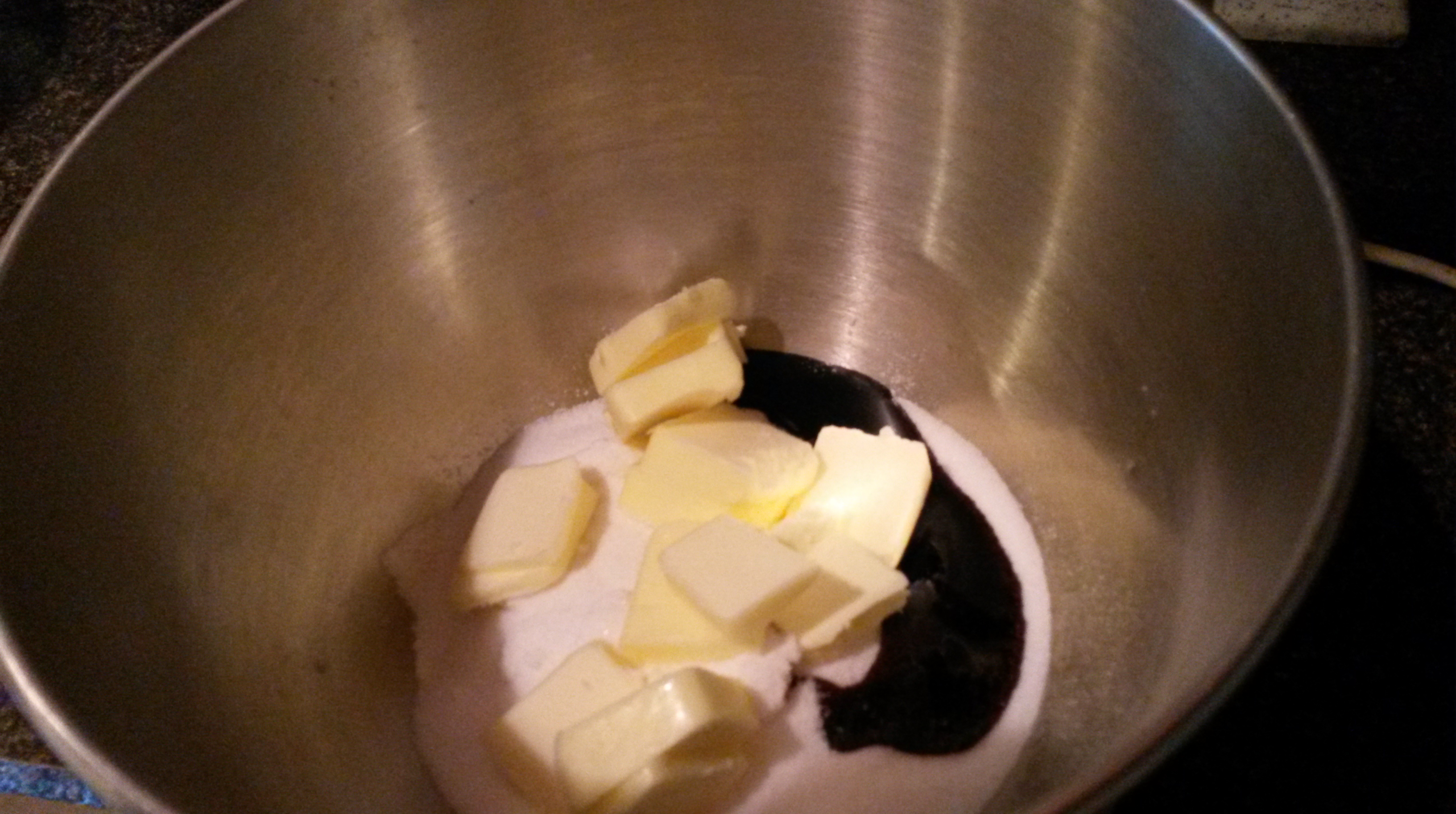
  • 1 stick (1/4 lb) butter, cut into segments and hard from the refrigerator.
  • 1 tablespoon unsweetened molasses (I use this rather than brown sugar).

2016-06-03 16.31.30 Use the mixer to thoroughly blend into a crumbly uniform state. It is a little more crumbly than pie crust mixtures and a lot sweeter.

2016-06-03 16.34.22


Mix in 1 cup oatmeal.

Wash about 1 cup of blackberries. I use a basin of cold water, twice, to remove bits of leaves and other things that tend to accompany wild fruit.
2016-06-03 16.37.10

Place 2/3 of the mixture in a 9×9 baking dish, put the blackberries on top. Peel, core and section a cooking apple (Granny Smith in this case) and place over the blackberries.
2016-06-03 16.42.34
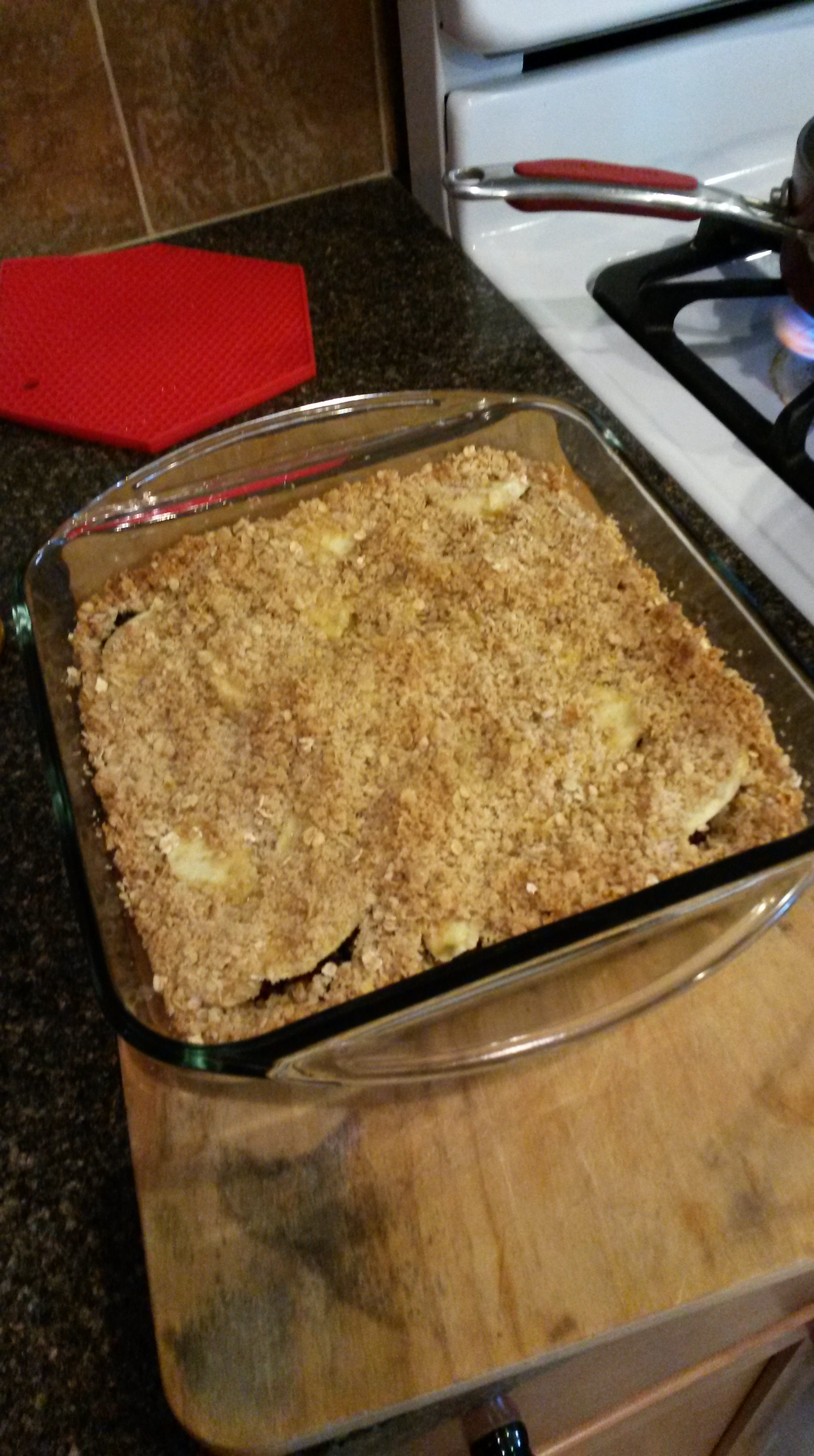
Cover with the rest of the mixture and bake at 350F (200C) until the fruit is done and the crust browned. About 1/2 hour.
2016-06-03 17.29.29

The Art of Deception 17 #wewriwar #amwriting

The Art of Deception

or Pride and Extreme Prejudice

12241791_735836876546522_6197947469406170479_n

Welcome to Weekend Writing Warriors. This week continues a spy story set in late Georgian England, the year before Trafalgar. Last week Alice and Roderick finally met, or at least were in the same city at the same time. Alice is on her practical, learning the ropes as it were, when he spots her. This week, they exchange words. Roderick gives her a French recognition signal, which she accidentally – or perhaps on purpose, answers. (I hope footnotes don’t count for sentences. I like leaving the original French in.)


The girl gathered up the sheets she had been exposing to the sun, and put them in her basket; Roderick noticed her writing something on a piece of paper and then tucking it away; after that she started walking back into town. Lord Roderick told his friend, “See you in a few minutes Edward, some business to attend to.”

“Roddy, Drop it!”

Lord Roderick raced through the streets; Edward shook his head in disbelief and then followed; the express would have to wait; Roderick paused to catch his breath, smoothed his garments, and sauntered, deliberately casual, over to her;  he said, “Mademoiselle, bonne journée, est-il pas? Les petits oiseaux volent à travers le ciel nuageux[1].”

Without missing a beat, the young lady replied, “Mais il est clair; ou allez-vous Monsieur?” in an excellent Parisian accent although one that had a trace of Norman in it.

“The Swan, I think that’s where I’m booked.”

“And then London, on the stage, I’d think, or are you staying in Bristol?”

“It depends.”

Please see the other talented writers in Weekend Writing Warriors.


The Featured image shows Bristol Harbour from the tidal lock looking out. Roderick’s ship, the Asp, would have been anchored in the distance. Alice would have been among many servants who bleached sheets on the hill off to the left (not in the picture). The lock allows the harbour to stay full of water even during low tide so that ships weren’t set aground twice a day. The tides on the Severn are large, not quite in the Bay of Fundy class, but close. It was under construction at the time of this saga. A couple of years later, and Roderick would have docked inside the harbour.

I’ve released a sweet regency romance, Miss DeVere Miss_devere_1 This is a fun read.

Frankenkitty is available.
Frankenkitty What happens when teenagers get to play with Dr Frankenstien’s lab notebooks, a few odd chemicals and a great big whopping coil? Mayhem, and possibly an invitation to the Transylvanian Neuroscience Summer School.

[1] Good day Miss, isn’t it? The little birds are flying in a cloudy sky. She replied, “But it’s clear. Where are you going Sir?”

Get Free Stuff and try out my landing page. There are three free complete short stories (including an ARC for Frankenkitty) available after you’ve gone through the hoops.

A Day in My Life #lifebookswriting

Let’s see, a typical day. That’s actually hard because there are seldom typical days.

So here goes:

5-7 am. Wake up. Actually my wife wakes up first, usually. I let her have the first shower and either read or check email. If I’m teaching undergraduates, there’s always something from a student. Usually along the lines of “I’ve just started this homework at 11:45” They’ve had it for two weeks, “and can you extend the deadline past 12?”  I never check my work email during the evening when there’s a class. It only encourages them. Mind you, if it’s something substantial, I answer it.

She’s done, out walking the dog and training our cats. So it’s time for my morning ablutions. Before they went to uni, this was when I’d wake our boys. Wake them for the first time, that is. Now I just shower.

Breakfast: For someone who occasionally posts dashed good recipes, I keep it simple. A quesadilla; tortilla on griddle, hot sauce on tortilla, cheese on hot sauce, fold, and brown both sides. Mexican soul food. Did I mention I’m as anglo as they come? By now the tea is cool, but that’s fine.

Then I write and do author stuff. I’m usually sitting at the end of the table across from my wife, and she’s doing much the same. Atlanta traffic is ferocious.  If you can, and we often can, it’s best to wait it out. If I leave at 8, I’ll get in at 10. If I leave at 9 I’ll get in at 10. If I leave at 9:45, I’ll get in at 10. The car seats aren’t that comfortable.

Then it’s research, right now really difficult optimization problems – large systems of simultaneous transcendental equations (If you get that you’re good), or machine learning. We’re looking at faster ways to do Boltzmann machines. That Stat. mech. I took as an undergraduate in the dark ages still comes in useful.

This is often the truly fun part of being a professor. Working with the PhD students and teaching them how to formulate – then answer problems. Undergraduates are the next most fun, but they’re a little clueless. That can get frustrating. The rest, administration trolls and arbitrary power struggles over trivial things; well that can take a hike.

Usually, lunch at my wife’s office. She’s also a professor. Then after more work, the drive home.

Atlanta traffic comes into it’s full power in the afternoon. Between 3 and 6, it’s a parking lot. So we go the back way. Still an hour on the road, but at least you’re moving. We follow the line of march from Sherman’s army on the way home. There’s nothing wrong with the South that a visit from William Tecumseh Sherman couldn’t fix.

Then it’s a couple hours more writing, usually a mixture of work and fiction. Always with a pot of tea. Unless the trolls have been active; then it’s a beer.  Since we’ve had children, I’ve usually done the cooking (my wife nursed the kids when they were infants), and she’s done the cleanup (I played with and changed them). That division of labor has survived school, scouts and university. Before then we used to swap. Dinner, walk the dog, and in the immortal words of Pepys “off to bed.”

Patience Taught by Nature #fridayread #fridaypoem

Elizabeth Barrett Browning, 1806 – 1861

“O Dreary life!” we cry, “O dreary life!”
And still the generations of the birds
Sing through our sighing, and the flocks and herds
Serenely live while we are keeping strife
With Heaven’s true purpose in us, as a knife
Against which we may struggle. Ocean girds
Unslackened the dry land: savannah-swards
Unweary sweep: hills watch, unworn; and rife
Meek leaves drop yearly from the forest-trees,
To show, above, the unwasted stars that pass
In their old glory. O thou God of old!
Grant me some smaller grace than comes to these;—
But so much patience, as a blade of grass
Grows by contented through the heat and cold.

Windy Tybee Island Beach.

Nonsense Alphabet

Edward Lear, 1812 – 1888

A

A was an ant
Who seldom stood still,
And who made a nice house
In the side of a hill.

a
Nice little ant!

*

B

B was a book
With a binding of blue,
And pictures and stories
For me and for you.

b
Nice little book!

*

C

C was a cat
Who ran after a rat;
But his courage did fail
When she seized on his tail.

c
Crafty old cat!

*

D

D was a duck
With spots on his back,
Who lived in the water,
And always said “Quack!”

d
Dear little duck!

*

E

E was an elephant,
Stately and wise:
He had tusks and a trunk,
And two queer little eyes.

e
Oh, what funny small eyes!

*

F

F was a fish
Who was caught in a net;
But he got out again,
And is quite alive yet.

f
Lively young fish!

*

G

G was a goat
Who was spotted with brown:
When he did not lie still
He walked up and down.

g
Good little goat!

*

H

H was a hat
Which was all on one side;
Its crown was too high,
And its brim was too wide.

h
Oh, what a hat!

*

I

I was some ice
So white and so nice,
But which nobody tasted;
And so it was wasted.

i
All that good ice!

*

J

J was a jackdaw
Who hopped up and down
In the principal street
Of a neighboring town.

j
All through the town!

*

K

K was a kite
Which flew out of sight,
Above houses so high,
Quite into the sky.

k
Fly away, kite!

*

L

L was a light
Which burned all the night,
And lighted the gloom
Of a very dark room.

l
Useful nice light!

*

M

M was a mill
Which stood on a hill,
And turned round and round
With a loud hummy sound.

m
Useful old mill!

*

N

N was a net
Which was thrown in the sea
To catch fish for dinner
For you and for me.

n
Nice little net!

*

O

O was an orange
So yellow and round:
When it fell off the tree,
It fell down to the ground.

o
Down to the ground!

*

P

P was a pig,
Who was not very big;
But his tail was too curly,
And that made him surly.

p
Cross little pig!

*

Q

Q was a quail
With a very short tail;
And he fed upon corn
In the evening and morn.

q
Quaint little quail!

*

R

R was a rabbit,
Who had a bad habit
Of eating the flowers
In gardens and bowers.

r
Naughty fat rabbit!

*

S

S was the sugar-tongs,
sippity-see,
To take up the sugar
To put in our tea.

s
sippity-see!

*

T

T was a tortoise,
All yellow and black:
He walked slowly away,
And he never came back.

t
Torty never came back!

*

U

U was an urn
All polished and bright,
And full of hot water
At noon and at night.

u
Useful old urn!

*

V

V was a villa
Which stood on a hill,
By the side of a river,
And close to a mill.

v
Nice little villa!

*

W

W was a whale
With a very long tail,
Whose movements were frantic
Across the Atlantic.

w
Monstrous old whale!

*

X

X was King Xerxes,
Who, more than all Turks, is
Renowned for his fashion
Of fury and passion.

x
Angry old Xerxes!

*

Y

Y was a yew,
Which flourished and grew
By a quiet abode
Near the side of a road.

y
Dark little yew!

*

Z

Z was some zinc,
So shiny and bright,
Which caused you to wink
In the sun’s merry light.

z
Beautiful zinc!