A Visit to the Asylum (School’s started)

Edna St. Vincent Millay, 1892 – 1950

Once from a big, big building,
When I was small, small,
The queer folk in the windows
Would smile at me and call.
And in the hard wee gardens
Such pleasant men would hoe:
“Sir, may we touch the little girl’s hair!”—
It was so red, you know.
They cut me coloured asters
With shears so sharp and neat,
They brought me grapes and plums and pears
And pretty cakes to eat.
And out of all the windows,
No matter where we went,
The merriest eyes would follow me
And make me compliment.
There were a thousand windows,
All latticed up and down.
And up to all the windows,
When we went back to town,
The queer folk put their faces,
As gentle as could be;
“Come again, little girl!” they called, and I
Called back, “You come see me!”

The madhouse of university instruction has started again. Idiot administrators, daft students, and struggling faculty. I’m counting the days.

The Art of Deception 30

The Art of Deception

or Pride and Extreme Prejudice

12241791_735836876546522_6197947469406170479_n

Welcome to Weekend Writing Warriors.   This week continues a spy story set in late Georgian England, the year before Trafalgar. Last week, Mr Spode took Lucy and  Alice for a ride. His, and their, plan was to provide a distraction to cover a room search.  They’ve reached the monument and are on the way back when Alice discovers her horse isn’t quite as suitable for young ladies and invalids as she thought.


Her mare, realizing that this was now the return journey and that she was in front, took off; first at a trot, then a canter and finally, when a dog from one of the farms by the lane barked at her, a full-fledged gallop; Alice was no mean horsewoman, but riding a bolting horse is never easy or enjoyable.

Fortunately, a man who was riding a horse uphill in front of her, realized what was happening and urged his horse to the rescue; as she bolted past him, he galloped along her left side and by urging his horse to turn to the right eventually forced the two animals into a field; they circled, in successively smaller circles, until her mare calmed.

Finally able to look up from trying to control her mare, Alice turned to thank her saviour, “Mr Stanton! What are you doing here? I thought you were ill.”

“Well, I have felt better, but a change of air seemed an excellent idea; I remembered that your party was bound for the monument and decided to seek your company.”

“I’m glad you found me,” Alice was still a little breathless, “I’m not sure what I would have done.”

“You were holding your own; I haven’t seen such a fine display of horsemanship in a long while.”

Now that you’ve read my hackery, please see the talented writers in Weekend Writing Warriors.


My apologies for creative punctuation.

You may wonder how Roderick could arrange for Alice’s slug of a horse to bolt. It’s not as if he could put corundum powder on the steering gear (as in an Inspector Foyle story) or let most of the petrol out of the tank as Jeeves does in “the old school chum.” He couldn’t arrange for the horse specifically to bolt, but he could ensure that there would be some crisis or another by “figging” or “gingering up” the horse. Figging is an old horse cooper’s trick where an irritant is shoved up the horse’s backside. It gives the animal the appearance of spirit and was used to pass off an old or sick animal as healthy. Needless to say, it is unethical and cruel. People still occasionally try it in dressage where the conformation of the horse’s tail is important. It’s also, apparently, a common practice in BDSM – at least to judge from what I found when I searched for a relevant illustration. Roderick only uses it because he believes he is chasing a French spy – a serious matter. After all, she’d do the same, or worse, to him if she had the chance.

Like poor Cecelia, “The Curious Profession of Dr Craven” is back from the dead.

I’ve released a sweet regency romance, Miss DeVere Miss_devere_1 This is a fun read.

Frankenkitty is available.
Frankenkitty What happens when teenagers get to play with Dr Frankenstien’s lab notebooks, a few odd chemicals and a great big whopping coil? Mayhem, and possibly an invitation to the Transylvanian Neuroscience Summer School.

Get Free Stuff and try out my landing page. There are three free complete short stories (including an ARC for Frankenkitty) available after you’ve gone through the hoops.

Patty’s Promos strike again.

unnamed (1)

Neither Amelia nor I are in this one, but it’s worth a look despite (or perhaps because) of that.

Linux is 25.

Missed the anniversary by a few days, (august 20 or so), but Linux is 25!

We’ve used it since 1995. It forms the backbone of the internet – even Microsoft’s cloud computing and web services run on Linux.

Amelia’s latest

Another installment of our work. Exploring writing horror. It’s harder than regency romance. If we put together all the stuff we’ve deleted on the way, it would be 70,000 words. As it is, 36000 right now.

The Art of Deception 29

The Art of Deception

or Pride and Extreme Prejudice

12241791_735836876546522_6197947469406170479_n

Welcome to Weekend Writing Warriors.   This week continues a spy story set in late Georgian England, the year before Trafalgar. Last week Lucy received an invitation to go for a ride. In a 1920’s gangster book that would seem a tad sinister, but this is just on horses, properly chaperoned, and to a civil war monument. They’ve decided this is an excellent opportunity for Miss Aldershot to investigate the men’s rooms at the Pelican. Unfortunately, Mr Stanton is ill, the sausage having disagreed with him.


Alice’s frustration with her horse showed, “I see these are gentle beasts, suitable for young ladies and other invalids.”

Edward smiled, “It will leave us with the time for conversation, and I should never forgive myself if Miss Haytor’s mount should bolt.”

“Thank you for considering my comfort.”

“These slugs, bolt? Not likely.” Alice was still not amused with the horses; her mare spotted a stray cur and sidled with a loud snort of displeasure; she pulled its reins and the horse quieted, “At least this one shows a little spirit.” She glanced at the groom, “but no manners.”

He ignored her.

After they had ridden off, a plainly dressed, middle-aged woman left the Christopher, bound for the Pelican; on the way she passed a rather good looking, similarly disguised, man heading the opposite direction; neither one of them noticed the other.

Now that you’ve read my hackery, please see the talented writers in Weekend Writing Warriors.


My apologies for creative punctuation.

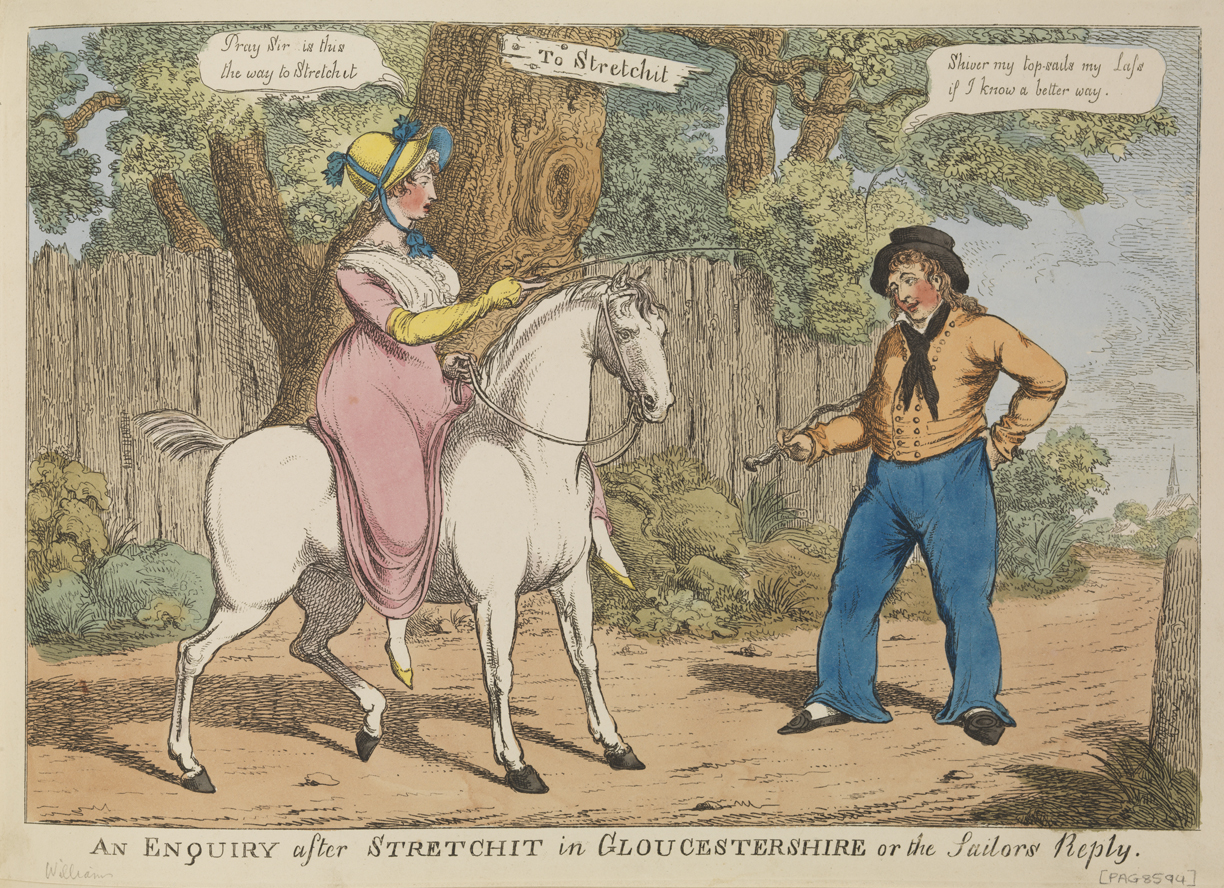
An enquiry after stretchit in Gloucestershire. PAG8594
An enquiry after stretchit in Gloucestershire.

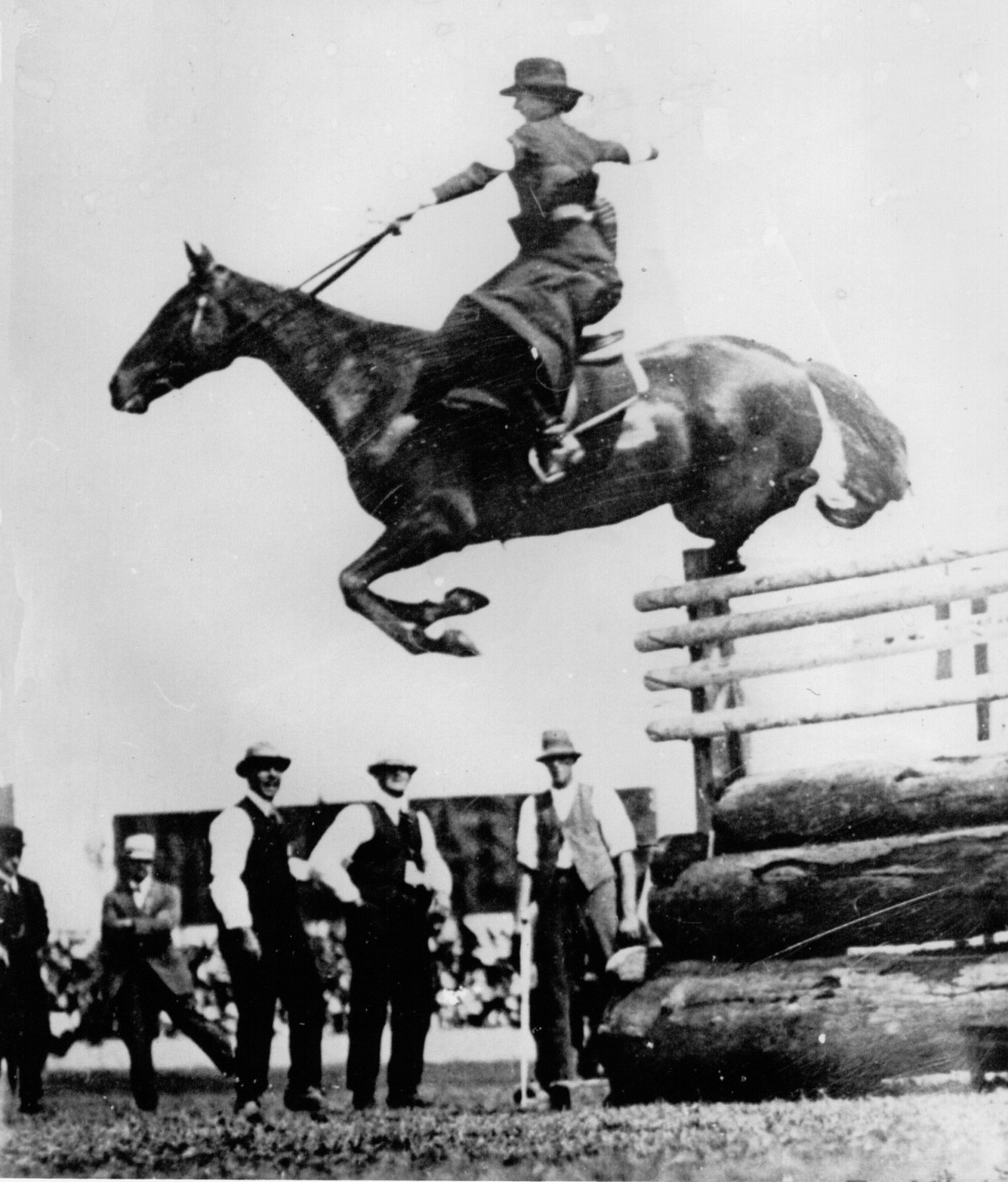
Having women ride astride is a very common error in historical films. Women generally rode sidesaddle. There were practical reasons for this as what the English call “pants” weren’t worn by the gentle gender. They did have leggings and stockings, but wore something closer to a suspender belt than modern undergarments. (for what it’s worth men wore something much like a cross between modern swimming trunks and “boxers”, with a drawstring and without the mesh inside.) Personally, the few times I’ve been on horseback I’ve been very glad to have both feet in stirrups and being able to grab the horses’ back between my knees. I can’t imagine what it was like to sit sideways. The young lady in the cartoon is “fast” and the Tar knows it. The featured image shows what could be done, if you had the guts. (If you look carefully, she’s raised from the seat and having significant “air time!”)

Like poor Cecelia, “The Curious Profession of Dr Craven” is back from the dead.

I’ve released a sweet regency romance, Miss DeVere Miss_devere_1 This is a fun read.

Frankenkitty is available.
Frankenkitty What happens when teenagers get to play with Dr Frankenstien’s lab notebooks, a few odd chemicals and a great big whopping coil? Mayhem, and possibly an invitation to the Transylvanian Neuroscience Summer School.

Get Free Stuff and try out my landing page. There are three free complete short stories (including an ARC for Frankenkitty) available after you’ve gone through the hoops.

The Art of Deception 28

The Art of Deception

or Pride and Extreme Prejudice

12241791_735836876546522_6197947469406170479_n

Welcome to Weekend Writing Warriors.   This week continues a spy story set in late Georgian England, the year before Trafalgar. Last week the two men discussed Lucy and Alice as they trudged back to the Pelican for a supper of dubious sausages washed down with excellent beer. Their discussion has borne fruit this week when Lucy receives an invitation for an excursion.


A message awaited Miss Haytor when she awoke Tuesday, “Mr Spode invites her and a companion, to ride with him and Mr Stanton; perhaps to see the Grenville monument, but certainly to take some exercise in the fresh air, away from the smells and smoke of Bath.”

“Could we?”

Miss Aldershot studied Lucinda, “What else does it say?”

“Merely that if riding were out of the question, he could hire a chariot; failing that, he’d meet us at the Bath; I should so like to ride.”

She stalled for time to think, “What do you think Alice?”

“It would get the two of them away from the Pelican; I’d be happy to, um, investigate their rooms while they are … detained by other activities.”

Martha smiled, “That is an idea, but no; I think it best, Alice, that I investigate your friends; you’ll enjoy the ride far more than I ever could and that dashing Mr Stanton won’t be tempted to cry off if you’re there.”

“If you insist.”

“I do, besides people are far less likely to remember a frumpy old maid poking around the Pelican than a pretty young thing like you.”

Now that you’ve read my hackery, please see the talented writers in Weekend Writing Warriors.


My apologies for creative punctuation.

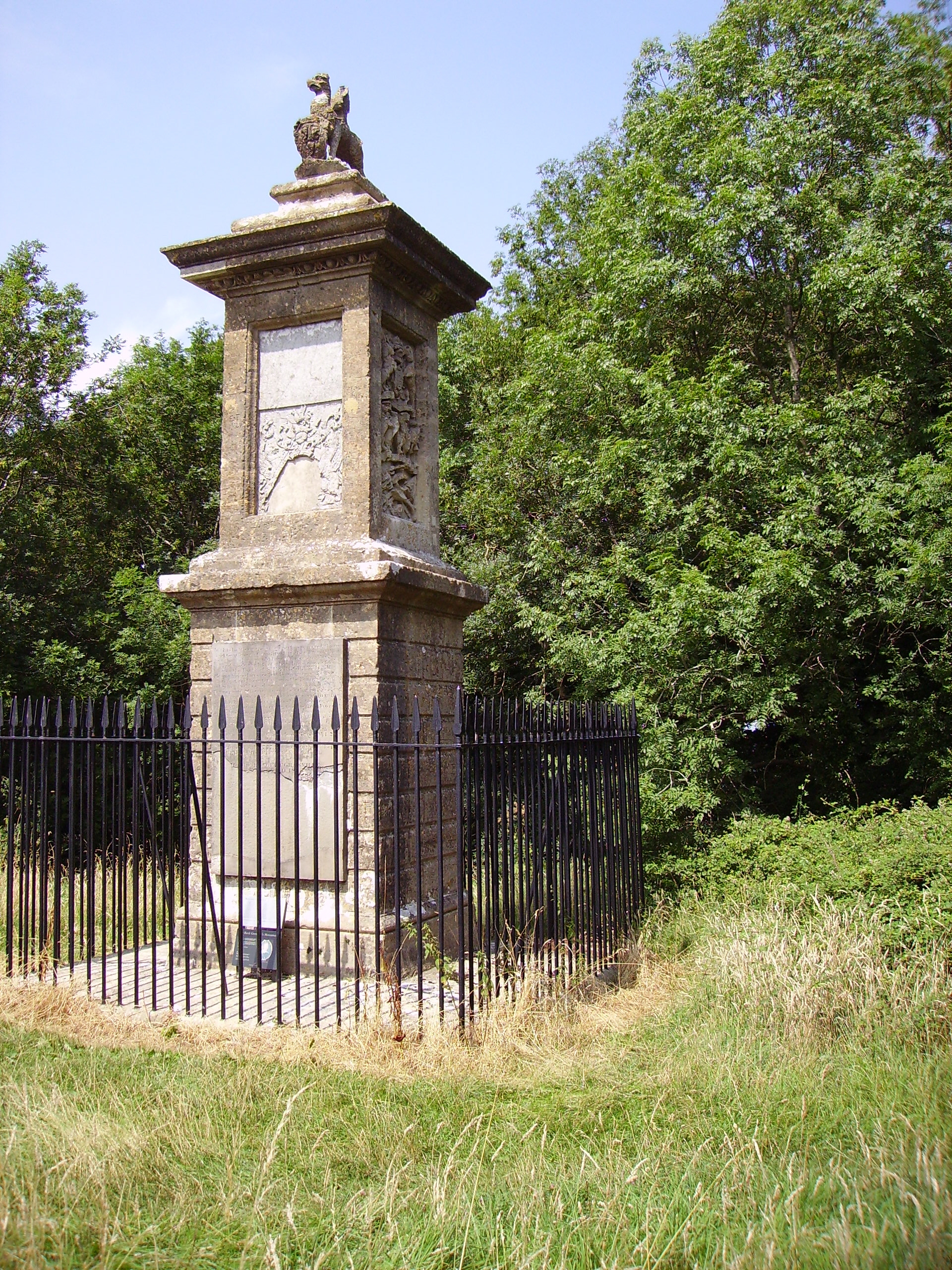
Sir_Bevil_Grenville_monument
The monument as it looks today.

Sir Bevill Grenville fought for the royalists at the battle of Landsdown during the English civil war. The parliamentarian army camped on the hill overlooking Bath. Sir Bevill died, leading his regiment of Cornish pikemen, in fierce hand to hand combat. Unfortunately, for the royalists that is, they lost. This battle was one of several turning points in the civil war. Had the royalists won, they would have held onto the southwest. His good friend, the poet William Cartwright – who would also die fighting for the royal side, wrote the elegy that is inscribed on the column.

This was not Nature’s courage nor that thing,
We valour call which Time and Reason bring,
But a diviner fury fierce and high,
Valour transported into Ecstasy. 

Like poor Cecelia, “The Curious Profession of Dr Craven” is back from the dead.

I’ve released a sweet regency romance, Miss DeVere Miss_devere_1 This is a fun read.

Frankenkitty is available.
Frankenkitty What happens when teenagers get to play with Dr Frankenstien’s lab notebooks, a few odd chemicals and a great big whopping coil? Mayhem, and possibly an invitation to the Transylvanian Neuroscience Summer School.

Get Free Stuff and try out my landing page. There are three free complete short stories (including an ARC for Frankenkitty) available after you’ve gone through the hoops.

A household tip (from the UK).

Nothing profound in this one, not even a pretty picture.

One difference between the UK and the land of the free is the use of body wash instead of soap. It’s actually a European trend that has gradually spread west. Darn EU. Body wash is sort of like shampoo, but uses coarser detergents (typically Sodium Lauryl Sulfate or Sodium Dodecyl Sulfate) and has fewer conditioners and scents.

In the UK I’m partial to the cheapest Tesco value product (blue coloured and 50p a bottle). A bottle lasts my boys and me almost two weeks, which is pretty good value (my wife still prefers soap). This time, after returning to the USA, I tried to find a similar product. Ivory makes one that’s 97 cents at Walmart.

You may ask “So what?”

It turns out the detergents are excellent at lifting soap scum. Soaps are sodium and potassium salts of organic acids – for example Sodium Laurate. As such they form coordination complexes with ions in the water, especially calcium, which precipitate into a hard, insoluble and scummy substance. It’s a real nuisance. The sulfate-based detergents don’t do this, and even better solubilize the scum.

Gear review, trail runners and the Talon 44.

You may have noticed some of the pictures I’ve posted. At least I hope you have. Most are not from places you can easily drive to.

DSC_0910 The road on this Welsh mountain isn’t for cars. Not even those little tiny ones they drive too fast and on the other side of the road in the UK.
IMG_0865 This view, on the AT in North Carolina, isn’t on the road either.

So I tend to walk. Which means I wear shoes. I used to wear hiking boots.

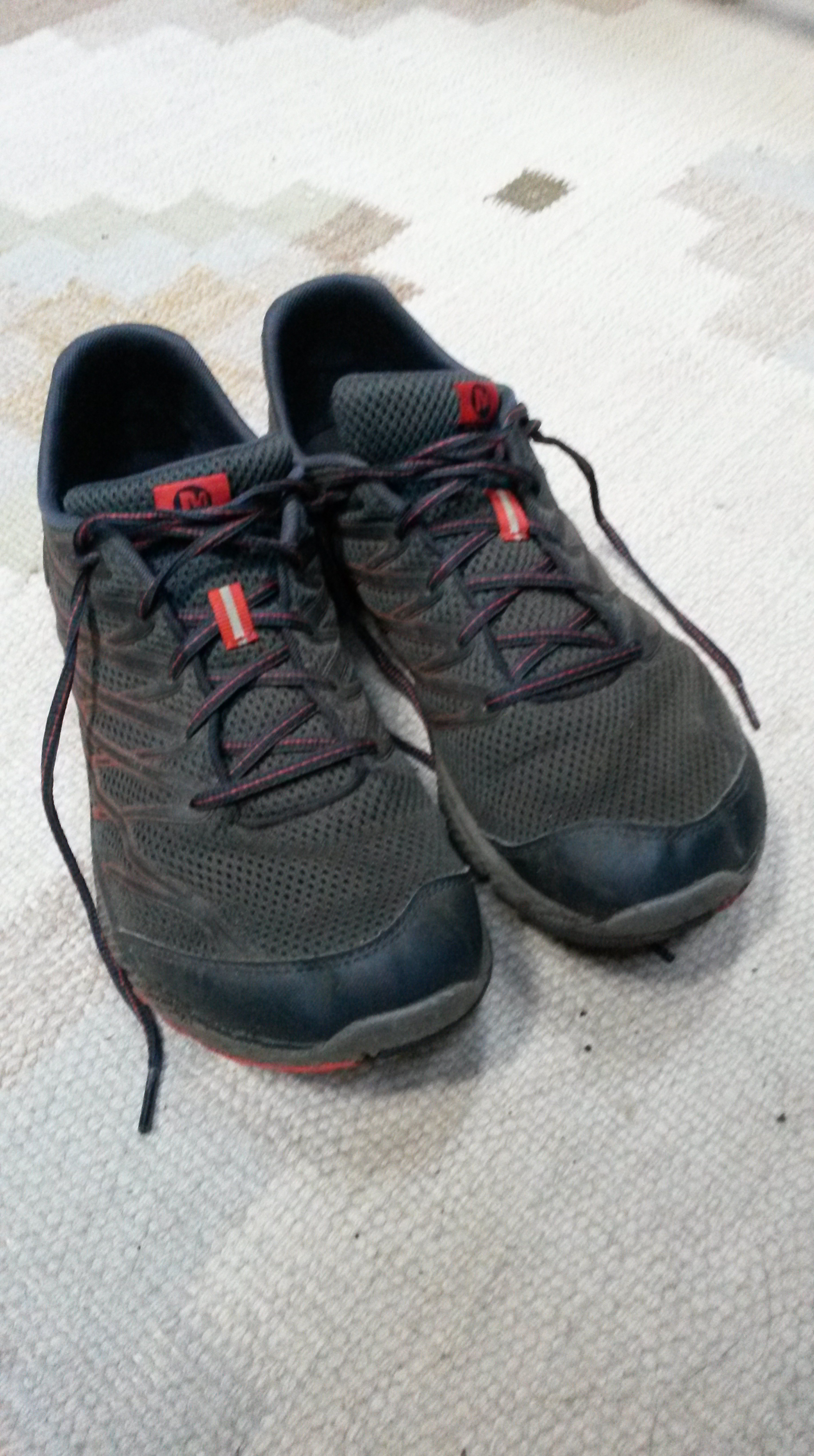
2016-08-17 17.14.47These are Merrell bare access 4 trail runners. Ones that happen to be used and peat-stained. It doesn’t look quite as pretty as the catalog image. I’ll typically wear only a thin pair of liner socks. There are two approaches to keeping dry feet. Do and don’t. In reasonable 3-season hiking the best approach is to let your feet get wet and then wear gear that dries quickly. These are laced with a “heel lock” which holds them on tightly without requiring extraordinarily tight lacing. It also means that the backs of the shoes don’t wear out and break down. Most trail runners wear out quickly, so I only wear these for walking. They have a thin vibram sole. Mine don’t slip when they’re wet, which is good. Not just good but necessary. The thin sole is a blessing and a curse. You can feel your way, it’s almost barefoot. It also means you can feel sharp rocks and gravel.

After a good few kilometres, I strongly recommend them.

I also need a pack. My trusty REI flash 50 finally bit the dust after several years of hard service. I thought very hard about replacing it with a Gossamer gear or similar ultralight pack. (I have and love a Mariposa plus.) 2016-08-17 17.15.48Several things made me choose the Osprey Talon 44. It’s made of tougher fabric, it has a top pocket with a key holder, it easily meets airline carry on restrictions, there’s a semi-hidden pocket for passports and spare cash, and finally it carries a reasonable amount of weight without too much effort. This last point is important. I tried an earlier version of Osprey’s breathable frame and it hurt. (This is a personal observation, my son used it for Philmont without any trouble.) Finding where to put water bottles and platypus’s (platypi?) is a little problematic but solvable. There’s even a top strap under the lid so I can drape my raingear over the top and strap it in. It’s definitely big enough for a light-weight backpacker during the three easy seasons.

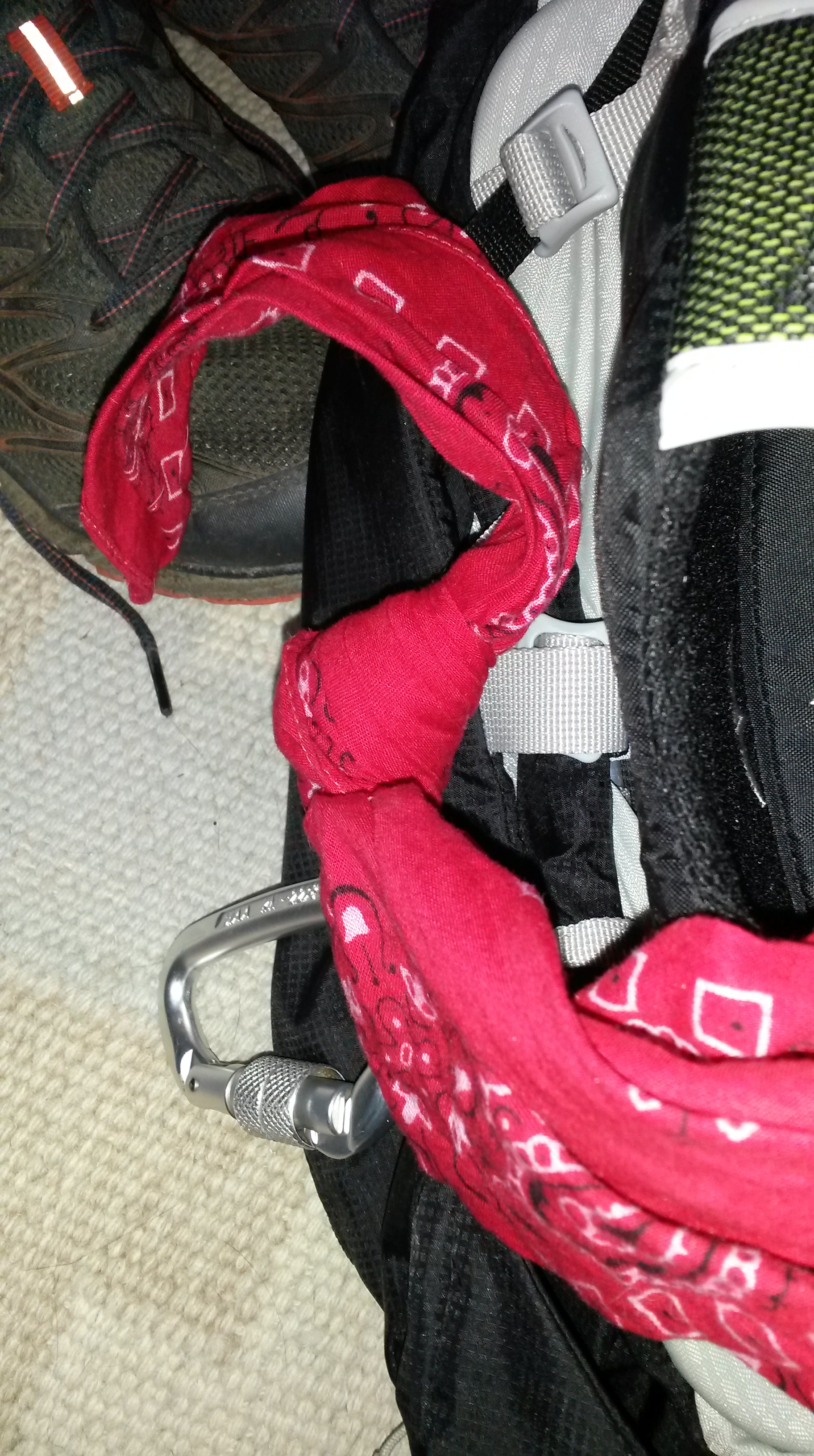
2016-08-17 17.16.10 I always add a couple of extras to my packs. A real carabiner – from the climbing section at REI and not a cheap knock off, is essential. I clip my walking sticks and map case to it. It can also double as a pulley when I hoist my pack in bear country. This carabiner is a locking one which is better for my use than a clip one because it won’t accidentally clip on to things. The other thing is a bandana. Cotton might kill, but a bandana is a life-saver. A pot holder, an emergency hat, when soaked in water it can keep you cool, and um, is useful for washing those delicate areas when they start to chafe. I also tie it to the pack I’m using as sort of a badge of honour.

Happy trails.

The Art of Deception 27

The Art of Deception

or Pride and Extreme Prejudice

12241791_735836876546522_6197947469406170479_n

Welcome to Weekend Writing Warriors.   This week continues a spy story set in late Georgian England, the year before Trafalgar. Last week, Roderick and Edward met, somewhat to Roderick’s surprise, Alice and Lucy in Bath. They had an interesting and accidental meeting with an old acquaintance of Roderick’s. This week, the niceties over, the two men head back to the Pelican for as Roderick described it, “Sausages. Presumably made from pigs, but possibly with other, less savoury, ingredients.”


“Sausages for dinner, again?” Edward joked as he and Roderick trudged back to the Pelican.

“I hear they have a new cook; at least I hope so; in any case, the beer has a fine reputation and anything is edible – with enough of it; Did you catch their names and addresses?”

“Wondered how long it would take for you to ask me that, Lucinda,” He looked heavenward, “Lucinda is from Derbyshire, Thornsett, Miss Mapleton from the village of Easterly; I suppose that means we can write two villages off the list.”

“Not necessarily, Edward; the best cover stories are as true as is possible; fewer things to forget; Miss Mapleton did say her cousin was Miss Green … I think that is the name of the family thereabouts.”

Edward stopped, “You don’t think they’re involved?”

“Who?”

“Lady Green.”

“I’m impressed … know your minor nobility?”

“Lord no – they were friends of my parents; at least until Lord Green outran his legs; wonder what happened to them; last I heard they’d retired to the country; had a daughter, much younger.”

Now that you’ve read my hackery, please see the talented writers in Weekend Writing Warriors.


My apologies for creative punctuation.

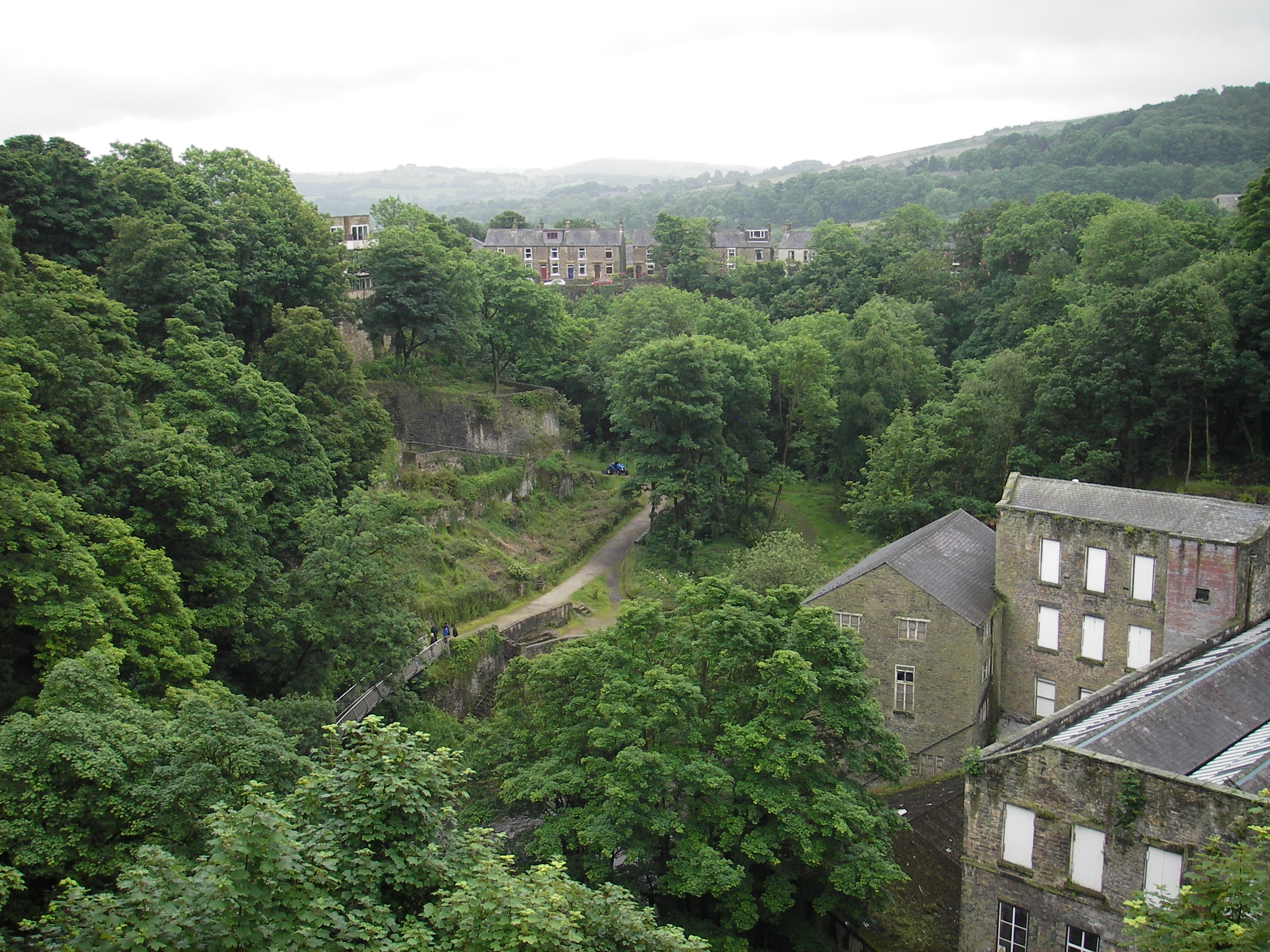
IMGP3801Thornsett is a real village, more of a crossroads now, on the canal between New Mills and Hayfield in the peak district. New Mills (in the picture) is, as the name suggests, a factory town. It’s situated on ample water power and was being built about the time of this story. In 1804 Thornsett was the bigger of the three towns.

Like poor Cecelia, “The Curious Profession of Dr Craven” is back from the dead.

I’ve released a sweet regency romance, Miss DeVere Miss_devere_1 This is a fun read.

Frankenkitty is available.
Frankenkitty What happens when teenagers get to play with Dr Frankenstien’s lab notebooks, a few odd chemicals and a great big whopping coil? Mayhem, and possibly an invitation to the Transylvanian Neuroscience Summer School.

Get Free Stuff and try out my landing page. There are three free complete short stories (including an ARC for Frankenkitty) available after you’ve gone through the hoops.