The Lady That Loved a Swine

Anonymous

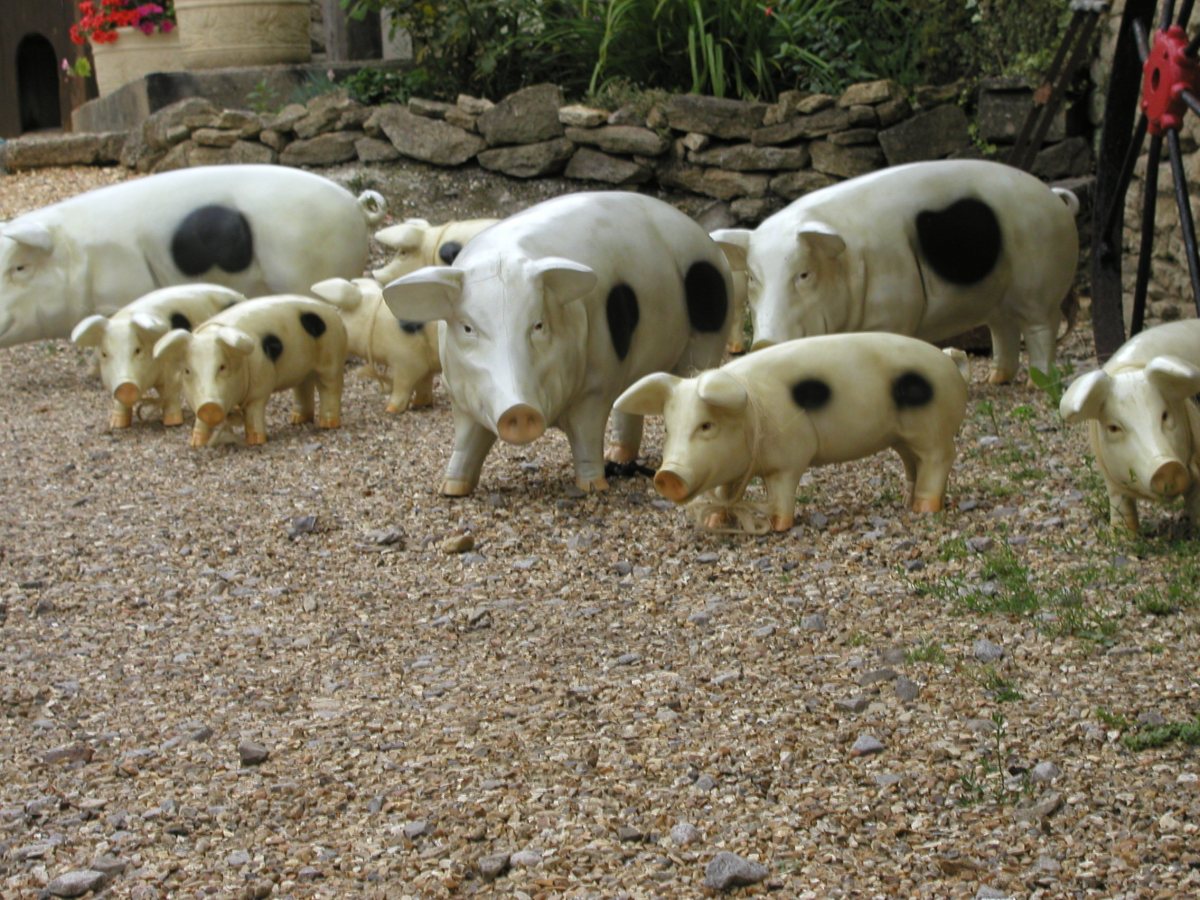
There was a lady loved a swine,
“Honey!” quoth she;
“Pig-hog, wilt thou be mine?”
“Hoogh!” quoth he.

“I’ll build thee a silver sty,
Honey!” quoth she;
“And in it thou shalt lie!”
“Hoogh!” quoth he.

“Pinned with a silver pin,
Honey!” quoth she;
“That thou mayest go out and in,”
“Hoogh!” quoth he.

“Wilt thou have me now,
Honey?” quoth she;
“Speak, or my heart will break,”
“Hoogh!” quoth he.

The Thinker

William Carlos Williams, 1883 – 1963

My wife’s new pink slippers
have gay pom-poms.
There is not a spot or a stain
on their satin toes or their sides.
All night they lie together
under her bed’s edge.
Shivering I catch sight of them
and smile, in the morning.
Later I watch them
descending the stair,
hurrying through the doors
and round the table,
moving stiffly
with a shake of their gay pom-poms!
And I talk to them
in my secret mind
out of pure happiness.

Actually, my wife detests pink, and prefers striped socks to slippers. This poem is a masterful love-poem, without all that yucky mushy stuff of hearts and cupids. It captures how I feel about her.

Limitations

Henrietta Cordelia Ray, 1848 – 1916

The subtlest strain a great musician weaves,
Cannot attain in rhythmic harmony
To music in his soul. May it not be
Celestial lyres send hints to him? He grieves
That half the sweetness of the song, he leaves
Unheard in the transition. Thus do we
Yearn to translate the wondrous majesty
Of some rare mood, when the rapt soul receives
A vision exquisite. Yet who can match
The sunset’s iridescent hues? Who sing
The skylark’s ecstasy so seraph-fine?
We struggle vainly, still we fain would catch
Such rifts amid life’s shadows, for they bring
Glimpses ineffable of things divine.

Miracles

Walt Whitman, 1819 – 1892

Why, who makes much of a miracle?
As to me I know of nothing else but miracles,
Whether I walk the streets of Manhattan,
Or dart my sight over the roofs of houses toward the sky,
Or wade with naked feet along the beach just in the edge of the
water,
Or stand under trees in the woods,
Or talk by day with any one I love, or sleep in the bed at night
with any one I love,
Or sit at table at dinner with the rest,
Or look at strangers opposite me riding in the car,
Or watch honey-bees busy around the hive of a summer
forenoon,
Or animals feeding in the fields,
Or birds, or the wonderfulness of insects in the air,
Or the wonderfulness of the sundown, or of stars shining so
quiet and bright,
Or the exquisite delicate thin curve of the new moon in spring;
These with the rest, one and all, are to me miracles,
The whole referring, yet each distinct and in its place.

To me every hour of the light and dark is a miracle,
Every cubic inch of space is a miracle,
Every square yard of the surface of the earth is spread with the
same,
Every foot of the interior swarms with the same.

To me the sea is a continual miracle,
The fishes that swim—the rocks—the motion of the waves—the
ships with men in them,
What stranger miracles are there?
Canal Boating #travel #England

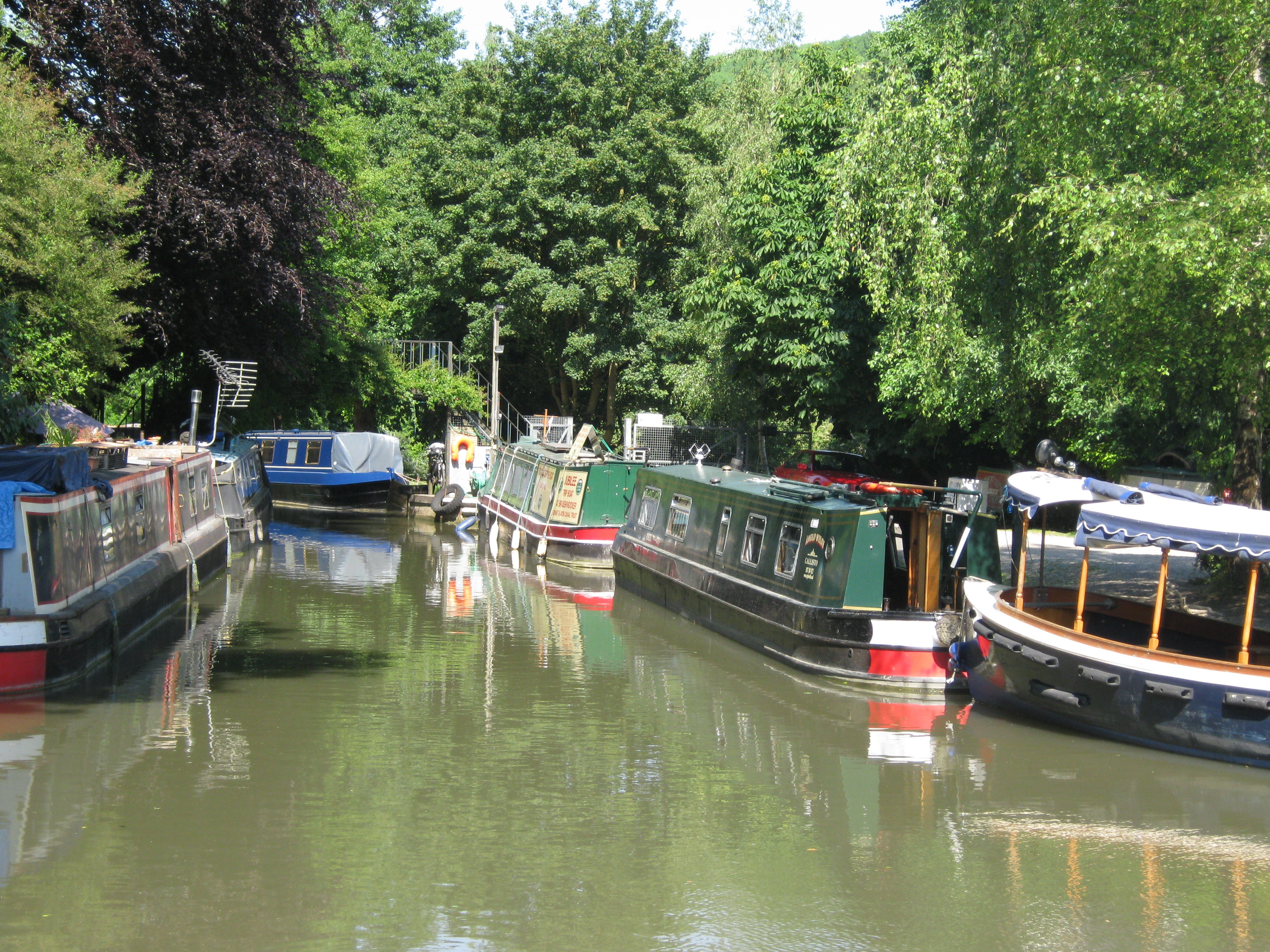
One thing to do in the UK is canal boating. There are several companies that will hire you a narrow boat, give you the fairly minimal training you need to get started, and let you go. We hired one from the Anglo-Welsh hire company and picked it up near Dundas Aqueduct. It wasn’t hard to arrange this from the US.
IMG_0056

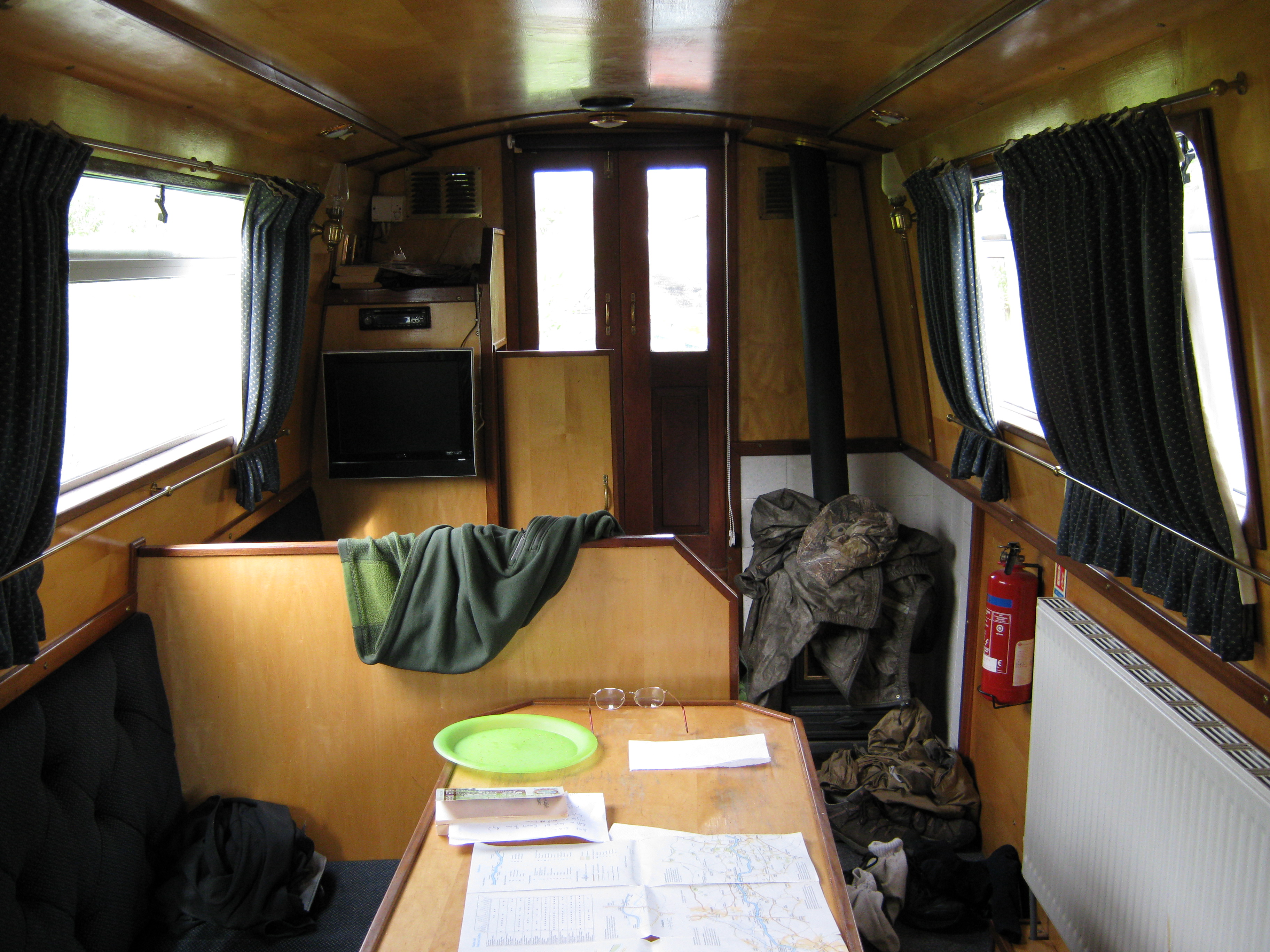
The boats are compact, but fully functional and pleasant to live in.
IMG_0186

This shows our first mooring, snugged against the bank.
IMG_0058

You spend a fair bit of time in the country.IMG_0185

IMG_0171

Locks can be interesting.IMG_0081

Slightly scary the first time.IMG_0067

But by the time you’ve done Caen Hill, you’ll be a pro.IMG_0084

Most of the time it’s straightforward. We did run into some difficulty with strong winds one afternoon. (The engines on the narrowboats aren’t exactly powerful and the wind can push the bow around).

It is a fun family trip, though you should be prepared to walk, especially if the locks aren’t far apart.

IMG_0166

I didn’t take many pictures of the towns we passed through (Chippenham, Devizes) mostly because they look like typical English cities. I was also somewhat busy with the mechanics of locks and shopping at the time. The small towns were more interesting.
IMG_0062

IMG_0226

The Tempest, Act III, Scene II [Be not afeard]

William Shakespeare, 1564 – 1616

Caliban speaks to Stephano and Trinculo.

Be not afeard; the isle is full of noises,
Sounds and sweet airs, that give delight, and hurt not.
Sometimes a thousand twangling instruments
Will hum about mine ears; and sometime voices,
That, if I then had waked after long sleep,
Will make me sleep again: and then, in dreaming,
The clouds methought would open, and show riches
Ready to drop upon me; that, when I waked,
I cried to dream again.

In This Age of Hard Trying, Nonchalance Is Good and

Marianne Moore, 1887 – 1972

“really, it is not the
business of the gods to bake clay pots.” They did not
do it in this instance. A few
revolved upon the axes of their worth
as if excessive popularity might be a pot;

they did not venture the
profession of humility. The polished wedge
that might have split the firmament
was dumb. At last it threw itself away
and falling down, conferred on some poor fool, a privilege.

“Taller by the length of
a conversation of five hundred years than all
the others,” there was one, whose tales
of what could never have been actual—
were better than the haggish, uncompanionable drawl

of certitude; his by-
play was more terrible in its effectiveness
than the fiercest frontal attack.
The staff, the bag, the feigned inconsequence
of manner, best bespeak that weapon, self-protectiveness.

March Evening

Amy Lowell, 1874 – 1925

Blue through the window burns the twilight;
Heavy, through trees, blows the warm south wind.
Glistening, against the chill, gray sky light,
Wet, black branches are barred and entwined.

Sodden and spongy, the scarce-green grass plot
Dents into pools where a foot has been.
Puddles lie spilt in the road a mass, not
Of water, but steel, with its cold, hard sheen.

Faint fades the fire on the hearth, its embers
Scattering wide at a stronger gust.
Above, the old weathercock groans, but remembers
Creaking, to turn, in its centuried rust.

Dying, forlorn, in dreary sorrow,
Wrapping the mists round her withering form,
Day sinks down; and in darkness to-morrow
Travails to birth in the womb of the storm.

On Seeing a Tuft of Snowdrops in a Storm

William Wordsworth, 1770 – 1850

When haughty expectations prostrate lie,
And grandeur crouches like a guilty thing,
Oft shall the lowly weak, till nature bring
Mature release, in fair society
Survive, and Fortune’s utmost anger try;
Like these frail snow-drops that together cling,
And nod their helmets smitten by the wing
Of many a furious whirlblast sweeping by.
Observe the faithful flowers! if small to great
May lead the thoughts, thus struggling used to stand
The Emathian phalanx, nobly obstinate;
And so the bright immortal Theban band,
Whom onset, fiercely urged at Jove’s command,
Might overwhelm, but could not separate!

We don’t have wild snowdrops in the south, so maybe a spring Trillium will do. From Jarrod Gap near the AT. The odd, sort of hand-shaped, leaf just out of focus in the back is a bloodroot – a delicate spring flower with bright orange sap.

The Uses of Poetry

William Carlos Williams, 1883 – 1963

I’ve fond anticipation of a day
O’erfilled with pure diversion presently,
For I must read a lady poesy
The while we glide by many a leafy bay,

Hid deep in rushes, where at random play
The glossy black winged May-flies, or whence flee
Hush-throated nestlings in alarm,
Whom we have idly frighted with our boat’s long sway.

For, lest o’ersaddened by such woes as spring
To rural peace from our meek onward trend,
What else more fit? We’ll draw the latch-string

And close the door of sense; then satiate wend,
On poesy’s transforming giant wing,
To worlds afar whose fruits all anguish mend.