At the Window

D. H. Lawrence, 1885 – 1930

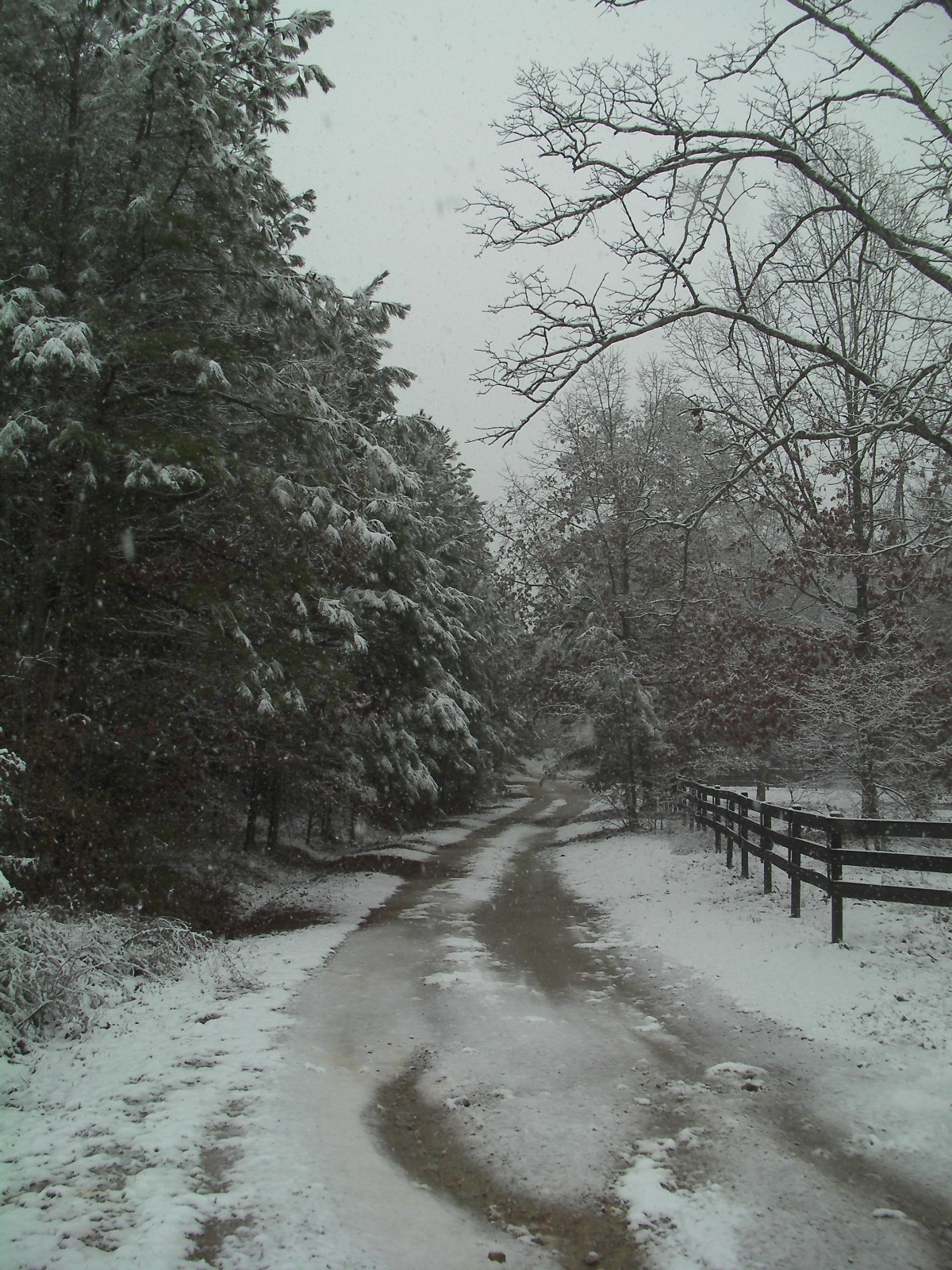
The pine-trees bend to listen to the autumn wind as it mutters
Something which sets the black poplars ashake with hysterical laughter;
While slowly the house of day is closing its eastern shutters.

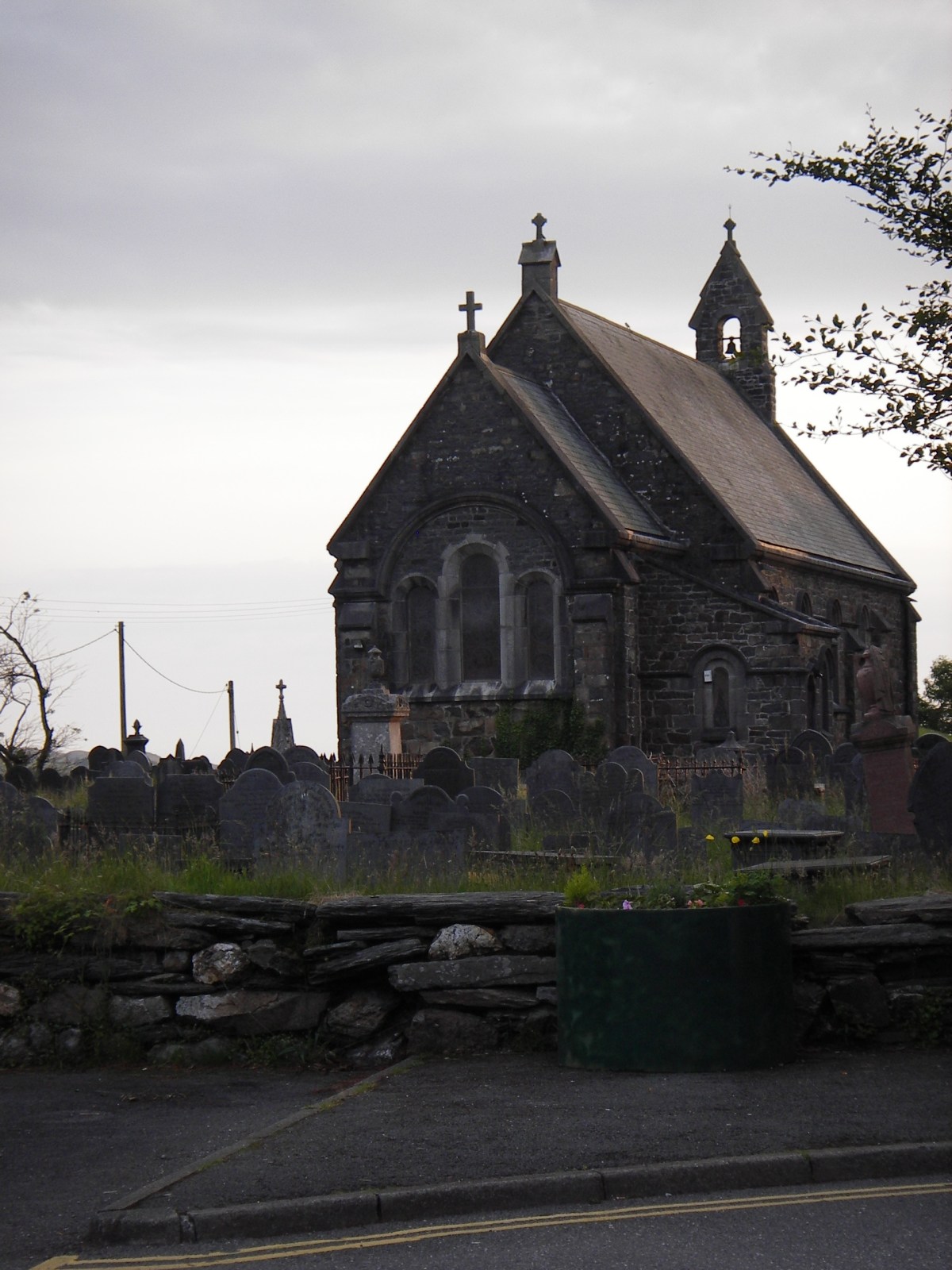
Further down the valley the clustered tombstones recede,
Winding about their dimness the mist’s grey cerements, after
The street lamps in the darkness have suddenly started to bleed.

The leaves fly over the window and utter a word as they pass
To the face that leans from the darkness, intent, with two dark-filled eyes
That watch for ever earnestly from behind the window glass.

Dartmoor Story II

This is the second installment of a story I’ve been working on that is set at a little farm near North Bovey. It’s set much later (1893) than my usual ones and has a strong science fiction backstory.


Her uncle walked to the trap and offered a hand to help her down, “You should call me Sylvester. Uncle Sylvester if you must. We’ll see, but I’m sure the fresh air and clean water of Dartmoor will help.”

He led her into the parlour and said, “You must be hungry, tea?”
“Yes, please. I mean, if it wouldn’t be a bother, Uncle.”
“It’s no bother for me,” he turned and shouted, “Mary! Tea please, in the parlour. My niece Elizabeth is finally here.” Then he explained to Elizabeth, “There’s no bell so I just shout for the servants. You’ve met George, my man-of-work. Mary is his wife and my housekeeper.”
While they waited for Mary, Uncle Sylvester played with a lamp, adjusting the wick and finally lighting it. A dim orange glow filled the room. “I’m afraid we’re not on the gas here. So kerosene lamps it is.”
Elizabeth said that would be fine.
“It’s either those or candles, but I have laid on water. At least when the pump works.”
Mary arrived with the tea tray. In addition to the teapot, she had put some scones on a plate. She curtsied and said, “Miss James, I hope you’ll find this to your liking.”
Uncle Sylvester said, “Mary, if you would see to Elizabeth’s needs. There is an experiment I must attend to. I shan’t be long and I should like to listen to those lungs of yours before you sleep.”
After her uncle left, Elizabeth asked Mary, “His laboratory? When my father said that, it usually meant he was dashing around the corner for a nip of brandy.”
“No Miss. If Dr Standfast says he’s in his laboratory, he’s working. He doesn’t drink like that.”
“A teetotaller?”
“Not quite Miss Elizabeth, he’s just temperate. I can’t imagine him sneaking off for a nip.”
“What’s so special about his laboratory?”
“Can’t say Miss Elizabeth. It’s private, maybe you should ask him.”
“I will. Thank you for the scones, I didn’t realize how hungry I was. It’s been a long trip.”
“From London and all, Miss. I shouldn’t wonder. I’d love to go to London, some day.”
Mary’s speculation about London ended when George dragged Elizabeth’s trunk inside. “Sorry Miss, I had to put the pony in his stall first. Mary, love, which room is hers?”
“Upstairs, left in back.” Mary turned to Elizabeth, “It has a lovely view, Miss and is away from the noise of the road.”
“What noise? It is so quiet here.”
George struggled with the trunk, mostly because the staircase was narrow and twisty, and he couldn’t stand straight to lift it properly. Mary led Elizabeth in his wake to the room her uncle had chosen for her. There was a small brass bedstead, a wardrobe and a table with the inevitable pitcher and basin. The chamber pot was under the bed where it should be. Elizabeth went to the window and gazed out. The stars shown above the line of hills and downs in the distance. Dim yellow lights showed where the village of North Bovey lay to the North. Rather more light, to the East, showed the town of Moreton Hampstead.
Elizabeth said, “It’s perfect.”
“Yes, Miss.” Mary paused, “George, Miss Elizabeth should get her rest.”
“Oh, right.” George bowed slightly and tipped his forehead in a salute. “Sleep well, and if you want to tour the farm, let me know in the morning and I’ll get the Tilbury ready.”
“I shall, but you know it depends on what Uncle says.”
Mary bustled her husband out of the room, and then helped Elizabeth to open her trunk. They found her nightdress. Then she helped Elizabeth out of her dress and the corset she wore beneath it.
“Miss,” she asked, “Your arms, all those bruises, what did you do to them?”
“I don’t know. I think I knocked them on my bedstead when I had a nightmare. I have bad nightmares.”
“Then I hope you sleep well here and have no nightmares.”
“So do I.”
Uncle Sylvester knocked on the door. “When you are ready, I’d like to listen to that chest, and you can tell me about these nightmares.”
A few minutes later, once Elizabeth wore her nightdress, they let him in. He too, noticed the bruises on Elizabeth’s arms, and frowned at the story Mary repeated to him.
“Interesting,” he said, “How often did you have those nightmares?”
“Every two weeks, it was like a clock.”
He nodded, and then said, “I think you’ll find the fresh air and good food of Dartmoor will banish those. Let me hear your chest.”
He pulled a stethoscope from his pocket, explaining, “I had to get this from the laboratory. It’s probably best if you’d sit on the edge of the bed.”
Elizabeth sat and he sat behind her. Mary, still there for proprieties sake, watched as he slid the chestpiece along Elizabeth’s back, asked her to breathe deeply and listened. Then he thumped her back while he carefully listened.
“Interesting, interesting, interesting.” He paused, “I don’t think I need to listen to the front of your chest.” Then he stood up and walked to the window. He stared out at the stars for a few moments of intense thought, and then, finally, turned around and said, “How long have you had this consumption?”
“I don’t know, but I’ve been weak for the last year, and coughing for almost as long.”
“When did the nightmare’s start?”
“About the same time. After he examined me, Mr Harvey told me it was because I couldn’t breathe well. When I struggled for breath, I’d have the dreams.”
Her uncle nodded, “It could be. When did the bruises start?”
“At least a year ago, about the same time. What is it?”
Uncle Sylvester frowned, “I’m not sure.” Then he smiled at her, “But whatever it is, your parents did the right thing to send you here. Get some sleep and we’ll see how you feel in the morning.” He paused again and said, “Mary, before you go, make sure the windows are fastened tight, locked. Elizabeth shouldn’t breathe the chill night air. By the way, Elizabeth, how long has it been since your last nightmare?”
“Two weeks.”
Her uncle frowned again, but said nothing more and shut the door as he left.

The next installment.
 

In Flanders Fields

John McCrae, 1872 – 1918

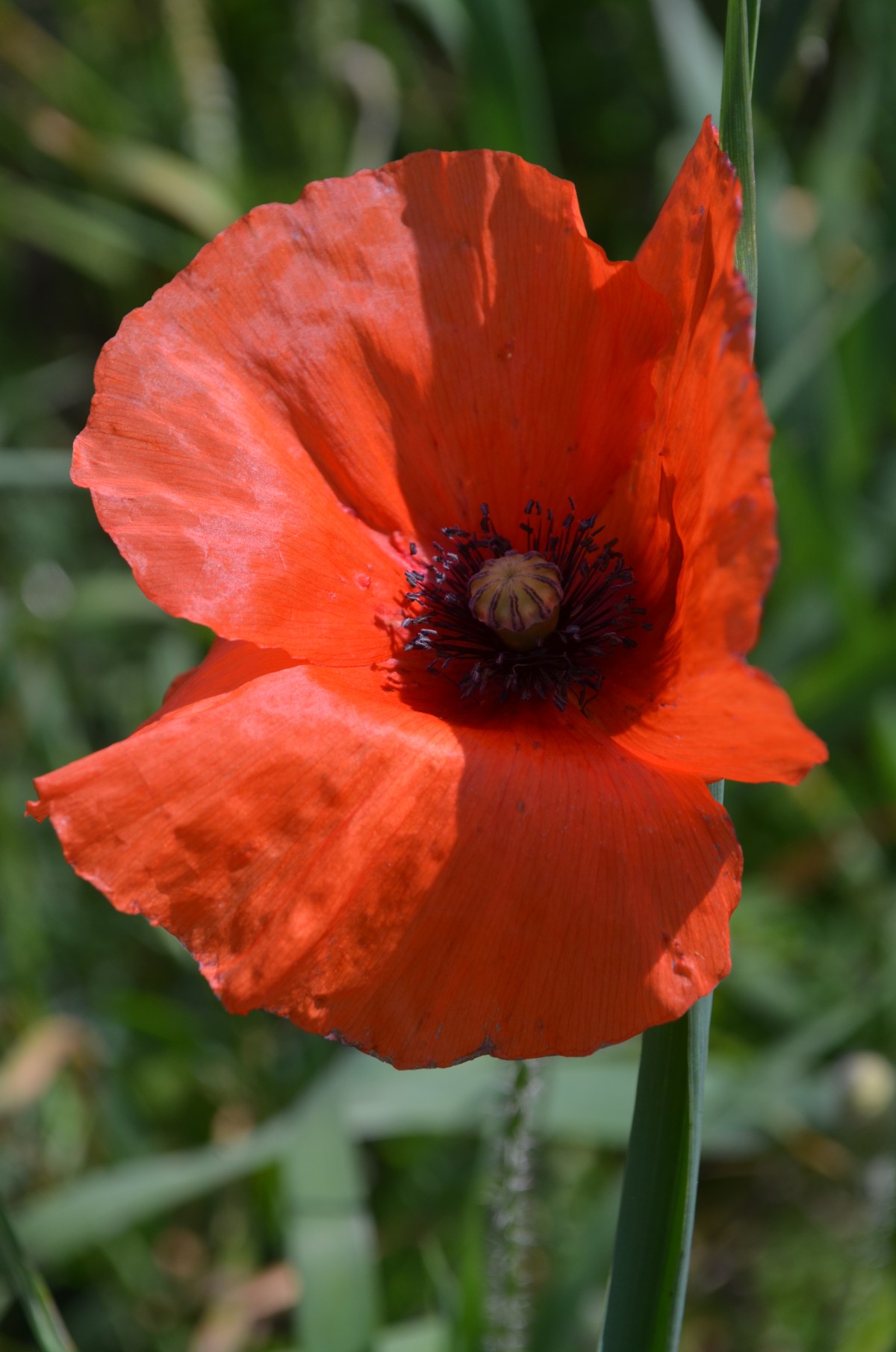
In Flanders fields the poppies blow
Between the crosses, row on row,
That mark our place, and in the sky,
The larks, still bravely singing, fly,
Scarce heard amid the guns below.

We are the dead; short days ago
We lived, felt dawn, saw sunset glow,
Loved and were loved, and now we lie
In Flanders fields.

Take up our quarrel with the foe!
To you from failing hands we throw
The torch; be yours to hold it high!
If ye break faith with us who die
We shall not sleep, though poppies grow
In Flanders fields.

Sonnet—Silence

Edgar Allan Poe

There are some qualities—some incorporate things,
That have a double life, which thus is made
A type of that twin entity which springs
From matter and light, evinced in solid and shade.
There is a two-fold Silence—sea and shore—
Body and soul. One dwells in lonely places,
Newly with grass o’ergrown; some solemn graces,
Some human memories and tearful lore,
Render him terrorless: his name’s “No More.”
He is the corporate Silence: dread him not!
No power hath he of evil in himself;
But should some urgent fate (untimely lot!)
Bring thee to meet his shadow (nameless elf,
That haunteth the lone regions where hath trod
No foot of man,) commend thyself to God!

FrankenKitty 10 #wewriwar #amwriting

Frankenkitty

(Some assembly required)

12241791_735836876546522_6197947469406170479_n

Welcome to Weekend Writing Warriors.  This is a sample from my work in progress, “Frankenkitty”, and I hope you enjoy it.  It started out as a young-adult superhero book, and well, you’ll see. The week before last week, in the chapter, “The Gerbil from Hell,” the girls found a test subject. The trouble starts this week. This snippet picks up right after last weeks where Amber reminded Mary about their experiments with a coil.


“How could I forget? We nearly blew out the town’s power grid; you don’t think.”

“Why not,” Amber said, “it would be fun, and we could totes do it this time; they’d never know it was us.”

Jennifer’s father arrived at Amber’s house to pick up his daughter. He arrived just in time to see the house lights dim and brown out. The streetlights flickered then went out. Then with a loud bang, the whole street went black and sparks flew from the transformer attached to the power line in the street.

“Funny that,” he said to himself, “Same thing happened last year.”

 He tried to ring the doorbell, then after realizing it didn’t work without power, knocked on the door.

Amber’s parents calmly answered the door; they were wearing LED headlamps and were surprisingly unphased by the events of the night.


This is a work in progress. In other news, I’ve become a booktrope author, but more on that latter. It has meant a change in pen-name. The week before last week’s is here and you can read the whole last chapter if you’d rather.  I’ve added a sub-title “(some assembly required).”

I’m also looking for reviewers for my nearly ready book “The Curious Profession of Dr. Craven” It’s moved out of layout to final assembly.  There was a bit of a hiccough in production, but that’s sorted out.

Get Free Stuff and try out my landing page.

Follow my blog with Bloglovin

January

William Carlos Williams

Again I reply to the triple winds
running chromatic fifths of derision
outside my window:
Play louder.

You will not succeed. I am
bound more to my sentences
the more you batter at me
to follow you.

And the wind,
as before, fingers perfectly
its derisive music.


Holidays

Henry Wadsworth Longfellow

The holiest of all holidays are those
Kept by ourselves in silence and apart;
The secret anniversaries of the heart,
When the full river of feeling overflows;—
The happy days unclouded to their close;
The sudden joys that out of darkness start
As flames from ashes; swift desires that dart
Like swallows singing down each wind that blows!
White as the gleam of a receding sail,
White as a cloud that floats and fades in air,
White as the whitest lily on a stream,
These tender memories are;— a Fairy Tale
Of some enchanted land we know not where,
But lovely as a landscape in a dream.

Dartmoor Story.

This is the start of a story I’ve been working on that is set at a little farm near North Bovey. It’s set much later (1893) than my usual ones and has a strong science fiction backstory.

Uncle Sylvester Receives a Visitor.

It was nearly dark when the pony-trap carrying Elizabeth from the station at Moreton Hampstead finally arrived at the farm at Barnecourt. Venus, the evening star, shown brightly in the dull orange band of the western sky. She presaged a clear and starry night. Nobody noticed when she winked out and fell to Earth with a quick bright streak of light. George Trent, Dr. Standfast’s man-of-all-work, drove the trap to the front of a small farmhouse in the country not far from the isolated village of North Bovey on the outskirts of Dartmoor.

After stopping, he gently awakened his sleeping passenger, “Miss James? We’re here.”

Elizabeth James, a slight young woman, dark haired and pale, with the gentle slight cough of incipient consumption, stirred. Her parents had arranged for her to visit her uncle. He lived and practised in the country, and they all hoped that the fresh air would suit her lungs better than the stale smutty air of London. They had waved goodbye as she boarded a train in Paddington in the morning, her first step in the longest journey of her life. London, to Bristol, to Exeter, and then on the stopping train to the end of the line at Moreton Hampstead. There she was met by her uncle’s servant with a one-horse trap, and now, finally, she awoke in front of his house.

“We’re here?”

“Yes, Miss. Let me tie the horse and I’ll help you down.”

The clatter of their arrival brought Dr. Standfast to the door. Unusually tall, thin and surprisingly active for his sixty years, he shot out of the door and said, “Elizabeth! You’ve made it at last. How was your trip?”

Elizabeth replied, “Tiring.”

“I can see that, but are you feeling well. At least as well as can be?”

She gave a slight cough, and then said, “I think so.”

The cough made her uncle frown, “We’ll see what we can do about your cough.”

“If you can do anything, Uncle Standfast, it will be more than the doctors on Harley Street could.”

Her uncle walked to the trap and offered a hand to help her down, “You should call me Sylvester. Uncle Sylvester if you must. We’ll see, but I’m sure the fresh air and clean water of Dartmoor will help.”

The story continues

How to get a good grade in my class.

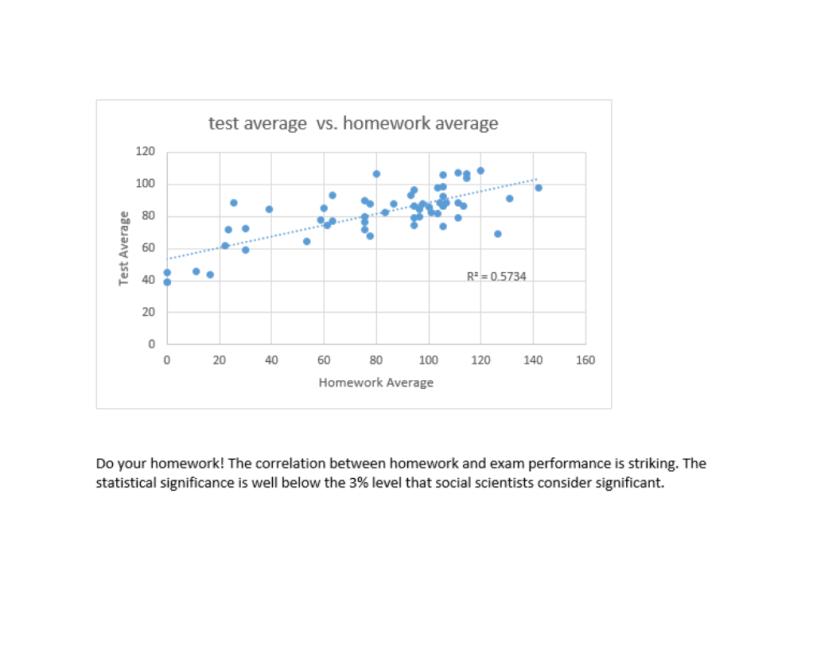
The real world is sneaking in again. Oh well. Just finished a marathon of grading. Students might think my finals are hard. Grading 60 of them takes two days. My class was large enough that the university’s online grading system choked.

There is an extremely interesting correlation, and one that is very statistically significant. If you actually do the homework you tend to do well in class. This might not be causal, in that students who can’t do the homework can’t do the tests, but it is highly suggestive. Certainly a ‘head’s up’ would be that if you can’t do the homeworks then you probably should take some other class. Similarly if you’re too lazy to do the homework or it isn’t interesting to you, then maybe you shouldn’t be doing this.

homework

We Wear the Mask

Paul Laurence Dunbar, 1872 – 1906

We wear the mask that grins and lies,
It hides our cheeks and shades our eyes,—
This debt we pay to human guile;
With torn and bleeding hearts we smile
And mouth with myriad subtleties,

Why should the world be over-wise,
In counting all our tears and sighs?
Nay, let them only see us, while
We wear the mask.

We smile, but oh great Christ, our cries
To thee from tortured souls arise.
We sing, but oh the clay is vile
Beneath our feet, and long the mile,
But let the world dream otherwise,
We wear the mask!