Fur and Feathers

I’ve joined one of the groups of photographers in the Atlanta area: the Southeastern Photography Society. Partially for social reasons, and partially to get feedback and learn new things.

Anyway they have monthly themed contests and next month’s is “Fur and Feathers.” The obvious choice is animals, though I did entertain several alternatives, and maybe will pursue them. Unfortunately I don’t know anyone with a feather boa who wears fur and would be willing to be an outrageous model. I wondered about a still life of fish flies or lures since they often use both fur and feathers; and something tells me that my puppies would not be keen on being dressed up with a bunch of feathers. So the obvious choice it is.

I get to put in a black and white/monochrome entry and a color one. 
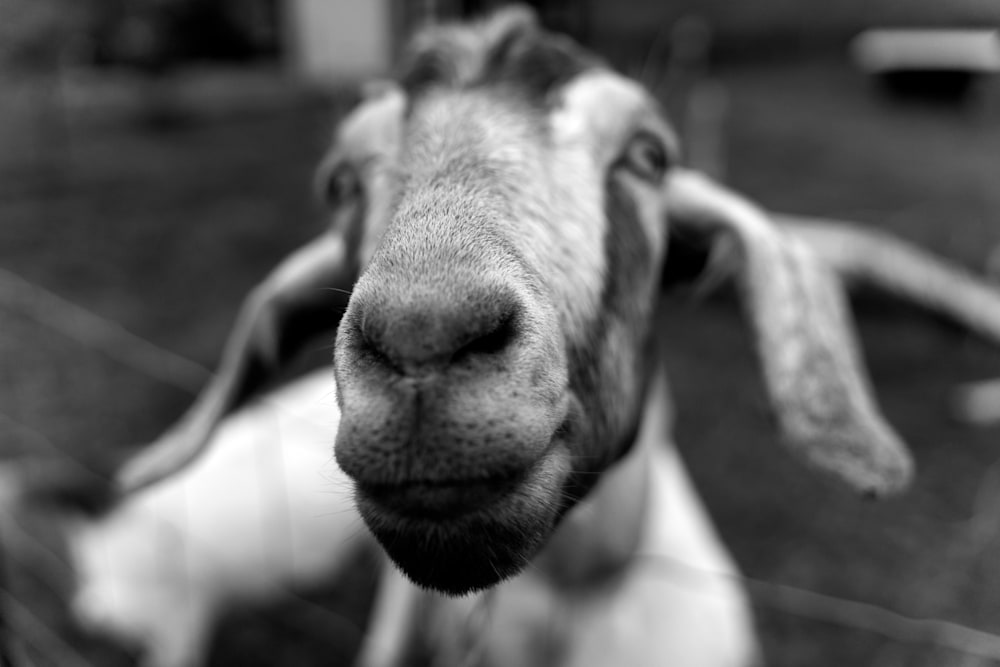
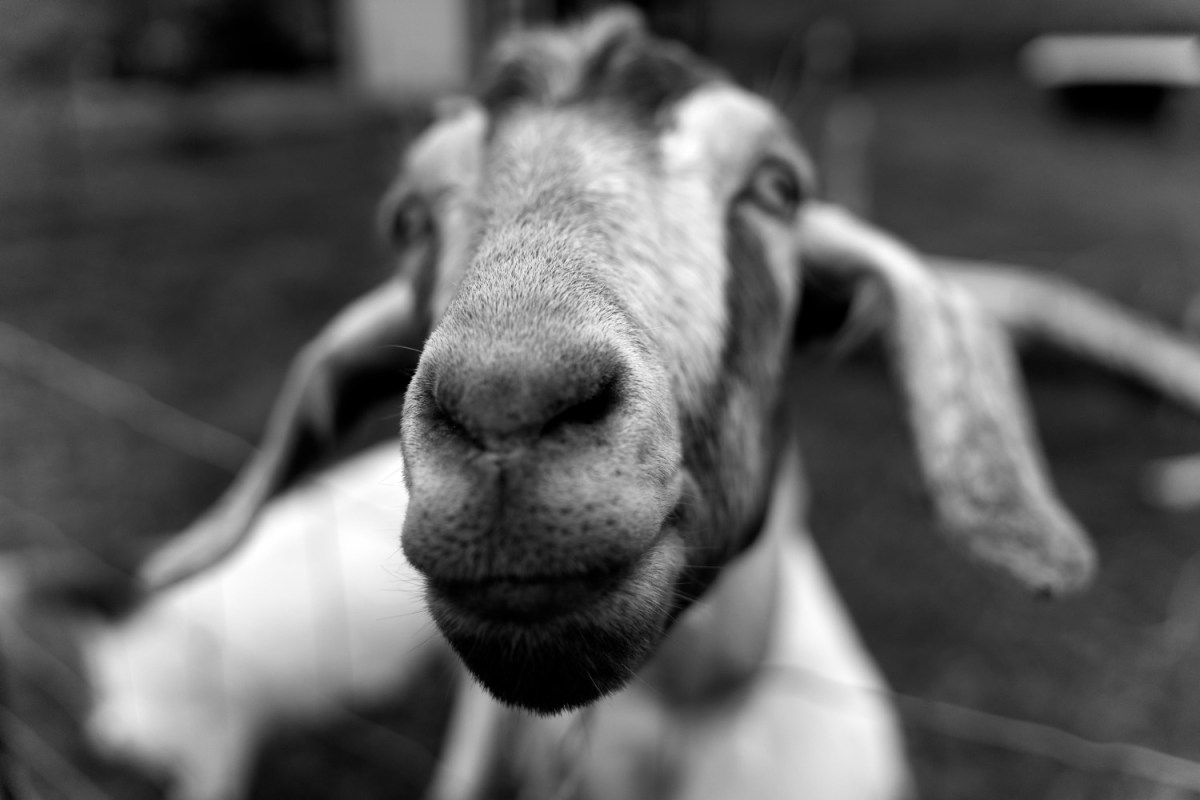
This one is one of my favorites, just because it’s funny. 
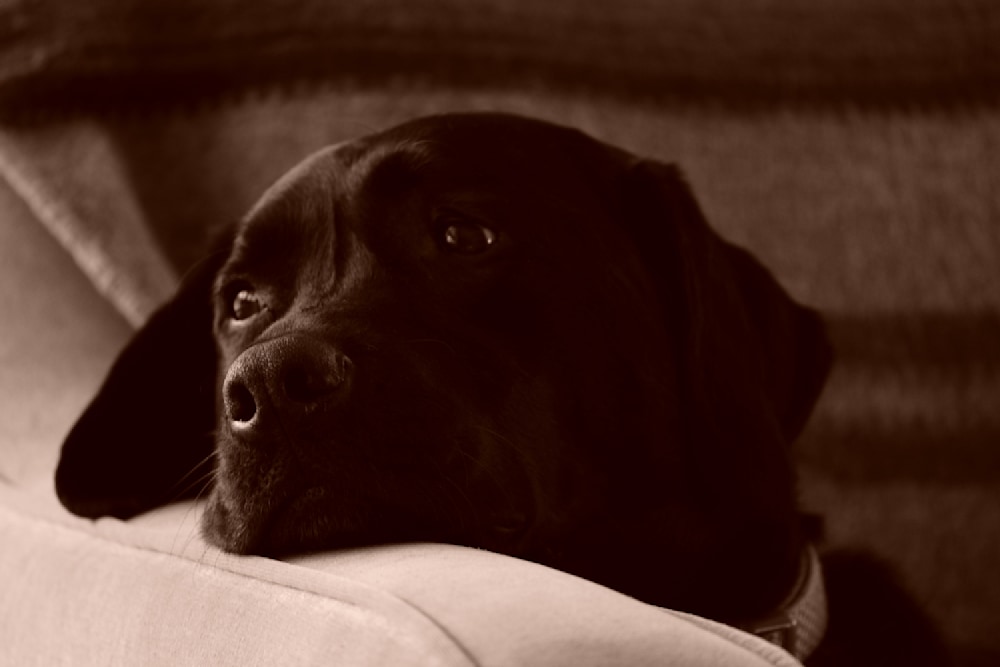
I also like this one of our puppy. It looks like a Julia Ward Cameron work. Either of these will work well enough.

Feathers are a different case.

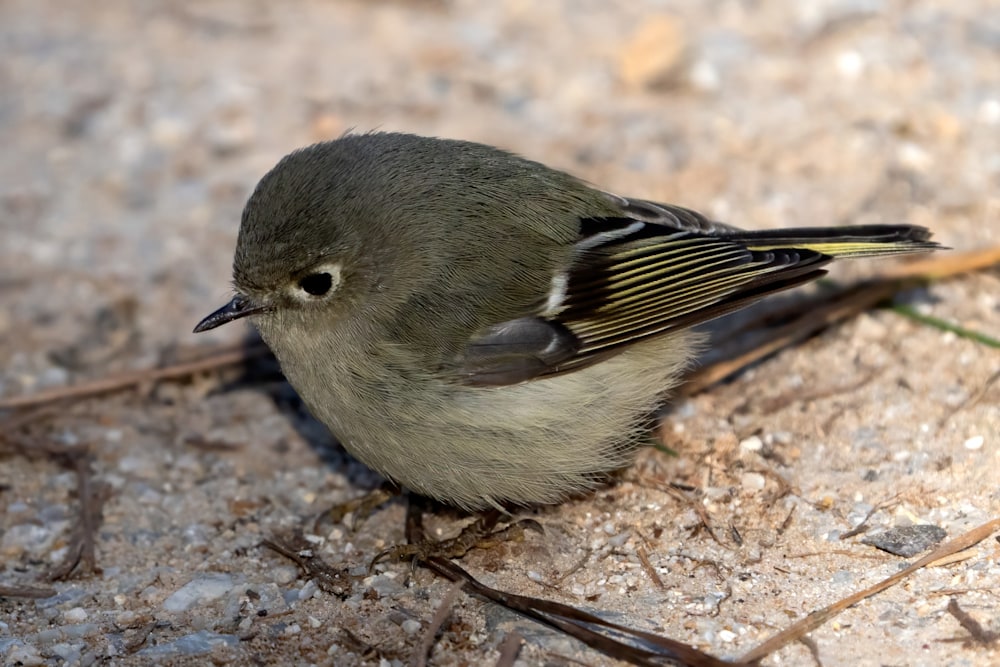
A bird is an obvious choice:
A closeup of a bluejay feather is also possible:
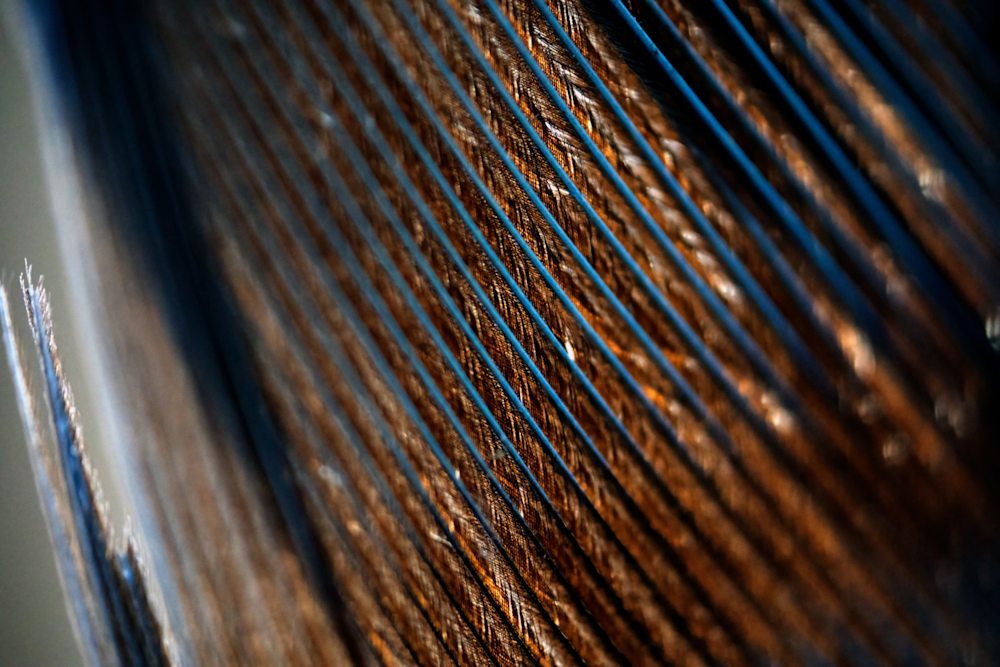
I have a lighter and a darker version of this, but the mid-range is probably best.
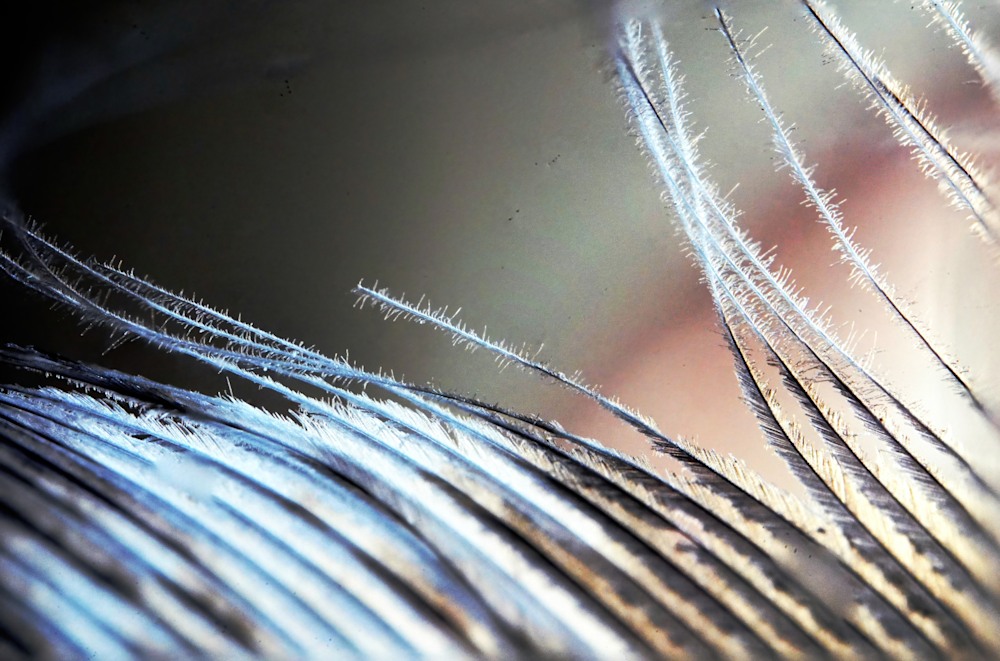
This close up of the edge of a turkey feather is neat, though there are some artefacts from the focus stacking.

What do you think?

Landing in the Microverse

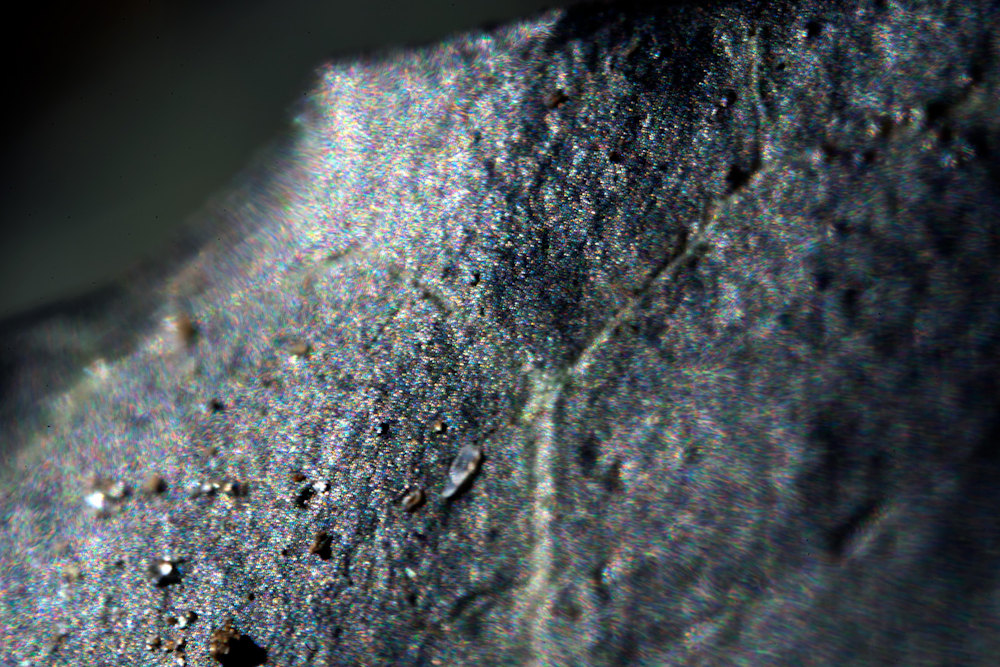
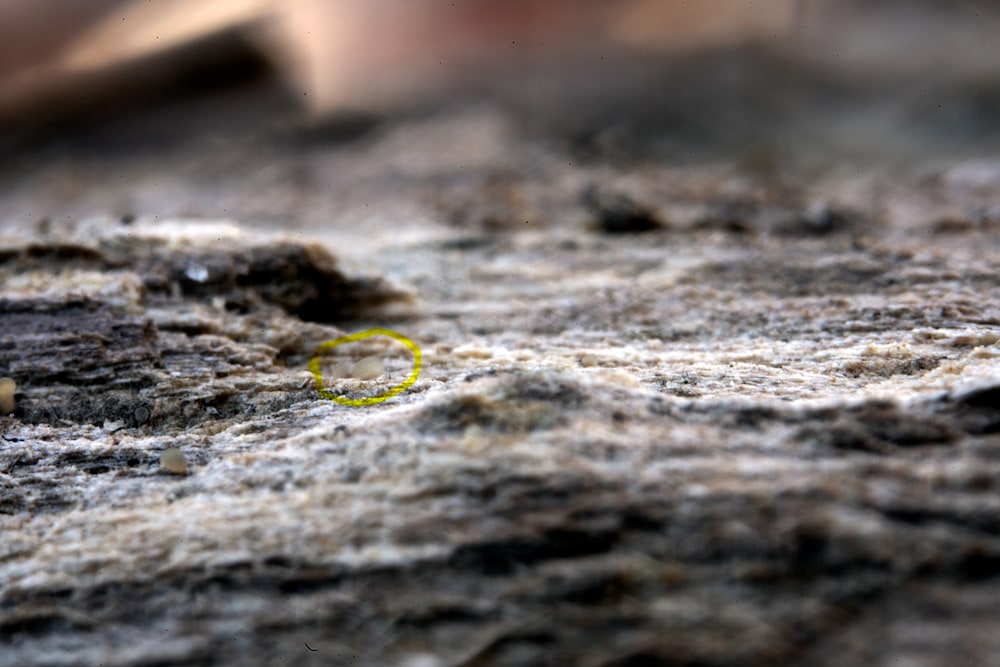
This science-fiction landscape is actually an extreme closeup of a decomposing Oak branch. 

Cool, aint it? There’s a tiny mite near the left side and at least three small fungi spore bodies (or possibly slime molds). If you like seeing new worlds, and I do, this is exciting.

I’ll be experimenting with ultraclose photography in the new year. It practically begs for focus stacking – where you overlap a stack of images based on the focus. The lens I’m using is basically a microscope lens adapted onto a mount for my cameras. It’s only a 20mm lens, but you must be within a couple of centimeters to focus. And by the way, you focus by moving the camera, not the lens. So a focusing rail and sturdy tripod are de rigueur  so to say.  I’m also curious to see what happens when I use extension tubes to move the lens away from the camera body and increase the magnification. 

Still there’s a lot to see even with single shots.

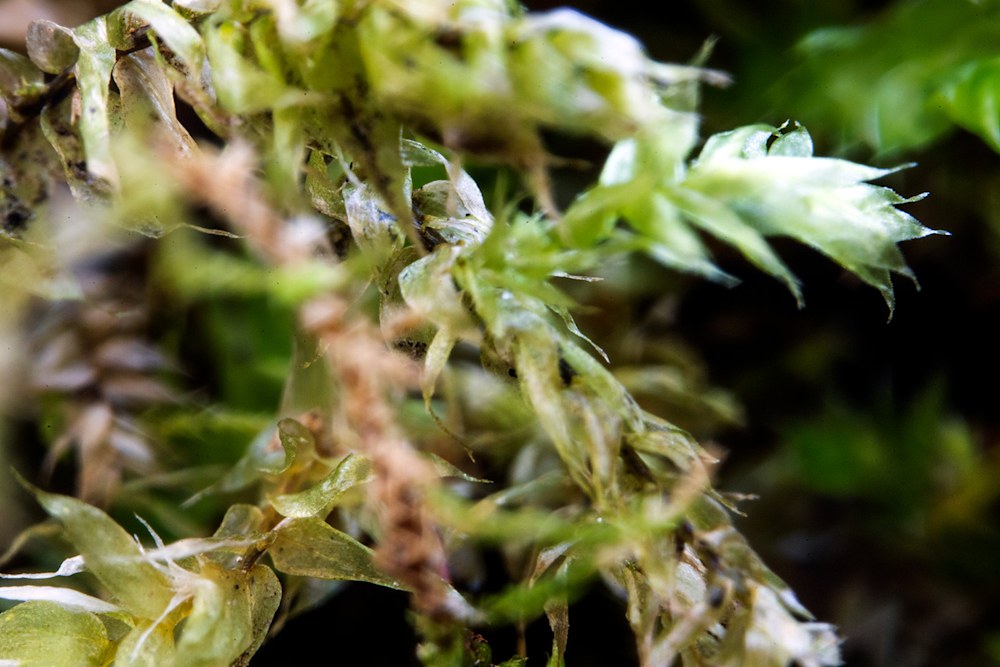
This jungle is a common species of moss:

And English Ivy sparkles with color or perhaps it should be colour, even though it’s dark from the cold.

I didn’t know that and wouldn’t have noticed it with just my eyes.

These images probably won’t make it onto our website, though I’m not sure about the first as it is intrinsically interesting, but drop me a line if you’d like a copy (I’ll probably aske you to sign up for the mailing list though).

Artwork of the week 1/6/23

One of the big differences between “just snapshots” and art photography is that the artist thinks about what they’re doing, what they’re trying to show, and how to achieve the desired result. 

I’ve been reading and studying techniques of composition because … well … that’s one way to learn. The other is way is to go out and shoot, I’ve been doing that as well, and I’m hoping to have meaningful interactions with some of the local photography groups. (We’ll see about that last part, I tried before with one group and had a less than stellar experience. Cliques and in-groups are a thing.)

One book I’ve found useful is Richard Garvey-Williams “mastering composition”   It’s inspired me to look again at how I edit images. You can’t always plan out photographs in the wild. You can try, but nature has a way of doing what she wants and the process of observation often perturbs the environment. Shades of quantum mechanics, say what? 

Today’s images show what I mean.  (and they are or soon will be available on this site.)

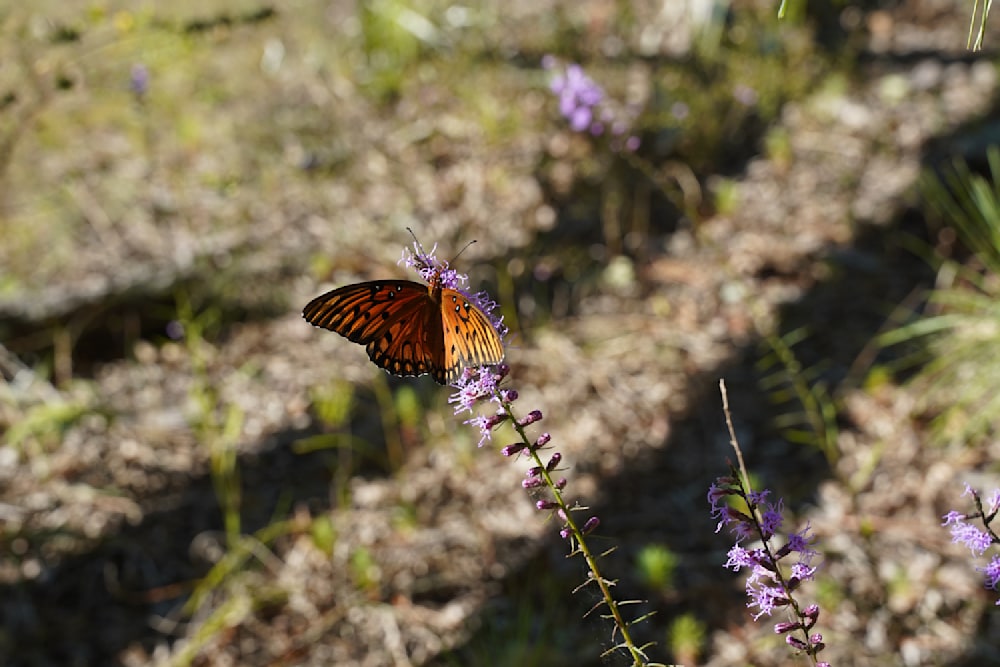
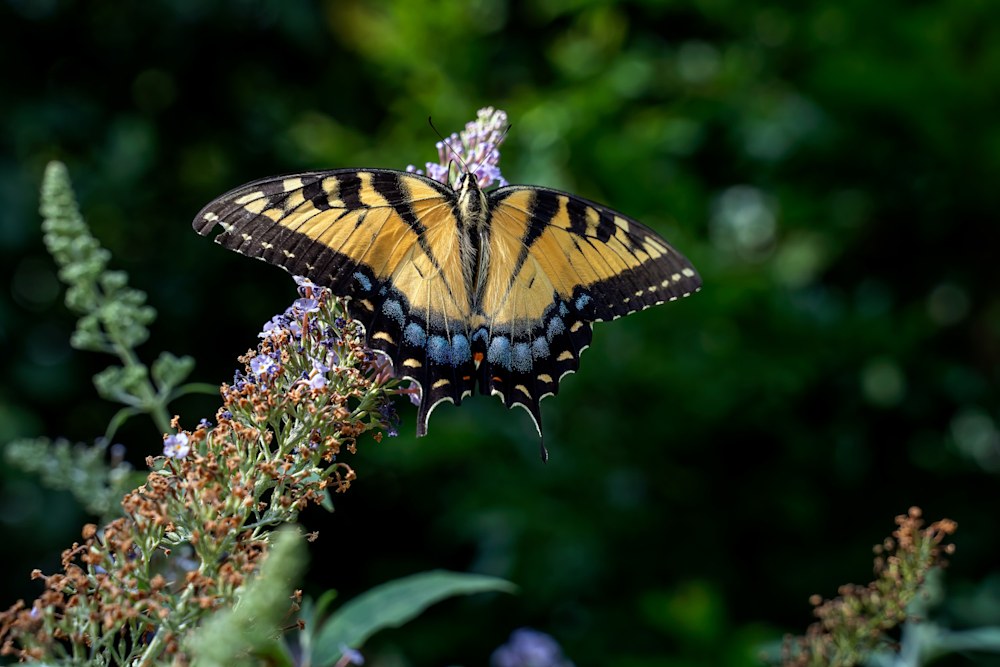
The original is pretty, enough, but it’s out of balance and a bit washed out.

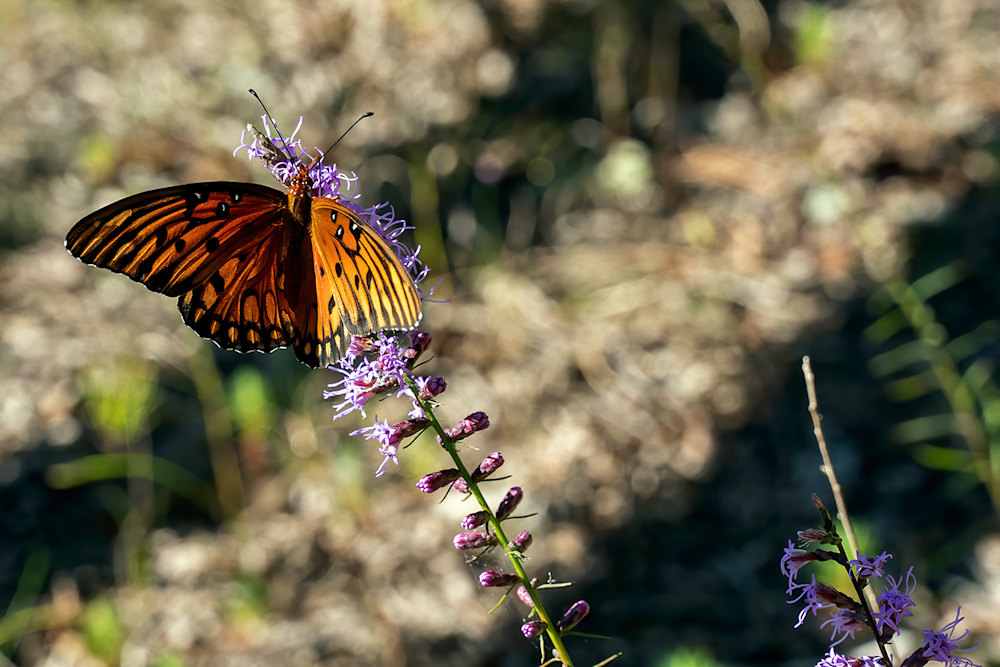
Cropping, playing with the image chromatic values (adjusting the image values to remove saturation and then adjusting the midpoint level), and using various trickery to restore the size results in:

This is a vastly better image. The subject dominates the picture and the lines defined by the flowers leads the eyes to it.

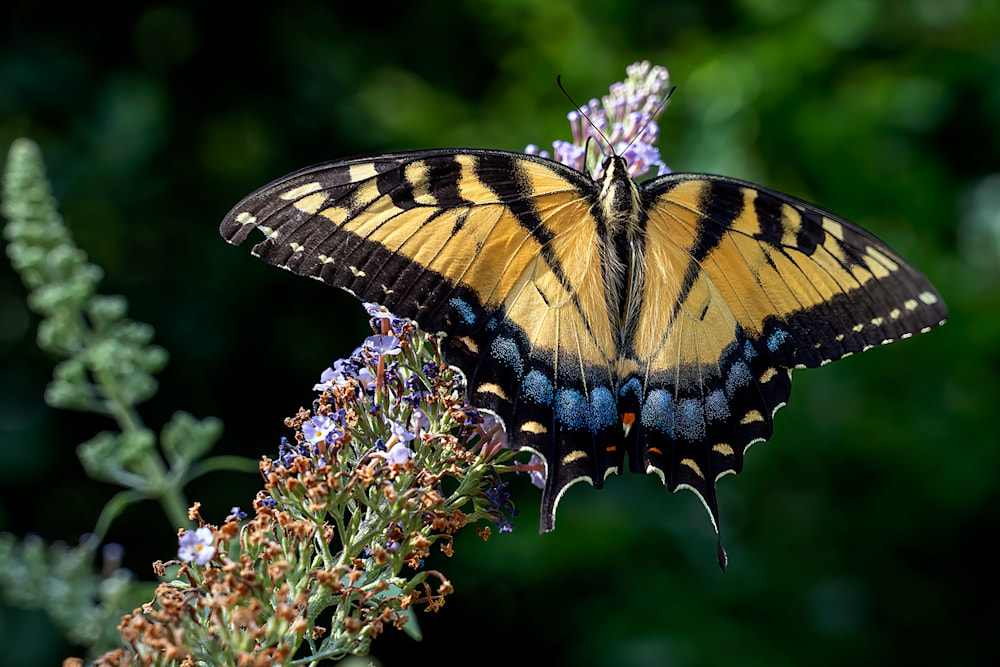
Much the same happens with this image of a Swallowtail. Before:

and after:

Bon Secour NWR

A follow up to my post on RVs. 

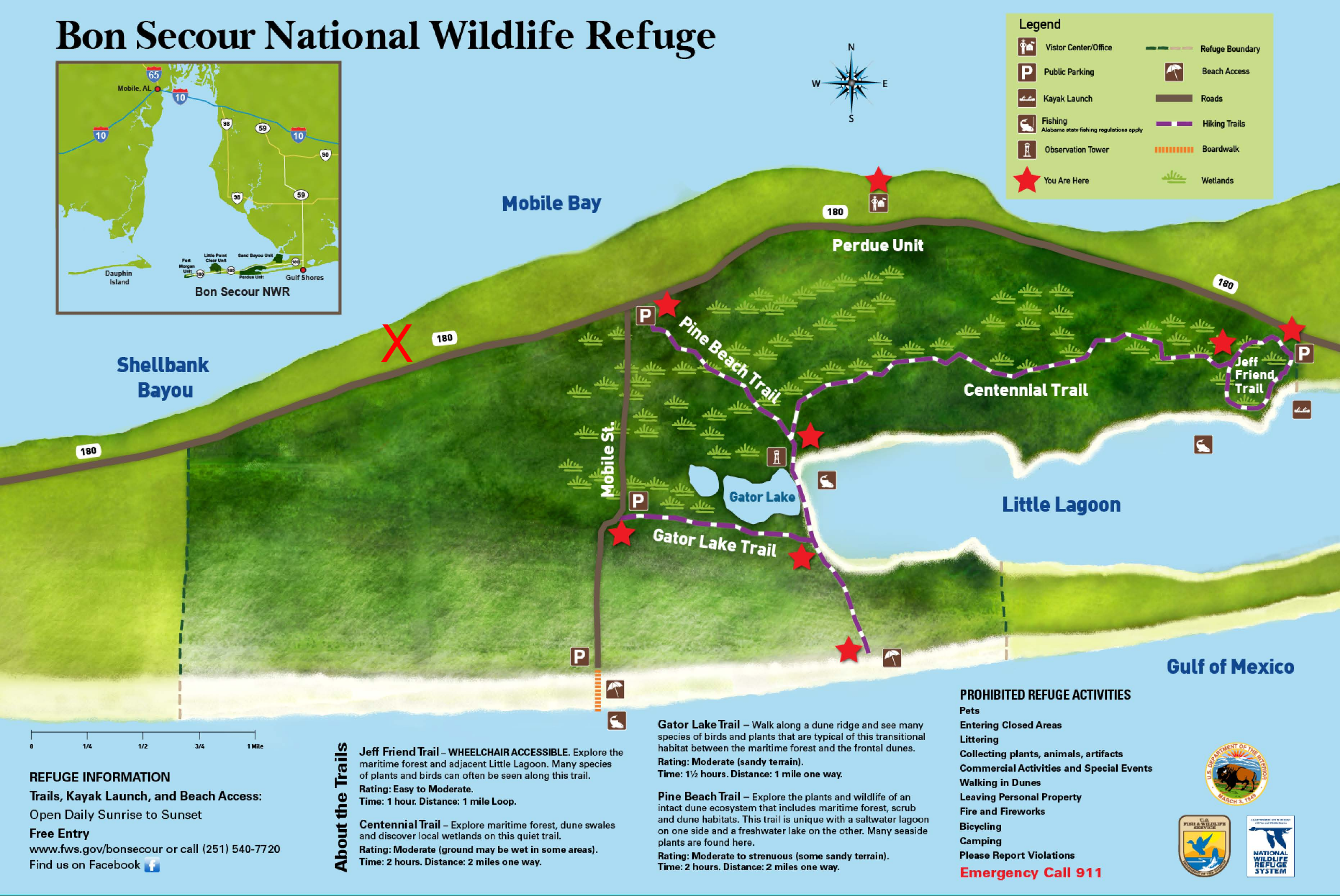
One of the highlights of our trip was exploring the nearby National Wildlife Refuge. We were about a mile down the road from it, and while route 180 is fast, there are wide margins so that it is eminantly walkable.

X marks the approximate location of Fort Morgan RV park.

I have a birding life list into the hundreds and was still able to identify five new species without serious birding. (Just walking with binocculars in hand.)  We walked there three times: first, late in the afternoon to the junction of the Gator Lake trail and the Pine Branch trail (4 miles round trip),  second, to the shore on the Pine Branch trail (6 miles round trip), and lastly to the Gator Lake trail returning via Mobile street, the shore, and the Pine Branch trail (8 miles round trip).


A Sandriling

Since pets (dogs) are not allowed in the refuge and there are not that many people who visit, the birds are quite tame. The Sandriling walked within two feet of me.

Fifteen inches (1/3 meter) of rain will flood the trails.

There were mosquitos, even at the winter solstice, so a summer visit should include insect repellent and quite possibly a face net.

Without trying, we saw:

  • Osprey
  • Great Blue Heron
  • Belted Kingfisher
  • Brown Pelican
  • Sandriling
  • Snowy Plover
  • Willet
  • Common Loon
  • Horned Grebe
  • Double Crested Cormorant
  • Lesser Scaup
  • Common Goldeneye
  • Bufflehead
  • White-eyed Vireo

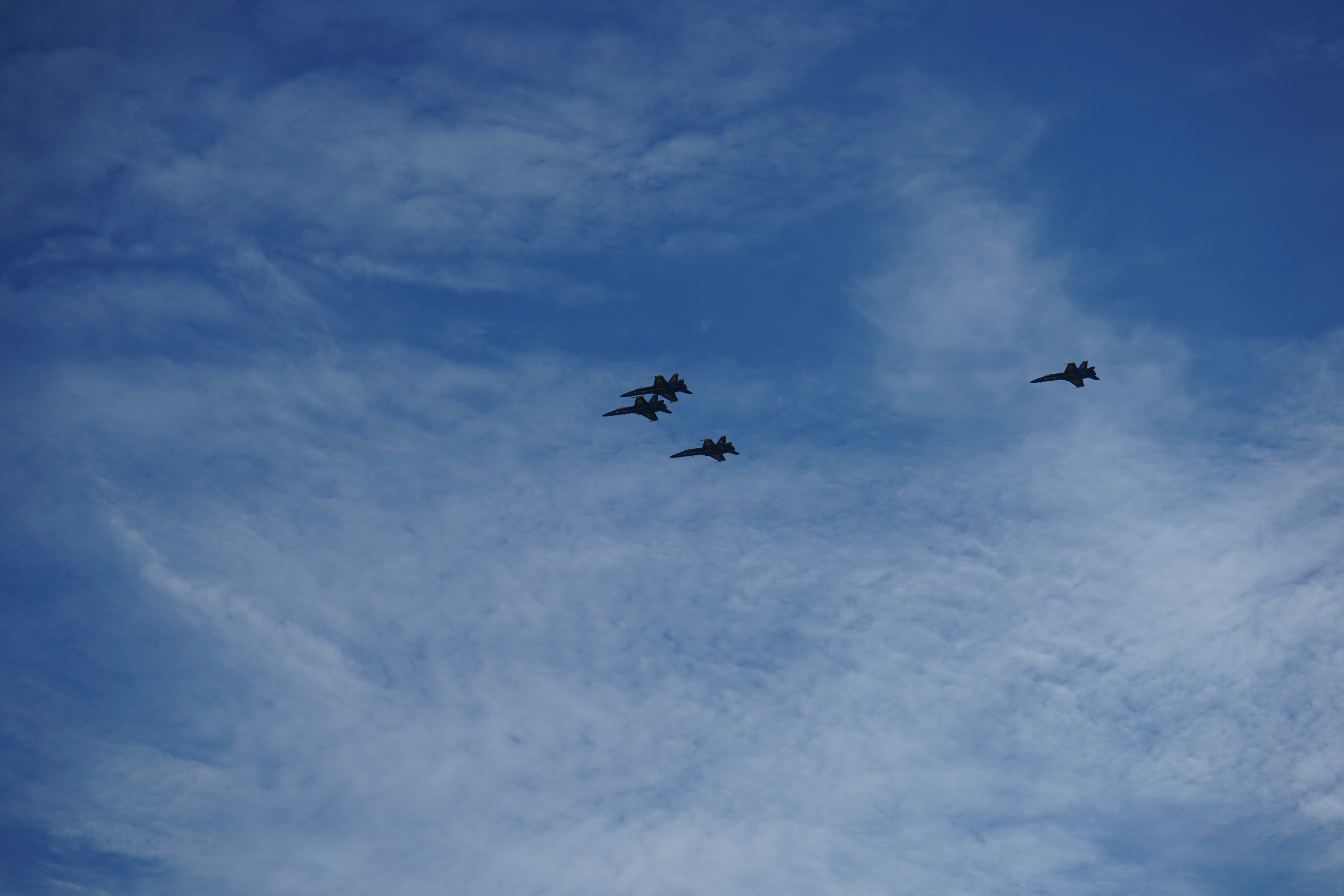
There were gulls (of course) and crows, as well as several varieties of sparrow, that we didn’t identify.  Not to mention these guys, who scared off the plover.

The Blue Angels.

My Portfolio

My photography portfolio is online. Take a look.

Dunster Loop #Exmoor #UKwalks

I’ve been queuing up a series of walks – mostly about 10 km (6 miles for us colonials), and this is the second.

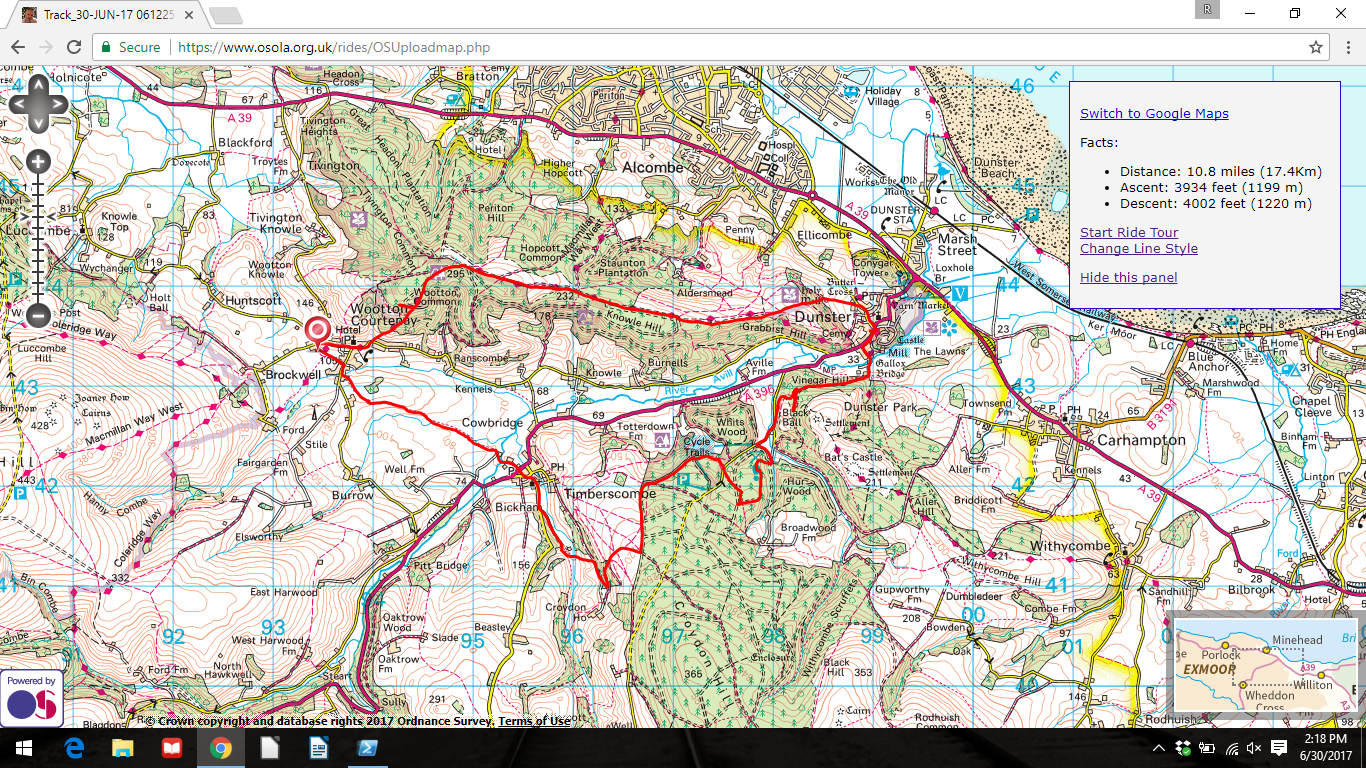
This started out as a “pub walk” from the house we hired in Wootton Courtenay – and we did get to one, about seven miles in. After several missed turns and places where the map … deviated from the trails on the ground.

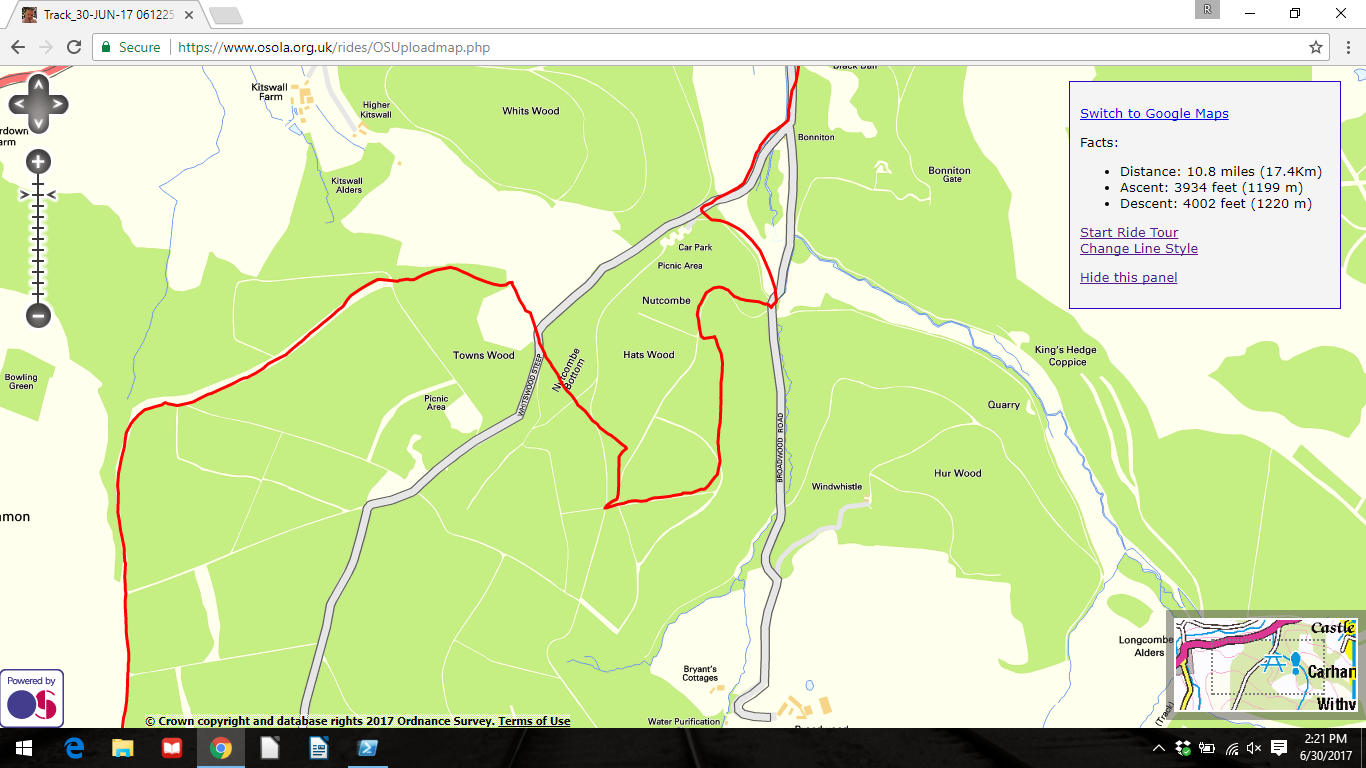
This shows our GPS trace overlaid on the most current Ordinance Survey map. These differences made it a bit interesting.

I covered the first part of the hike on an earlier post where we hunted a local pub. So you can read that post for details. We take this walk up at the village of Timberscombe.

Saint Petrock’s church in Timberscombe

We headed uphill on the wrong road, but eventually found our way to where we could see Dunster in the distance.

Dunster’s there, somewhere.

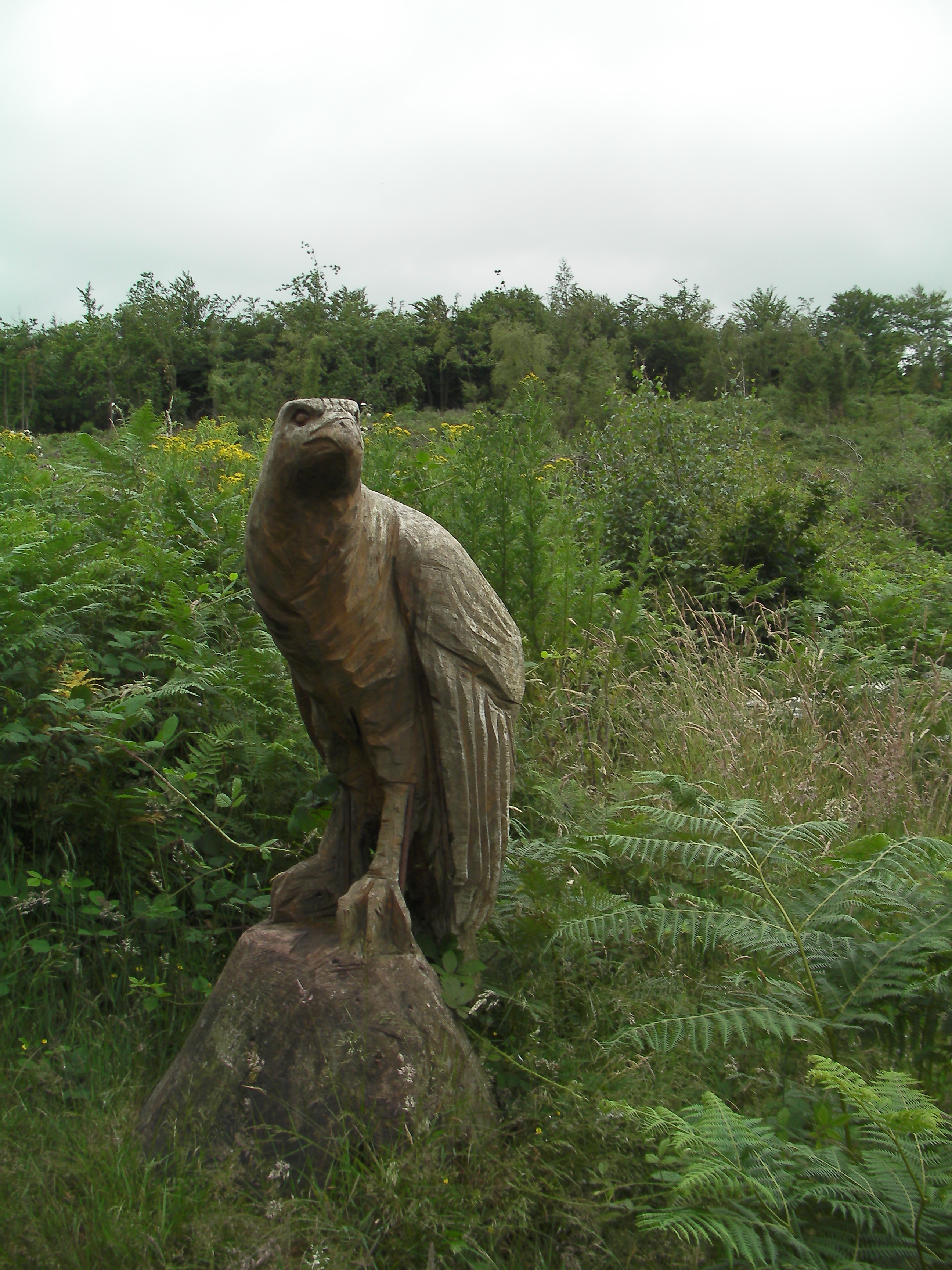
If you get to this carved bird (the buzzard), you’ve gone too far.

Some of the local landmarks have a decidedly sci-fi name. Is Gallox bridge in Gallifrey?

Gallox Bridge

Inside the Stag.

We stopped in the Stag – which is an excellent pub – and let two sweaty, dirty, and tired hikers enjoy their pints inside. It had a guitar in the corner so if you were a better player than I am, you could entertain the crowds (or if you were a better runner you might escape the disapprobriation.)


The path heads uphill, of course, from the town. It winds its way past St. Leonard’s well (Shades of Blackadder) along a ridge.

St Leonard’s well. Locked, but making the footpath mucky for the last thousand years.

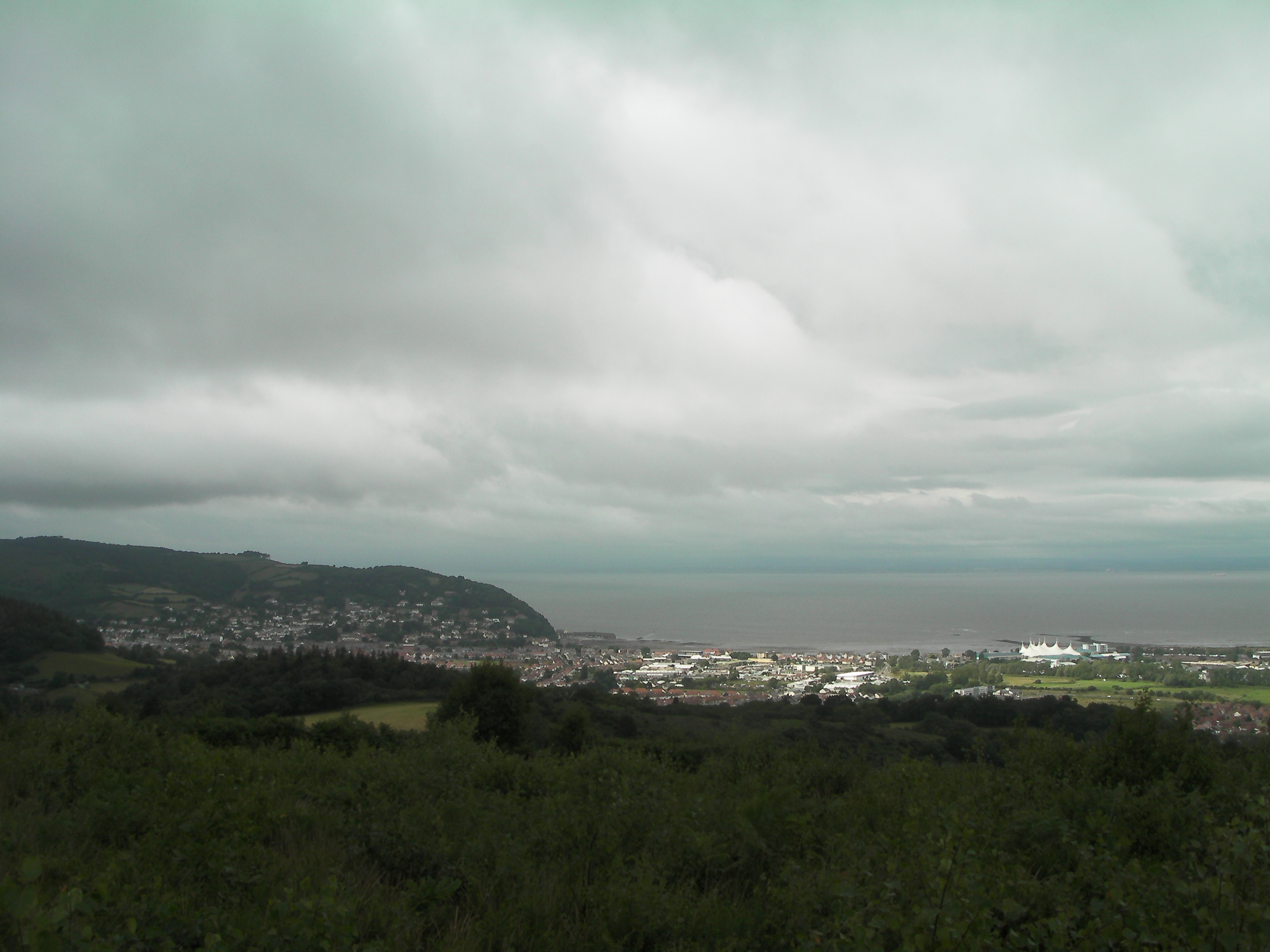
There is an excellent set of views of Minehead from the exposed ridge. The sun is shining on Butlin’s holiday camp.

Minehead.

Minehead in the distance

We also wanted to look for this weird feature – seen on google maps.

Unfortunately, it’s nothing special.

Dunkery Beacon #UKwalks

I’ve been queuing up a series of walks – mostly about 10 km (6 miles for us colonials), and this is the first.

Dunkery Beacon is the tallest peak in Exmoor. We’d hired a house in Wootton Courtenay which is at the base of the peak, but if you’re driving there are other places to start from.  I would probably park at Webber’s post where there is a large parking lot, but no post.

We managed to arrive just after a heat wave; 32-35 is no fun without aircon. It was typical English summer weather; i.e.raining and cold.

The trail proper starts in a lovely grove of trees and then ascends a moderate slope.

Of course we started in the sun, but that was not to last.

Wootton Courtenay is there, somewhere beneath the clouds

We passed the ponies several times – this shot being on the way up.


These preferred Bracken to handouts, which was a relief.

The top is marked by a cairn. We used it to shelter from the wind while eating lunch.

This shows the path up the hill.

We followed a steep descent part way down the hill and made our way through delightfully pretty woods (Rowan and Holly so we were doubly safe from the foul spirits of the undead) to Webber’s post, and back to our house. If I started from Webber’s post I’d go across the hill and up the way we did rather than the other way around.

Of course, then the weather cleared.

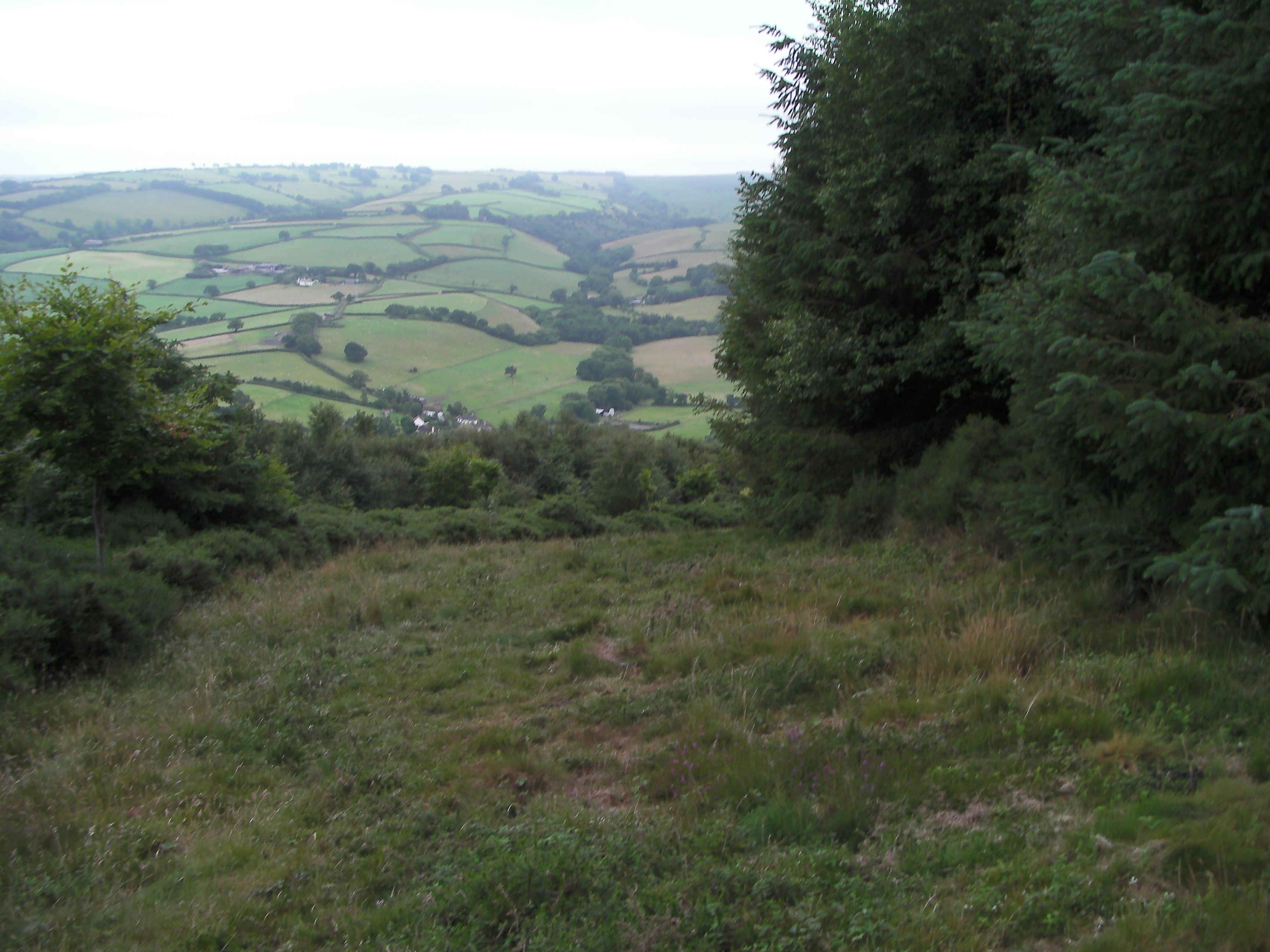
The view from the Timberscoombe trail.

Peas Potatoes and Gutter Cleaning.

Ah, spring. Even though it’s early March, it’s already late spring in Georgia.

dsc_0177
The early Daffodils are fading.
dsc_0175
And the Cranes have flown off.
dsc_0160

Time to plant peas, potatoes and clean the gutters (again).

Sandhill Cranes 2017.

dsc_0135
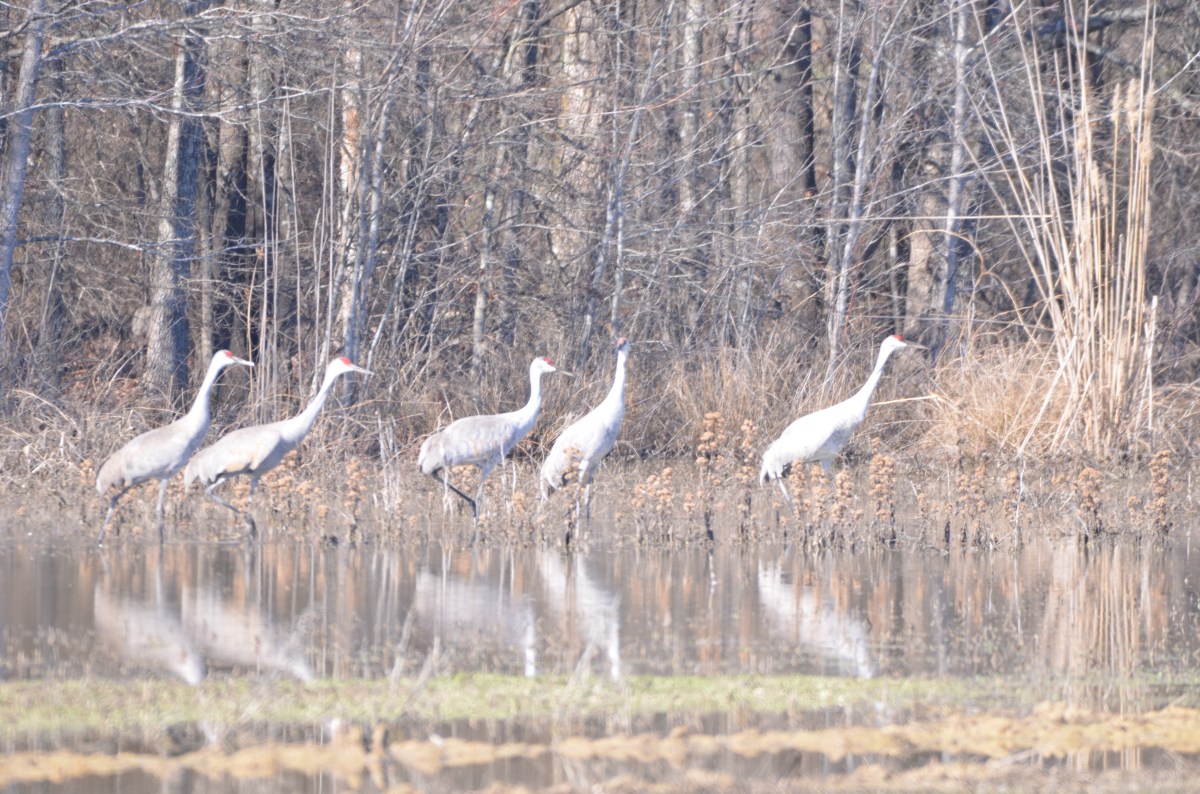
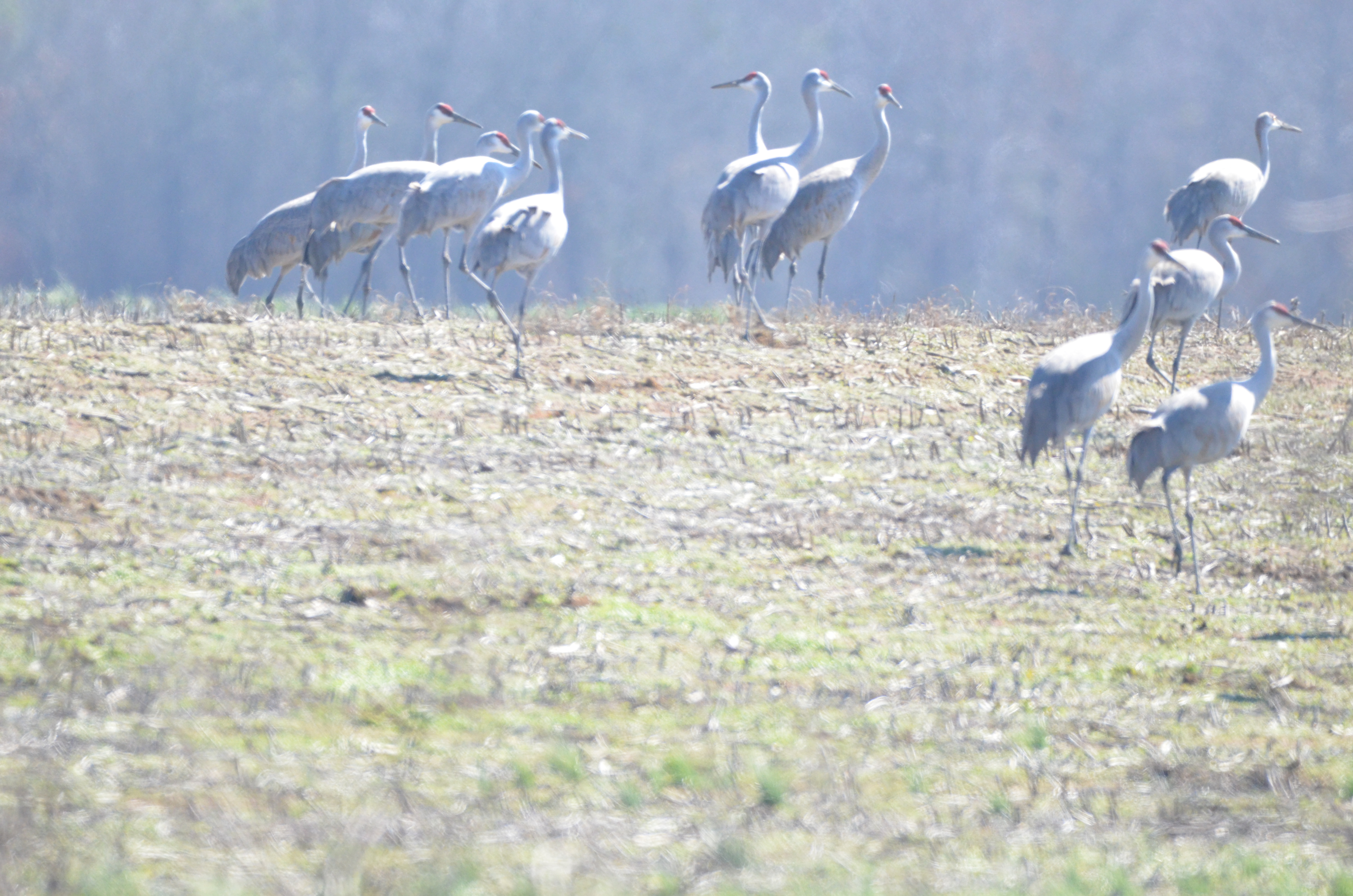
The sandhill cranes have returned. We saw the first few birds a couple of weeks ago, but now they are there in flocks. When we drove through today, they were a tad more spread out than usual. These ones (above) were hunting the early wood frogs. I could hear the frogs while I took the pictures.
dsc_0159
These were across the street from the others. During the summer this hill is a cotton field, so I’m not sure what critters there are now.
dsc_0168
However, there must be something because the flocks were spread out over several fields. These were the closest to the road where there was a convenient place to pull over and take pictures. I used a 600mm sigma lens. I’m not thoroughly happy about the sharpness.

crane_map This map shows where to look if you’re interested in seeing them yourselves. Remember they are protected birds. If you continue to Centre there are some half-decent places to eat and the petrol is about 30 cents cheaper than in Atlanta.

Curious Wild Turkeys (video)

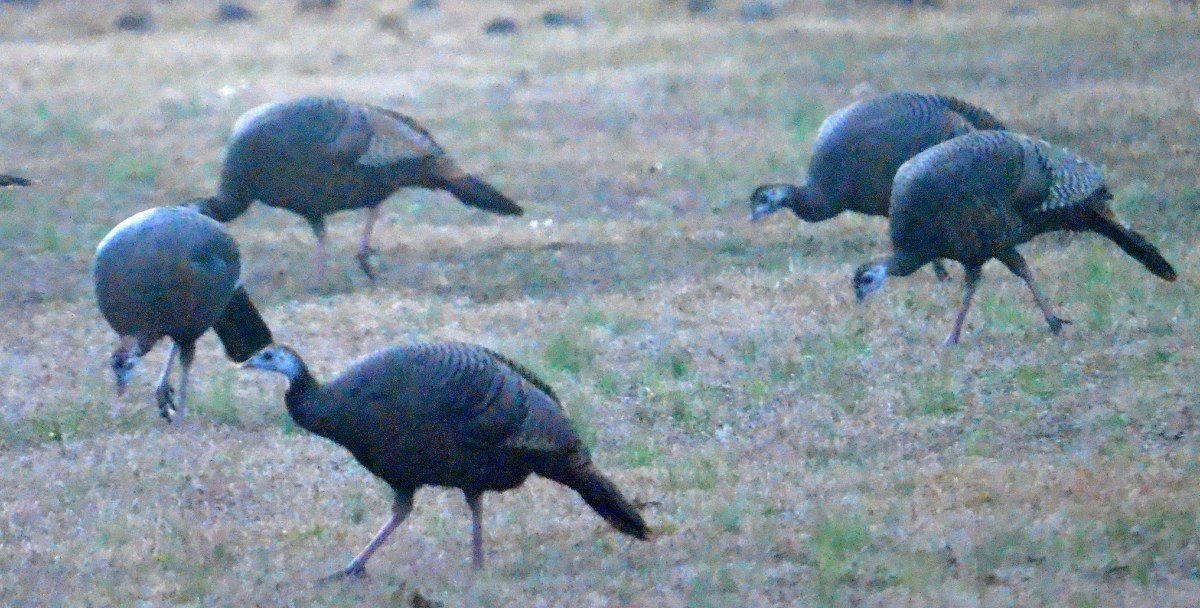
A flock walked by recently. Not quite as cuddly as cats, but neat nonetheless.

(sorry about the repost, but wordpress would not let me fix the image. ****** ***** **** ****).